News release
From:
University of Auckland
Record amount of heat accumulated in ocean in 2025, research shows
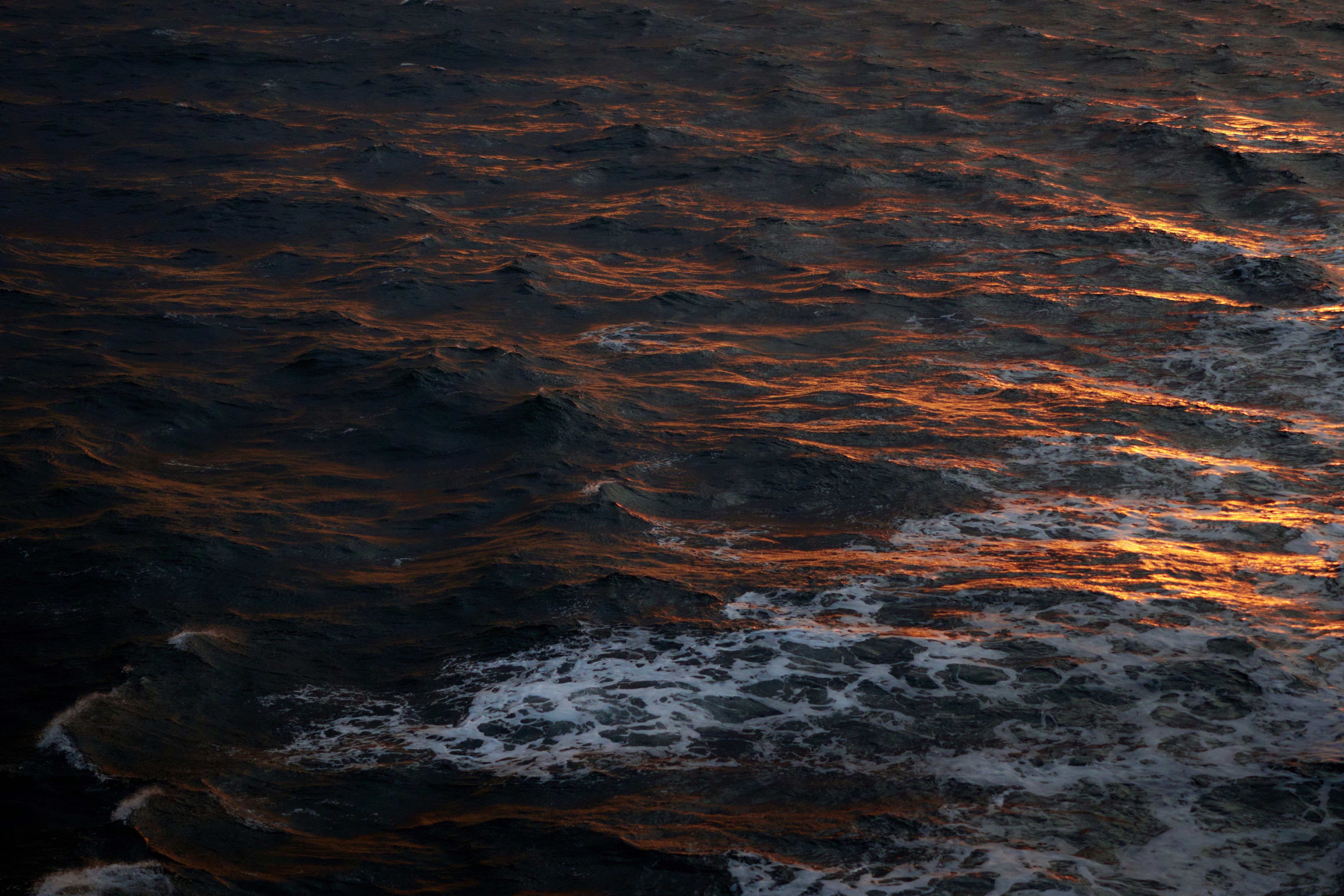
More heat accumulated in the ocean in 2025 than in any year since modern measurements began, says Dr Kevin Trenberth, an internationally recognised climate scientist from New Zealand.
Heat in the upper 2kms of the ocean increased by an estimated 23 zettajoules, according to a study co-authored by Trenberth, an honorary academic at the University of Auckland who is affiliated to the National Center for Atmospheric Research in the US.
That’s the equivalent of detonating hundreds of millions of Hiroshima atomic bombs – or roughly 200 times global electrical energy consumption in 2023.
“The ocean is the hottest on record,” says Trenberth. “We’re looking at creating a very different planet – do we really want to do that?”
The research by an international team of scientists, led out of the Chinese Academy of Sciences, was published in the journal Advances in Atmospheric Science.
Rising ocean heat drives global sea-level rise because water expands.
The extra heat intensifies extreme weather by increasing heat and moisture in the atmosphere.
The global sea-surface temperature was the third warmest on record, slightly lower than in 2023 and 2024, mainly due to the transition from El Niño to La Niña in the tropical Pacific.
The decline in mean sea-surface temperature was small compared to an unexpectedly large increase in 2023. Warmer surface temperatures lead to more evaporation, heavier rains, and more extreme tropical cyclones and weather events.
“Sea surface temperatures were exceptionally high near and around New Zealand during December 2025 into January 2026 from La Nina and global warming,” says Trenberth. “There’s a link with our unstable showery recent weather.”
The research paper referred to uncertainty over space-based observations for monitoring climate change, an apparent reference to US capabilities under the Trump administration.
Journal/
conference:
Advances in Atmospheric Sciences
Organisation/s:
University of Auckland, Chinese Academy of Sciences
Funder:
The IAP/CAS analysis is supported by the National Key R&D Program of China (Grant No. 2023YFF0806500), the International Partnership Program of the Chinese Academy of Sciences (Grant No. 060GJHZ2024064MI), the Chinese Academy of Sciences and the National Research Council of Italy Scientific Cooperative Programme, the new Cornerstone Science Foundation through the XPLORER PRIZE, the National Key Scientific and Technological Infrastructure project “Earth System Science Numerical Simulator Facility” (EarthLab), and Ocean Negative Carbon Emissions (ONCE). The numerical calculations in this study were carried out by eODS (an easy-to-use Ocean observation Data processing Software package, jointly developed by CNIC and IAP) on the ORISE Supercomputer. NCAR is sponsored by the US National Science Foundation. G. Li is supported by the Young Talent Support Project of Guangzhou Association for Science and Technology and the Natural Science Foundation of China (Grant number 42206208). We integrated some data collected onboard R/V Shiyan 6 implementing the Open Research Cruise NORC2022-10+NORC2022-303 supported by NSFC shiptime Sharing Projects 42149910. We acknowledge the Earthlink tool (https://github.com/OpenEarthLab/EarthLink) for providing insights into the analysis of some results in this study. The efforts of Dr. Fasullo in this work were supported by NASA Awards 80NSSC21K1191, 80NSSC17K0565, and 80NSSC22K0046, and portions of this study were supported by the Regional and Global Model Analysis (RGMA) component of the Earth and Environmental System Modeling Program of the U.S. Department of Energy’s Office of Biological & Environmental Research (BER) under the Lawrence Livermore National Lab subaward DE-AC52-07NA27344, Lawrence Berkeley National Lab subaward DE-AC02-05CH11231, and Pacific Northwest National Lab subaward DE-AC05-76RL01830. This work was also supported by the National Science Foundation (NSF) National Center for Atmospheric Research, under Cooperative Agreement No. 1852977. The efforts of Dr. Mishonov were supported by NOAA (Grant No. NA19NES4320002 and NA24NESX432C0001 to CISESS-MD at the University of Maryland). The efforts of Dr. Mayer were supported by the European Space Agency (ESA) under contract 4000145298/24/I-LR (MOTECUSOMA) and contract 4000147586/I/25-LR (CCI Ocean Surface Heat Fluxes).
The CNR-ISMAR CIGAR reanalysis is supported by the Copernicus Marine Service (contract 24254L01-COP-GLORAN GREP-4000). From 2021 to 2024, the XBT data have been collected under the framework of the MACMAP project funded by the Istituto Nazionale di Geofisica e Vulcanologia (INGV) in agreement between INGV, ENEA, and GNV SpA shipping company, which provides hospitality on its commercial vessels. From December 2024,793
the XBT monitoring is supported by INGV funds.
 Sign In



 New Zealand; International