Sign In



 Australia; NSW

News release
From:
University of Sydney marine biologists have identified a devastating combination of coral bleaching and a rare necrotic wasting disease that wiped out large, long-lived corals on the Great Barrier Reef during the record 2024 marine heatwave.
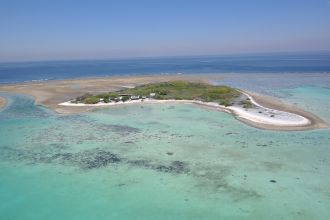
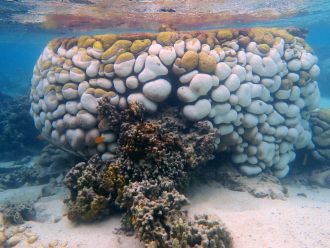
The study, led by Professor Maria Byrne and Sydney Horizon Fellow Dr Shawna Foo, found that bleaching triggered by extreme ocean temperatures was followed by an unprecedented outbreak of black band disease that killed massive Goniopora corals, also known as flowerpot or daisy coral, at One Tree Reef on the southern Great Barrier Reef.
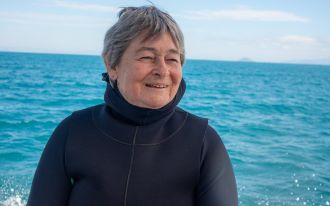
“This research shows that the compounding impact of disease – which appeared after the onset of bleaching – is what killed the Goniopora. These are very long-lived corals that would normally survive bleaching,” said Professor Byrne, a professor of marine biology in the School of Life and Environmental Sciences.
Their study is published today in Proceedings of the Royal Society B.
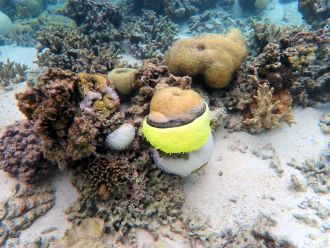
Black band disease is a bacterial necrotic infection that invades living coral, forming a black band that crosses the infected coral, usually killing the colony. Common in Caribbean reefs, it is rare in Australian waters.
The 2024 El Niño brought the highest sea temperatures on record to the Great Barrier Reef, with marine heatwave conditions persisting for months. During this period, 75 percent of Goniopora colonies at One Tree Reef bleached. Initially only a few (4 percent) showed signs of black band disease. By April, however, the disease had spread aggressively, invading more than half the bleached colonies.
Tracking 112 tagged Goniopora colonies over a year, the team found that three-quarters had died by October 2024, while only one quarter showed partial recovery. Population surveys of more than 700 colonies revealed the same pattern: widespread bleaching, rapid disease progression and high mortality.
Black band disease has been known for decades in the Caribbean, often linked to pollution or nutrient runoff, but it is extremely rare on the Great Barrier Reef. Its sudden appearance in One Tree Reef’s pristine waters marks the first recorded epizootic (an animal epidemic) event of this kind on the Great Barrier Reef and demonstrates how heat stress can turn even resilient coral species into disease victims.
“Normally these massive corals withstand environmental stress, but the combination of record heat and infection was catastrophic,” said Dr Shawna Foo, an ARC DECRA Fellow in the School of Life and Environmental Sciences. “It’s a stark example of how multiple stressors can act together to undermine reef resilience.”
The findings highlight the importance of long-term in-water monitoring made possible by the University’s One Tree Island Research Station, which provides vital infrastructure for studying coral ecosystems under natural conditions.
At the global level, the research sends an urgent warning.
“The current trajectory of climate change is progressing too quickly for corals to adjust,” the authors write. “Coral reefs are in danger, with recurrent anomalous heatwaves and mass coral bleaching being the greatest threat to their survival.”
Professor Byrne said the loss of these large, structure-forming corals will have lasting effects on reef biodiversity, coastal protection and food security.
“Coral reefs support more than a billion people worldwide. What we’re witnessing is a collapse in the natural resilience of these ecosystems. Ambitious global action to reduce emissions is now the only path to their survival.”
Download photos and videos of affected corals and the research at this link.
Comment paper
Byrne, M. et al ‘Marine heatwave-driven mortality of bleached colonies of the massive coral Goniopora is exacerbated by a black band disease epizootic’. (Proceedings of the Royal Society B: Biological Sciences 2025). DOI: 10.1098/rspb.2025.1912
Declaration
The authors declare no competing interests. Funding was received from the Australian Research Council
Multimedia