Sign In



 Australia; Pacific; International; SA
News release
From:
Islands are famous for producing some of the world’s strangest creatures, and now a new international study shows that evolution of bird species on Hawaiian islands includes an ibis with unusually small eyes and limited visual capacity.
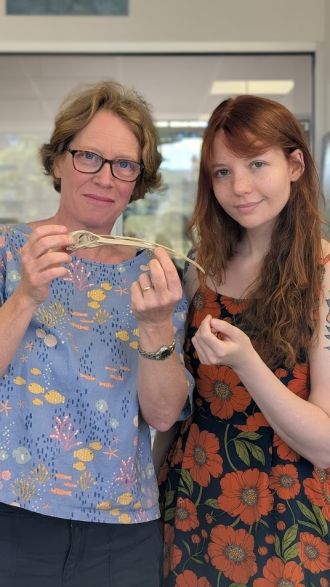
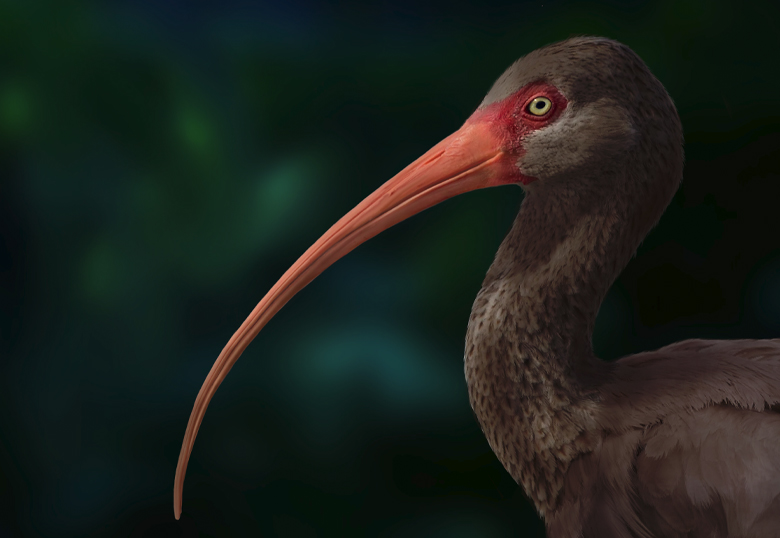
The team from University of Lethbridge in Canada and Flinders University in Australia made the discovery while examining the skull of Apteribis, an extinct flightless ibis that once inhabited the Hawaiian islands.
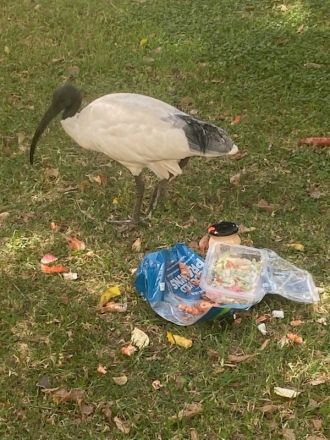
Lead author of the new research article, Sara Citron, says: “Apteribis was a relative of the Australian white ibis, commonly known as ‘bin chicken’ for their habit of rifling through rubbish bins with their beak. But really, ibises are beautiful and distinct birds: they have exceptionally long, elegant beaks and striking colours that set them apart from other shorebirds,” says Ms Citron, a PhD candidate from the University of Lethbridge Iwaniuk Lab.
“Their elongated beaks are key to how they feed. By inserting the beak into mud, shallow water, or soft ground, they probe for subtle vibrations that reveal the presence of hidden prey, such as small invertebrates,”
Using museum specimens from all over the world, the researchers examined skulls from 25 of the 28 living ibis species and used advanced imaging technology to create 3D reconstructions of the birds’ brains and compared them with the fossil species.
“What we found was astonishing,” Ms Citron says. “All imprints of the visual system on the skull – like the eyes, the optic nerve, and the optic tectum area where light is processed by the brain – were dramatically reduced in Apteribis compared to its living relatives.”
Co-author Aubrey Keirnan, a PhD student at Flinders University, says that such extreme reductions are known only in a few birds, including the elusive Australian night parrot or New Zealand’s kiwi and kakapo.
“All of these species rely very little on sight and are active mainly at night,” says Ms Keirnan, from the College of Science and Engineering at Flinders University.
The findings strongly suggest that Apteribis was also nocturnal, roaming the Hawaiian landscape under cover of darkness to feed and possibly breed, while resting during the heat of the day.
Senior author University of Lethbridge Associate Professor Andrew Iwaniuk, adds the Hawaiian species were targeted because island evolution often produces bizarre anatomies.
“From the moment we looked at the skull, we could see that the orbits, the spaces where the eyes sit, were far smaller than they should have been,” he says.
Another co-author Flinders University Associate Professor Vera Weisbecker says Hawaii is the most isolated archipelago on Earth and originally had no mammalian predators.
“Similar to the situation in New Zealand, large birds like ibises were safe on the ground and eventually lost the ability to fly,” says Associate Professor Weisbecker. “Accurate sight would not have been a particular advantage.”
The other factor pushing Apteribis into the dark was probably their prey.
Dr Helen James, Curator of Birds at the Smithsonian National Museum of Natural History in Washington, says the Hawaiian islands were once home to an extraordinary diversity of snails and flightless crickets.
“Flightless crickets and snails are nocturnal and would have been more abundant then, exactly the kind of prey that could drive a bird like Apteribis to adopt night‑time foraging,” explains Dr James, who is also part of the research team.
Possible causes of extinction are changes to the climate and vegetation on the Hawaiian islands, and the first arrival of humans.
Professor Iwaniuk concludes: “The New Zealand kiwi is often seen as a one‑of‑a‑kind oddity among modern birds. But this extinct ibis shows that similar forms evolved elsewhere.
“It reminds us how much diversity has been lost, and how many ecological roles disappeared, before we ever had the chance to study them.”
The article, ‘Comparative Anatomy Supports the Evolution of Nocturnality in the Extinct Hawaiian Ibis Apteribis’ (2025) by Sara Citron, Aubrey Keirnan, Vera Weisbecker, Helen James and Andrew N Iwaniuk has been published in Integrative and Comparative Biology https://doi.org/10.1093/icb/icaf159
First published: December 2025
Acknowledgements: Researchers received funding from the Canada Foundation for Innovation, Natural Sciences and Engineering Research Council of Canada, Australian Research Council and Canada Research Chairs.
Multimedia