Sign In



 Australia; VIC; SA
News release
From:
New research confirms the potential for police forensic investigators to carefully consider the presence of pets at crime scenes as a credible new avenue for finding and investigating DNA leads to solve the case.
Long-running research by Flinders University and Victoria Police experts demonstrate how dogs and cats can be tested for indirect DNA transfer at crime scenes from people other than householders or pet owners.
Heidi Monkman, PhD student from Flinders University’s College of Science and Engineering, with Dr Roland van Oorschot from the Victoria Police Forensic Services Department and Luke Volgin from the Forensic Science South Australia, are breaking new ground with their research on animal-mediated human DNA transfer.
Their recent studies reveal that household pets may play a surprising role in solving crimes.
“Dogs and cats are present in the majority of households worldwide and they routinely interact with multiple people and environments. Our findings show that dogs and cats can act as intermediaries in human DNA transfer, which has significant implications for case work where animals are present,” says Dr Monkman, a coauthor of several forensic DNA science articles on the topic.
The research discovered that even short contact between pets and people of interest, including potential offenders, leave detectable traces of human DNA on pets. It also found cats and dogs carry and spread human DNA as they move around a home or to other locations, transferring it from one surface to another.
“Awareness and use of this phenomenon could offer investigators important clues when piecing together evidence in serious criminal cases,” she says.
The studies involved controlled interactions between dogs, cats and volunteers in order to monitor DNA transfer in various scenarios. They found that owner’s DNA present on their pets can be picked up by mock offenders, potentially linking them to crime scenes. The DNA also can be transferred to locations that the owners never touched, possibly linking them to crime scenes where they were not present.
In the most recent article – ‘Investigation of human DNA transfer during mock dog-napping’ – researchers examined human DNA transfer dynamics in a mock “dog-napping” scenario.
Five dogs were placed into five separate cars by a recruited handler. The vehicles were neither owned by the handler nor familiar to the animals or their owners. The dogs remained in a car for 20 minutes and then returned home, where sampling took place one hour later.
Flinders University Senior Lecturer in Forensic Science Dr Mariya Goray – a coauthor in the journal articles – says while pets have often been overlooked in forensic casework, this research highlights their potential critical role in the dynamics of DNA transfer.
“These findings highlight the need for forensic investigators to carefully consider the presence of pets at crime scenes both as a possible new avenue for investigative leads, but also as a possible mechanism for indirect transfer and contamination”, says Dr Goray.
In another journal article, ‘The role of cats in human DNA transfer’ in Forensic Science International: Genetics 20 different cats tested, quantifiable DNA was detected in 16 or 80% of the samples taken.
Also ‘Paws for a moment: Investigation of bi-directional transfer of human DNA during a short human-dog interaction and subsequent indirect transfer’ in Science & Justice.
“While little is known about collecting and analysing human DNA to and from cats, we are exploring the potential for cats and dogs to be silent witnesses, to act as vectors of contamination and transfer at residential crime scenes,” says Ms Monkman.
“We know about 60% of households currently have a pet, and up to 90% a pet at some stage. They are the most common pet in most countries around the world.”
The new article, ‘Investigation of human DNA transfer during mock dog-napping’ (2025) by Heidi Monkman, Roland AH van Oorschot, Luke Volgin and Mariya Goray, has been published in Forensic Science International DOI: 10.1016/j.forsciint.2025.112724 (Vol 378 edition, February 2026).
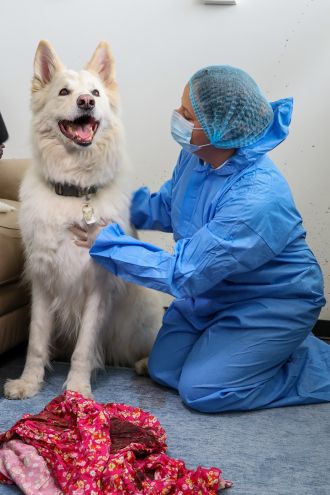
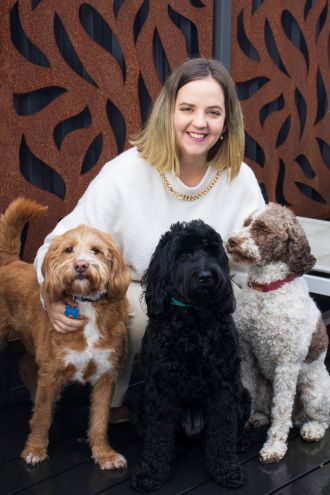
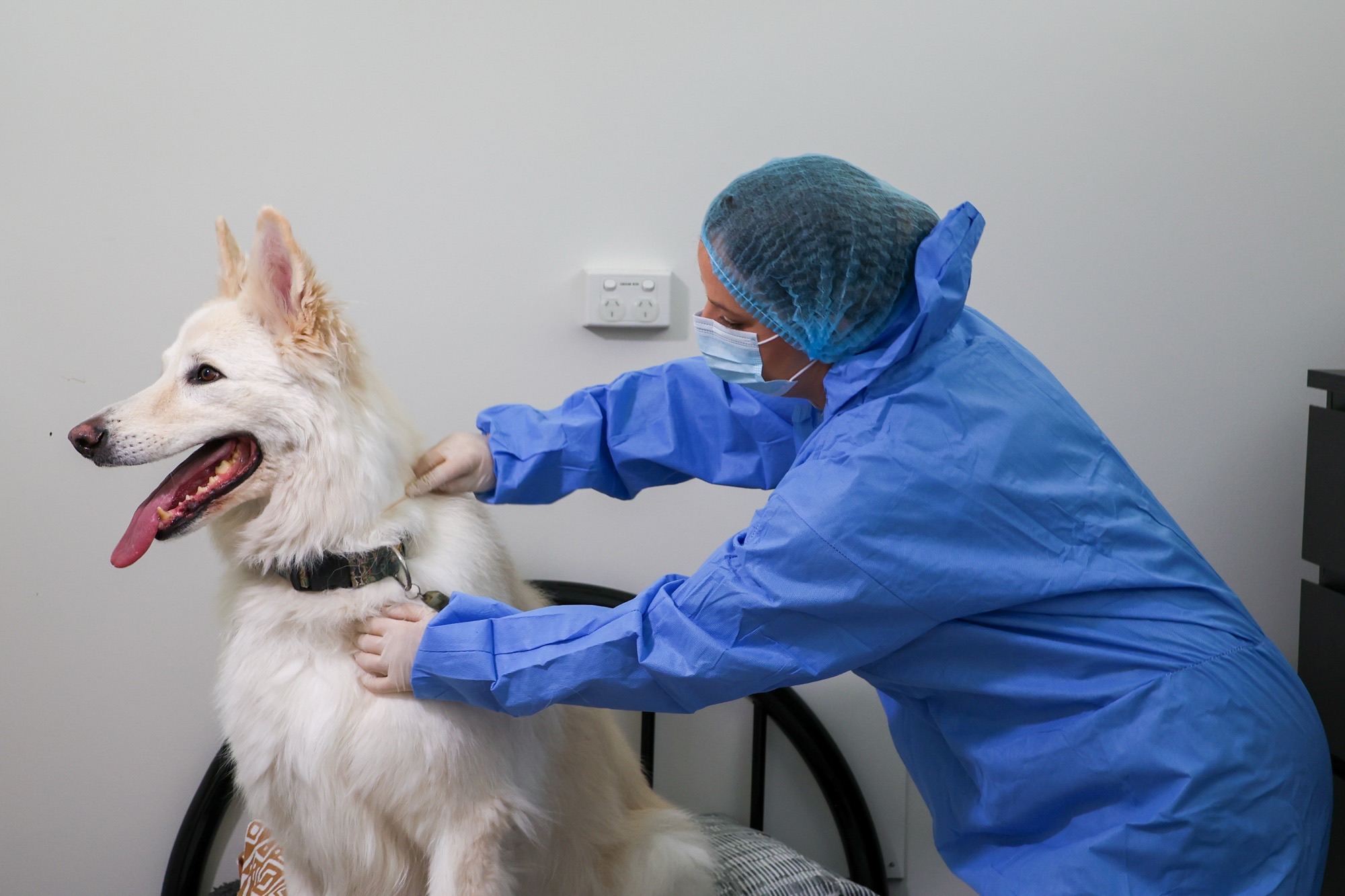
Photos of Heidi Monkman in the Flinders Crime Lab - courtesy Flinders University
https://drive.google.com/drive/folders/1nzYXvHgh974NiOBqSKgXRVJKfQ76L0rA
Multimedia