 Sign In



 Australia; SA
News release
From:
White sharks vs. killer whales: white sharks not always fearful of killer whales
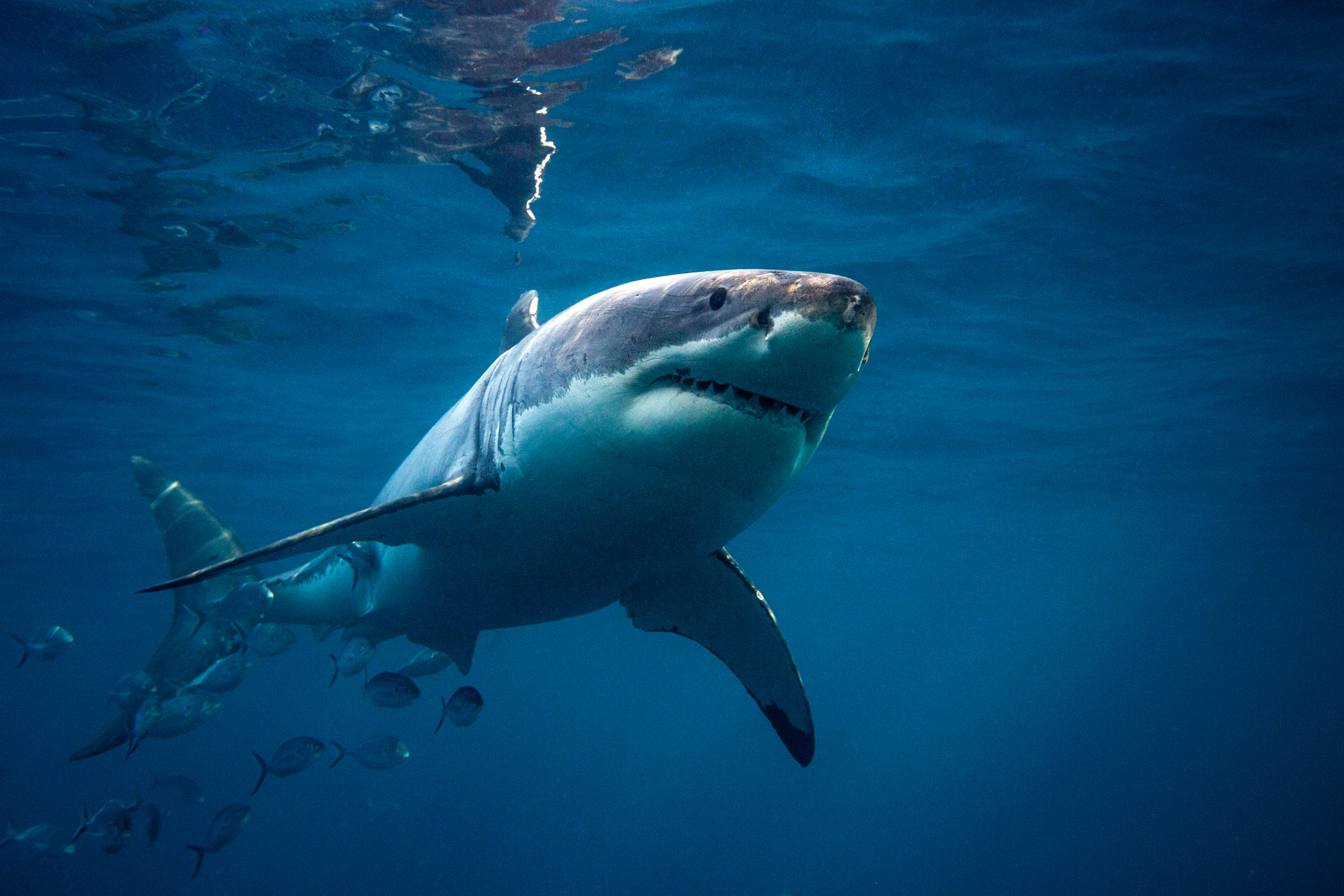
While killer whales (Orcinus orca) can trigger immediate departure of white sharks (Carcharodon carcharias), extended absences from their aggregation sites are also part of the sharks’ natural behaviour, new research reveals.
Using 12 years of acoustic telemetry and wildlife tourism sighting data, the Flinders University-led study found that the prolonged disappearance of white sharks from South Australia’s Neptune Islands after a 2015 predation event was unlikely to be driven solely by killer whales.
Around the world, killer whales have been observed preying on many different shark species, including white sharks, with documented cases in Australia, Mexico, California, and South Africa.
On 2 February 2015, approximately six killer whales were observed attacking and killing a white shark about 20 metres from a cage-diving vessel at the Neptune Islands Group Marine Park in South Australia.
Three whales appeared to corral the shark, restricting its movement, while others rammed it with their heads. The shark was pushed under the water, and an oil slick appeared on the surface, indicative of successful predation.
This presumed kill was widely documented and shared publicly, and was followed by an absence of white sharks from the area for around two months. At the time, this disappearance was widely attributed to killer whale predation and compared to similar events in South Africa.
Such predation events by killer whales are thought to trigger dramatic changes in shark behaviour, causing abrupt departures from coastal aggregation sites, and can cause cascading shifts in the wider marine ecosystem.
Studies in South Africa, Mexico, and California suggest these absences can last from weeks to months or even result in long-term site abandonment. However, most previous research has relied largely on observational data rather than long-term tracking.
Now, new research led by Dr Isabella Reeves and published in Wildlife Research, combined 12 years of long-term acoustic telemetry with tourism sighting records to test whether the 2015 absence was exceptional or part of natural variation in white shark residency at the Neptune Islands.
“Our results show that killer whales can absolutely trigger an immediate response from white sharks, but they are not always the whole story when it comes to long-term shark disappearances,” says Dr Reeves, postdoctoral candidate from Flinders University’s Southern Shark Ecology Group and the Western Australian Cetacean Research Centre (CETREC).
“Across the 12-year study, we recorded six prolonged absences of more than 42 days, and only one of them coincided with the presence of killer whales.
“The longest absence we recorded was even longer than the 2015 event and occurred when no killer whales were detected at all. This shows that while killer whales can trigger immediate short-term departures, they are not always the sole driver of extended disappearances of sharks from their local sites.”
Interestingly, the study also found that not every killer whale encounter or shark death leads to long-term absences.
A killer whale sighting in October 2024 caused only a five-day departure, while the death of a tagged white shark potentially releasing chemical signals known as necromones, resulted in just a four-day absence.
Senior author, Professor Charlie Huveneers, leader of the Southern Shark Ecology Group says residency patterns of white sharks at aggregation sites are highly variable and the study shows that long gaps in their presence can happen even without killer whale activity or white shark deaths.
“While these events seem to lead to immediate departure, long absences of white sharks at the Neptune Islands are more likely to reflect natural variability in white shark residency than a behavioural response to killer whales,” says Professor Huveneers.
“This study highlights the importance of long-term monitoring to understand white shark movements and site fidelity, while challenging the idea that killer whales are always or solely responsible for prolonged shark absences” says Dr Lauren Meyer, co-author of the study.
The research article ‘Absence or Avoidance? White shark response to killer whale predation risk’ (2026) by Isabella M Reeves, Adam Barnett, David M Donnelly, Lauren Meyer and Charlie Huveneers, has been published in Wildlife Research (CSIRO). DOI: 10.1071/WR25088
Attachments
Note: Not all attachments are visible to the general public. Research URLs will go live after the embargo ends.


