 Sign In



 International
News release
From:
New African species confirms evolutionary origin of magic mushrooms
- A newly described African species in the magic mushroom family confirms its evolutionary origin as from Africa.
- Psilocybe ochraceocentrata last shared a common ancestor with P. cubensis approximately 1.5 million years ago.
- Study sheds new light on the wild origins of domesticated P. cubensis and provide new genetic resources for research on psychedelic mushrooms.
A long-standing debate about the evolutionary origin of the world’s most widely cultivated “magic mushroom” – Psilocybe cubensis – may now have been settled by scientists from southern Africa and the United States.
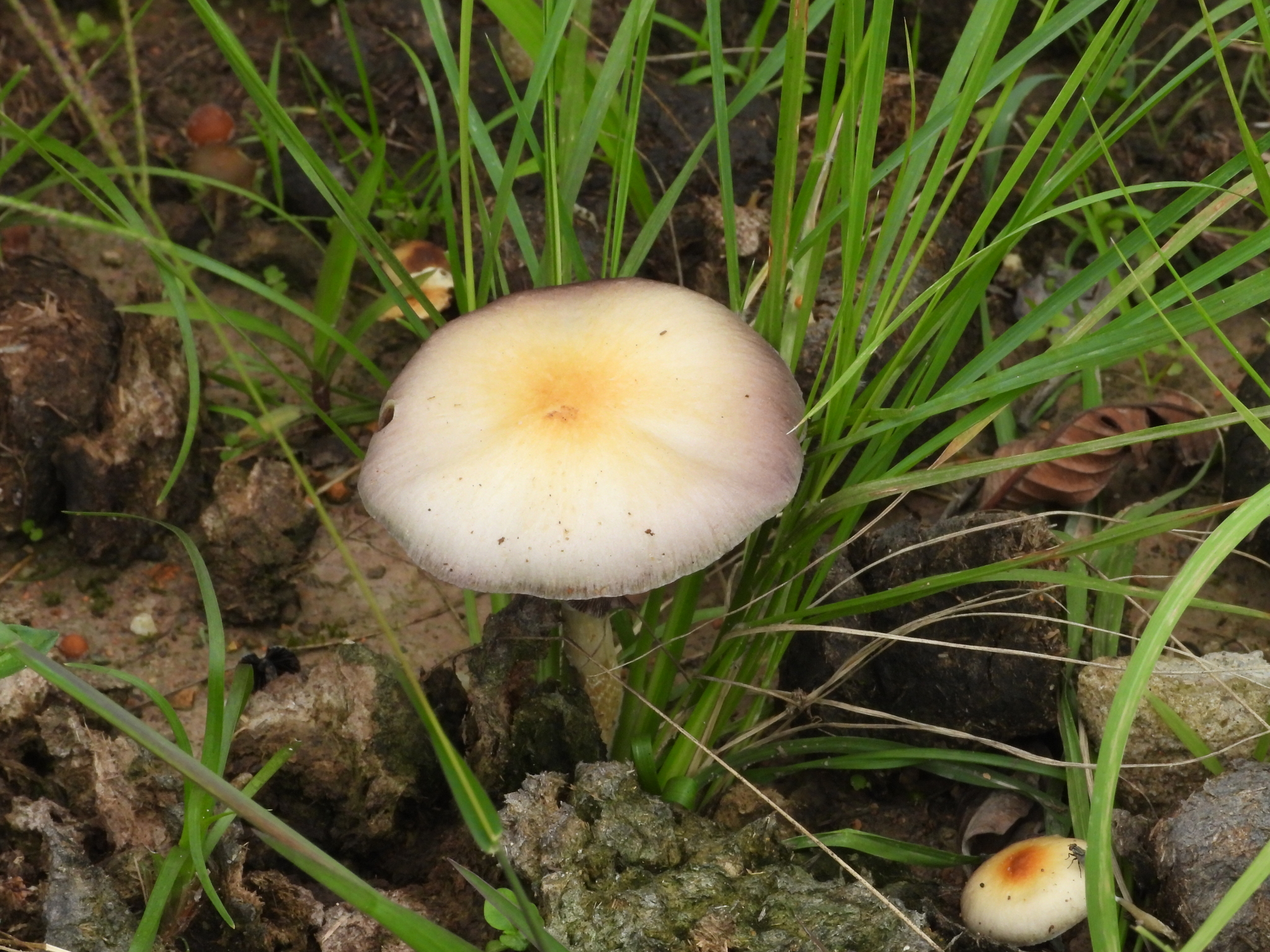
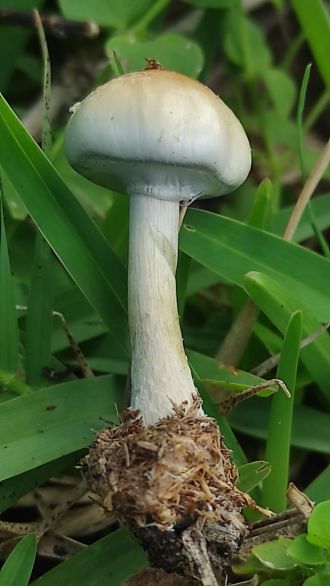
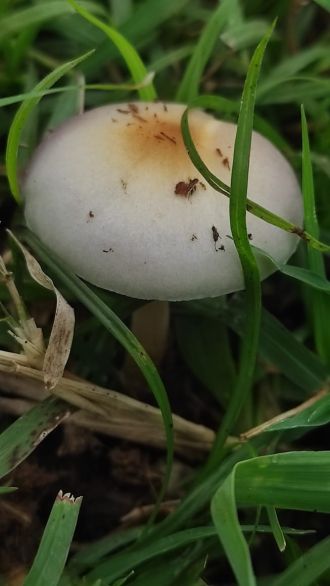
In a paper published in the journal Proceedings B of the Royal Society, they describe the discovery of a new species of magic mushroom – Psilocybe ochraceocentrata – from the grasslands of South Africa and Zimbabwe. So named because of the ochre-yellow colour at the center of the mushroom cap, P. ochraceocentrata last shared a common ancestor with P. cubensis approximately 1.5 million years ago.
This is contrary to the prevailing view that P. cubensis was inadvertently introduced to the Americas when cattle were introduced to the continents from Africa and Europe in the 1500s. P. cubensis was first described from Cuba in 1906.
Breyten van der Merwe, a mycologist and PhD student in chemical engineering at Stellenbosch University, says even though the two species look similar, they have different genetic, ecological and chemical traits. He is one of the co-authors on the paper.
He says the findings shed new light on the wild origins of domesticated P. cubensis and provide new genetic resources for research on psychedelic mushrooms.
P. ochraceocentrata has been cultivated around the world for many years under the name “NSS” (which stands for “Natal super strength”) or “Transkei”: “It’s one of the most popular strains of magic mushrooms, because it is quite potent and easy to grow. But until this study, nobody realised it was a totally separate species from the classic magic mushroom,” he explains.
Working with Dr Alexander Bradshaw from Clark University, Prof Bryn Dentinger from the University of Utah Health in the USA, Dr Keaton Tremble from the Duke University, and Dr Cathy Sharp from the Natural History Museum of Zimbabwe, they used DNA extracted from collections across southern Africa and historic type specimens to conduct multi-locus phylogenetic analyses, molecular clock dating, and ecological niche modelling.
Dr Sharp found some of the first specimens of P. ochraceocentrata in Zimbabwe back in 2013. To date, however, Africa remains heavily under sampled for fungal diversity.
In the article, titled “Discovery of the closest free-living relative of the domesticated ‘magic mushroom’ Psilocybe cubensis in Africa”, the team suggests several possible scenarios for when and how the species diverged so many millions of years ago. Around this time, grasslands were diversifying in South America, and grazing herbivores, which provide food for these mushrooms to grow on, were expanding out of Africa and into Eurasia. It is speculated that these ecological changes opened niches for the separate speciation of P. cubensis and P. ochraceocentrata.
In the meantime, Van der Merwe is pursuing further research on Psilocybe mushrooms and local psychoactive plants: “We plan to characterise and isolate the various compounds these plants and mushrooms produce, and then to test them against models for post-traumatic stress disorder, anxiety, and depression.”
Multimedia

Attachments
Note: Not all attachments are visible to the general public. Research URLs will go live after the embargo ends.


