Sign In



 Australia; International; VIC; SA
News release
From:
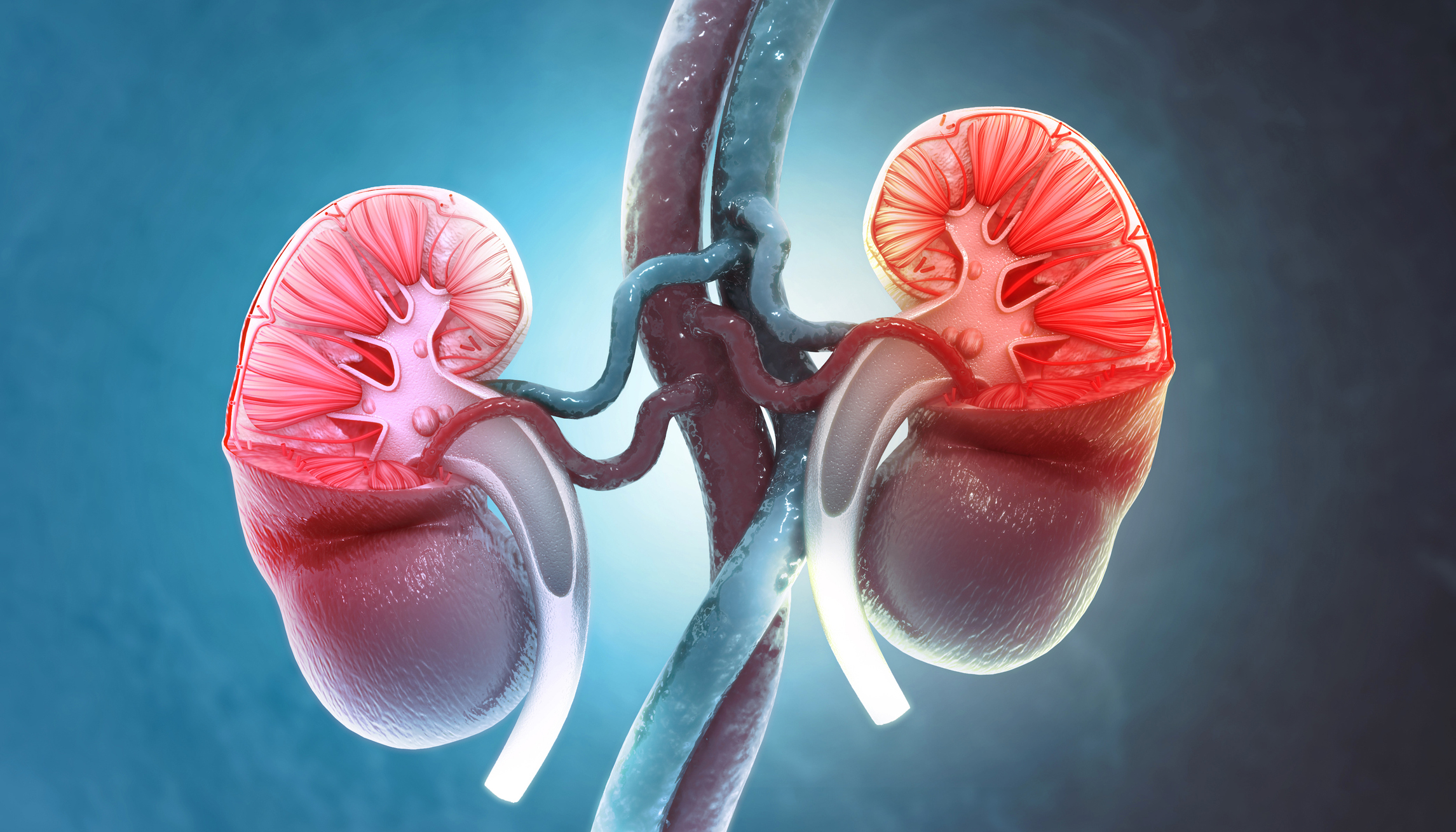
As concerns rise about the effects of tiny plastic particles on human health, Flinders University researchers have led new research on whether nanoplastics can accumulate or cause damage in kidneys – our body’s major blood filtering system.
Their study, just published in high-ranking international journal Cell Biology and Toxicology, calls for more investigations into the long-term risks, warning that high nanoplastics (NPs) particle ‘burden’ could seriously compromise kidney cell health and function.
“The findings demonstrate that while lower concentrations of NPs (less than 1 micron or 0.001mm in diameter) may not result in immediate toxicity to the kidney cells, particularly in terms of short-term exposure, higher burdens can compromise overall cell health and function, causing changes to the cell shape, survival and cell regulation,” says first author Hayden Gillings, a PhD Candidate in Nanoplastics and Health at Flinders University.
“The results also indicate that the effects are influenced not only by concentration but also by polymer composition and particle size, with some combinations inducing significant cellular changes even at relatively low doses,” says Mr Gillings, from the College of Science and Engineering.
The laboratory study tested kidney cells with varying concentrations and sized NPs, sourced from commonly used polymers – polystyrene (PS), poly(methyl methacrylate) or ‘PMMA,’ and polyethylene (PE).
It was supported by medical scientists from Monash University as well as Flinders University’s College of Medicine and Public Health.
The research team says sustained or repeated damage to regulatory kidney cells could impair kidney function, reduce filtration efficiency, clearance capacity, and lead to their potential buildup of NPs in kidney tissue over time.
With these plastics most commonly present all around in the environment, the study emphasises the need for further real-world long-term investigations into the effects of concentration, size, polymer types and chemical additives.
“Such studies should also explore biological outcomes, including potential DNA damage and long-term functional consequences, to fully assess the risks posed by environmental NPs to kidney health and systemic exposure,” adds Flinders University Associate Professor Melanie MacGregor, an ARC Future Fellow and Matthew Flinders Fellow in Chemistry.
Associate Professor MacGregor, who leads the Nano and Microplastics Research Consortium at Flinders University, says rising levels of plastic waste are breaking down in every part of Earth’s land, sea and air, leading to the proliferation of microplastic (pieces less than 5mm) and nanoplastic pollution posing a risk to all lifeforms.
“Millions of tonnes of microplastics can break down into even smaller nanoplastic particles and lead to chemical leakages,” she says.
“Tougher measures should be taken to reduce the release of chemicals and pollutants such as volatile organic compounds and micro- and nanoplastics to the environment, food chain and living organisms – both during production and after use.”
Kidney Health Australia says 2.7 million Australians, or about 1 in 7 Australians aged over 18 years old, are living with signs of kidney disease. Diabetes, hypertension and other conditions can reduce kidney function, leading to waste build-up in your body, and harmful impact on health.
The new article, ‘Nanoplastic toxicity and uptake in kidney cells: differential effects of concentration, particle size, and polymer type’ (2026), Hayden Louis Gillings, Darling M Rojas-Canales, Soon Wei Wong, Kaustubh R Bhuskute, Amandeep Kaur, Iliana Delcheva, Jonathan M Gleadle and Melanie MacGregor by has been published in Cell Biology and Toxicology (Cell) DOI: 10.1007/s10565-025-10135-2.
Acknowledgement: This work was supported by the Australian Research Council Future Fellowship Grant (FT200100301), Flinders Foundation and the Flinders Medical Centre Renal Research Fund.
Thanks to the NCRIS and Government of SA-enabled Australian National Fabrication Facility - South Australian Node (ANFF-SA) and Microscopy Australia.
Multimedia