 Sign In



 Australia; VIC; SA

News release
From:
Flinders University researchers have discovered a rare genetic mutation that could explain why some people do not respond to newer schizophrenia treatments.
The study, published in Genomic Psychiatry, reveals that an inherited change in the brain can completely block the function of the trace amine-associated receptor 1 (TAAR1), a receptor targeted by newer schizophrenia drugs making them ineffective.
Schizophrenia affects about 23 million people worldwide and is one of the hardest mental health conditions to manage. It can cause hallucinations, delusions, and problems with thinking and memory. Current medicines mostly work by targeting dopamine, but they are not effective for everyone and can cause serious side effects.
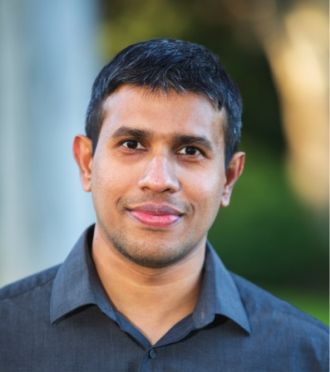
Principal Investigator of the study, Dr Pramod Nair, says that whilst TAAR1-based therapies have emerged as a leading alternative medication for treating schizophrenia, people with this mutation are unlikely to benefit from them.
“What surprised us most was how complete the effect was, the receptor didn’t just become weaker, it stopped responding altogether,” says Dr Nair who leads the Computational and Molecular Pharmacology laboratory at the College of Medicine and Public Health.
The study focused on a rare TAAR1 genetic variant, or mutation, known as C182F, first identified in an Indian family where the mother and two children were diagnosed with schizophrenia.
Using advanced cell biology techniques and molecular dynamics simulations, the team discovered that in normal TAAR1, a structural bond acts like a tent pole, holding the receptor’s binding pocket in the correct shape.
The C182F mutation removes this support and causes the receptor to fold in on itself, blocking the site where drugs and natural molecules would normally bind.
“The receptor basically locks itself shut and even the best new drugs can’t open it,” says Dr Nair.
“Our findings could explain why some people don’t respond to new schizophrenia treatments. While this mutation is very rare worldwide, it’s more common in South Asian populations.
“As TAAR1-based drugs move through clinical trials, genetic testing may become important to identify patients who won’t benefit.
“We need to think about screening for these mutations before treatment and use this information to help guide how trials are designed.”
The discovery also gives scientists new clues about what causes schizophrenia and highlights the need for personalised medicine, where treatment is tailored to a person’s genetic makeup.
Dr Nair says that this research is a big step forward in understanding how genes affect mental health and drug response and could help shape future treatments and improve care for people living with schizophrenia.
The paper, “Functional implications of the C182F TAAR1 variant identified in patients with schizophrenia,” by Britto Shajan, Utsav Vaghasiya, Tarun Bastiampillai, Karen J. Gregory (Monash University), Shane D. Hellyer (Monash University) and Pramod C. Nair was published in Genomic Psychiatryjournal. DOI:10.61373/gp026r.0006
Acknowledgements: PCN acknowledges Flinders University and Southern Adelaide Local Health Network for Innovation Partnership Seed Funding. This study was supported by an Ideas Grant (2039377) from the National Health and Medical Research Council of Australia. This research was undertaken with the assistance of resources from the National Computational Infrastructure (NCI), which is supported by the Australian Government.
Multimedia

Attachments
Note: Not all attachments are visible to the general public. Research URLs will go live after the embargo ends.


