The surprising resilience of Svalbard polar bears

Publicly released:
International
PHOTO: Trine Lise Sviggum Helgerud / Norwegian Polar Institute

Bucking the general trend, the population of Svalbard polar bears has remained stable and in good condition over the last two decades, a new study shows. Between 1995 and 2019, researchers performed over 1000 body measurements of nearly 800 bears to estimate their fat reserves. Although Svalbard lost sea-ice at more than twice the rate of other polar bear habitats, the fat reserves of local bears actually increased over this time. The researchers speculate that this could be due to the increased density of ringed seals during years with low sea ice and increasing populations of land-based prey like reindeer and walrus. They emphasised that melting sea ice is causing other polar bear populations to decline, and is likely to eventually affect the Svalbard bears too, but that it is important not to assume that all animal populations will be affected equally as the Arctic warms.

News release

From: Springer Nature

The body conditions of polar bear (Ursus maritimus) populations around the Norwegian island of Svalbard have improved despite sea ice losses, according to research published in Scientific Reports. The findings differ from previously published observations of polar bear population declines coinciding with sea ice loss across the Arctic.

Previous research has recorded temperature increases in the Barents Sea region surrounding Svalbard of up to two degrees Celsius per decade since 1980. However, following a 2004 census, the Barents Sea polar bear population numbered approximately 2,650 individuals and until recently appeared not to shrink in size, although the reasons for this have been unclear.

Jon Aars and colleagues investigated the potential causes of the stability of the Svalbard populations using data from 1,188 body measurement records of 770 adult polar bears taken on Svalbard between 1992 and 2019. They compared changes in the bears’ body composition index (BCI), an indicator of fat reserves and body condition, with the number of ice-free days in the Barents Sea region across the 27-year period. The authors found that although the number of ice-free days increased by approximately 100 over this period — at a rate of about four days per year — the mean BCI of the adult polar bears sampled increased following the year 2000. This indicates that fat reserves increased as sea ice levels decreased.

The authors suggest that improvements in the body conditions of Svalbard polar bears could be attributed to the recovery of populations of land-based prey sources that were previously over-exploited by humans, such as reindeer (Rangifer tarandus) and walrus (Odobenus rosmarus). They also propose that sea ice loss may lead to prey animals such as ringed seals (Pusa hispida) concentrating across smaller areas of sea ice and that this may increase the efficiency of polar bear hunting. The authors speculate that further reductions in sea ice may negatively affect the Svalbard populations by increasing the distances they need to travel to access hunting grounds, as this has already been observed in other polar bear populations. They conclude that more research is needed to understand how different polar bear populations will adapt to a warming Arctic in the future.

Multimedia
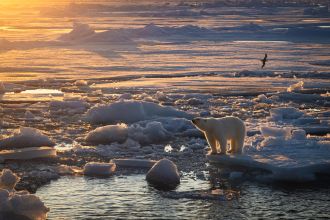
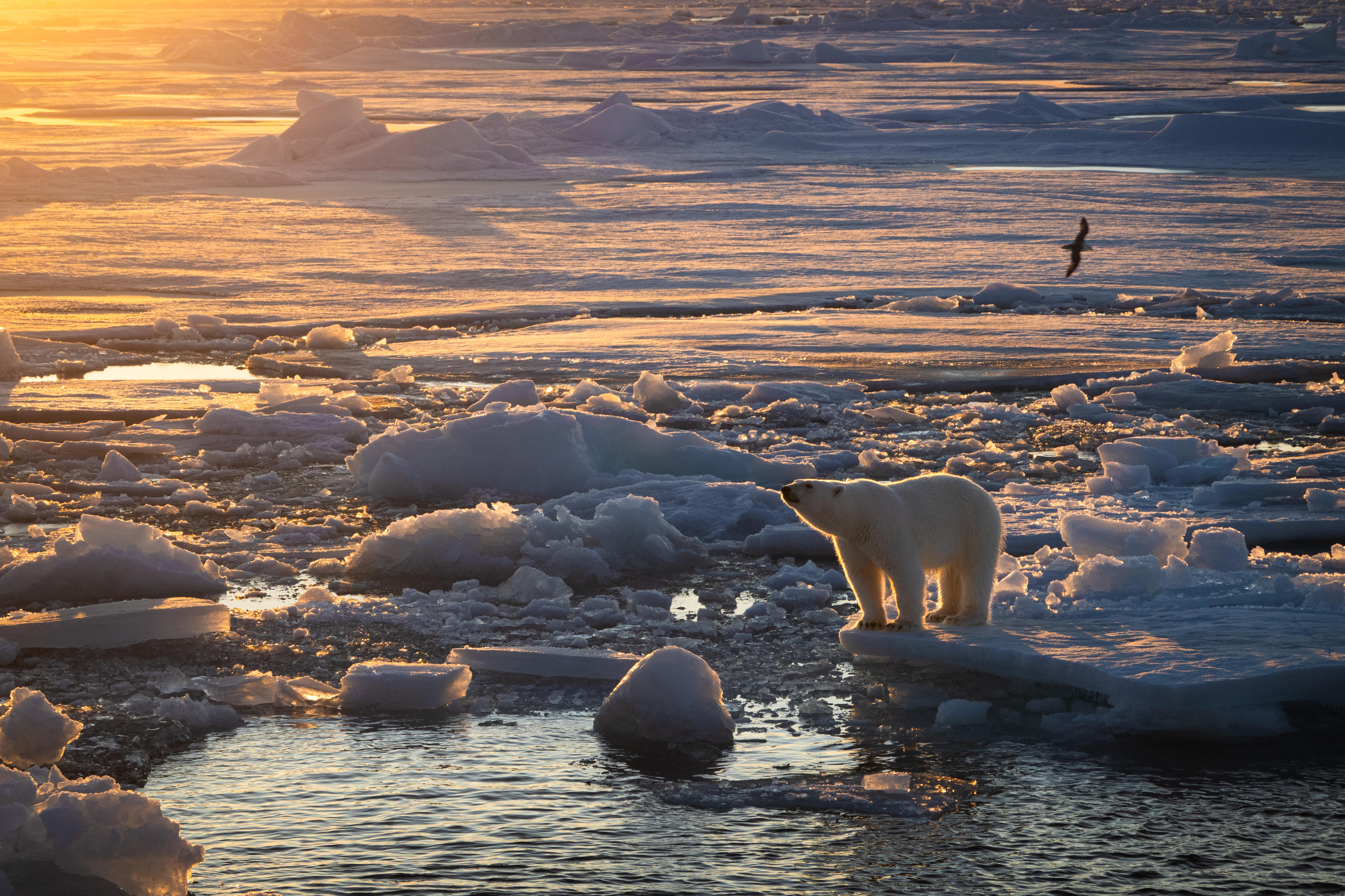
A polar bear pictured standing on sea ice in the golden hour
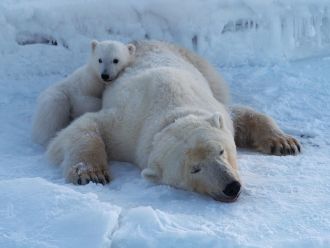
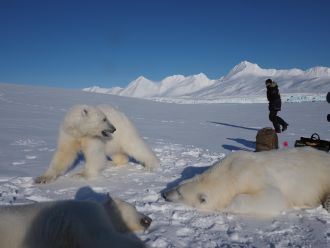
A sedated polar bear lies on the ice with its cub huddled against it
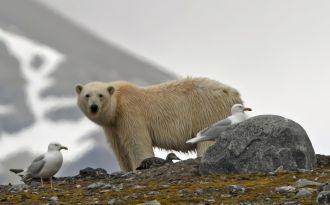
A polar bear looks past an assortment of seagulls and nesting birds to stare at
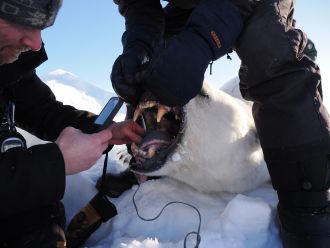
Researchers record the mouth measurements of an anesthetized polar bear
A juvenile polar bear receives a smaller dose of anaesthetic proportionate to it
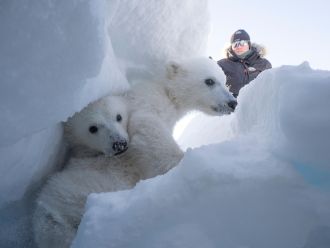
Researcher Magnus Andersen looks over two polar bear cubs hiding in a snowy crev
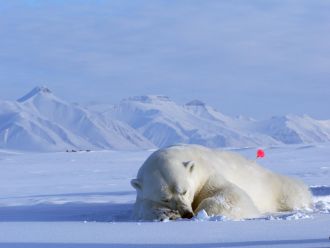
A sedated polar bear
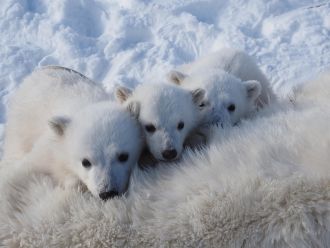
Three polar bear cubs gather around their tranquilized mother
A polar bear traversing scattered sea ice
A polar bear picks at the remains of a seal it has captured on a raft of sea ice
A polar bear walking across sea ice to lie down at the water’s edge
A polar bear crossing ice and water with its two cubs

Attachments

Note: Not all attachments are visible to the general public. Research URLs will go live after the embargo ends.

Research Springer Nature, Web page URL will go live once embargo ends.
Journal/
conference:
Scientific Reports
Research:Paper
Organisation/s: Norwegian Polar Institute, Norway
Funder: Open access funding provided by Norwegian Polar Institute. The monitoring has been funded by Norwegian Polar Institute, and during different periodes WWF, Polar Bears International, Statoil, and the Norwegian Research Council.
Media Contact/s
Contact details are only visible to registered journalists.