Sign In



 Australia; International; SA
News release
From:
Education systems need to focus more on independent critical thinking and rational, evidence-based learning and problem-solving to find answers to many of the unprecedented environmental, social and economic challenges facing humanity, experts say.
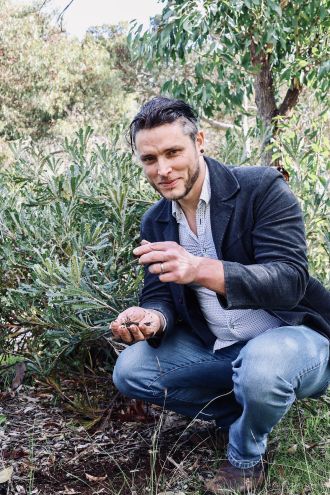
Scientists from around the world, including Flinders University microbiologist Dr Jake Robinson, have called for a radical refocus of school curricula from early years to high school to include more critical thinking and learning skills to empower students to ‘think outside the box’.
“Cultivating deep, critical and systems-oriented thinking is no longer optional (but) essential in the face of global challenges such as climate change, biodiversity loss and health crises,” the experts say in an open-access editorial in Microbial Biotechnology.
“Fostering these capacities must begin early in life, within educational systems designed not just to transmit information but to nurture thoughtful, engaged and capable citizens.”
Joining fellow microbiologists and scientists in Europe, China, India, the Middle East and North and South America, the editorial article warns digital technology, artificial intelligence and misinformation is “enhancing biases and numbing our ability to think clearly and reach sensible decisions”.
“There is an urgent need to rapidly roll out effective education program in which critical thinking teaching is solidly embedded,” says Dr Robinson, from Flinders University’s College of Science and Engineering.
“Critical thinking, and especially the cultivation of the habit of asking ‘why’ and requiring plausible justification for policies or actions, is a shield against bias, prejudice, propaganda, misinformation and the incessant pressures of social media.
“It promotes a healthy mind and the attainment of the developmental potential of individuals.
“The very young are not able to comprehend the complex abstract issues underpinning critical thinking, so embedding the teaching of critical thinking in a suitable educational context, and integrating it into curricula, is another challenge.”
Tools such as the International Microbiology Literacy Initiative’s MicroChats provide class discussion topics to encourage children to imagine the application of each element in other contexts to reinforce principles and hone critical thinking skills.
By introducing children to microbiological concepts that affect daily life – such as food spoilage, hygiene, disease transmission and fermentation – the resource creates real-world contexts for critical reflection.
Dr Robinson, whose third book The Nature of Pandemics: Why Protecting Biodiversity is Key to Human Survival has just been published, says many answers to age-old problems in scientific discovery have relied upon imagination to solve.
“Education is often reduced to the transmission of knowledge, yet in an era of climate disruption, biodiversity decline, and social injustice and unrest, learners require more than facts and skills,” he says in another Microbial Biotechnology editorial.
“Students must develop adaptive capacities that enable them to question, critically analyse, imagine, act, and empathise. One such fundamental capacity is imagination, which is frequently undervalued in science education, particularly in fields considered ‘hard’ sciences.
“Microbiology offers a compelling context for better cultivating imagination because its study requires learners to visualise invisible worlds, connect them to ecological and human health, and explore how such knowledge might be applied to societal challenges.”
Dr Robinson says microbiology education is one topic that can overcome curricular, resource and cultural barriers to encourage collective imagination and help to democratise learning, expand world views, and promote a sense of responsibility, citizenship, and stewardship.
“More than rote learning, education is key to realising the potential of an individual, and to cultivate the capacities that learners need to question, adapt and imagine.”
The articles – ‘Scientists' warning to humanity: The need to begin teaching critical and systems thinking early in life’ and ‘Creative futures in education: Building ‘imagination infrastructures’ for microbiology and beyond’ (2025) – have been published by Microbial Biotechnology (Wiley Online) DOI: 10. 10.1111/1751-7915.70270 & DOI: 10.1111/1751-7915.70284.
Multimedia