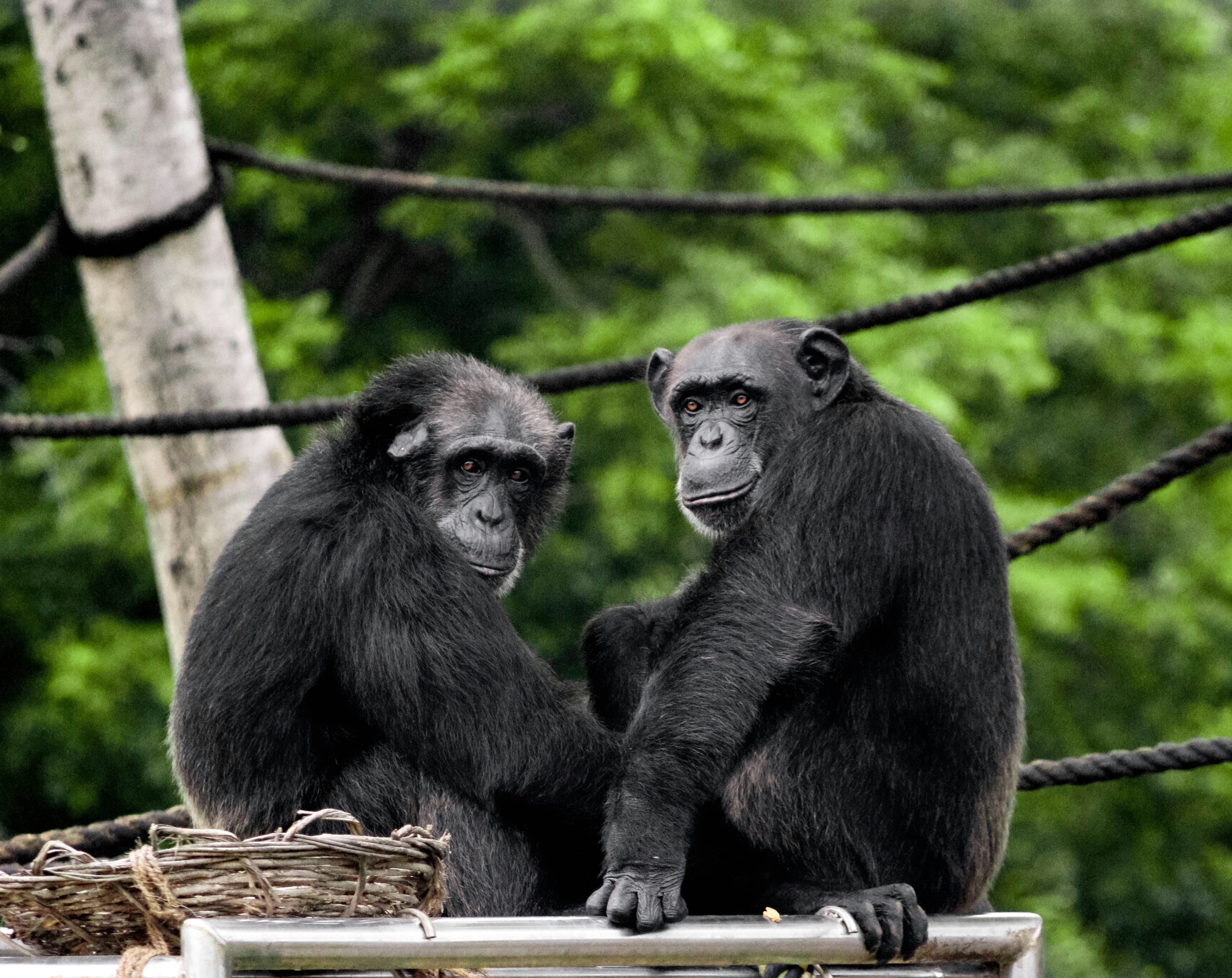
Playful teasing may help great apes establish social boundaries

Publicly released:
International
CC-0. Story by Dr Joe Milton, Australian Science Media Centre

Great apes, including chimps, gorillas, orangutans and humans, probably tease each other to help figure out how strong their relationships are, according to US scientists. The stronger the relationship, the more playful teasing a fellow ape will tolerate before getting grumpy and lashing out, the authors say, so teasing probably evolved as a relatively safe way of assessing relationships. Teasing may help humans and other great apes understand and take advantage of their social connections, the authors conclude.

News release

From: The Royal Society

Does playful teasing help great apes learn about social relationships?

Primates must navigate complex social relationships as they fluctuate over hours, days, and years. Accurately assessing the strength of relationships provides significant advantages. We propose that great apes (like humans) use playful teasing as a low-risk way to test the strength or quality of their social bonds. Teasing involves one-sided pestering and careful monitoring of the target’s socially-contingent responses. By determining how much their partner will tolerate before reacting negatively, teasers can assess the value their partner places on the relationship. Teasing may therefore help humans and other apes better understand and leverage their social connections.

Attachments

Note: Not all attachments are visible to the general public. Research URLs will go live after the embargo ends.

Research The Royal Society, Web page The URL will go live at some point after the embargo ends
Journal/
conference:
Philosophical Transactions of the Royal Society B
Research:Paper
Organisation/s: Indiana University, USA
Funder: This research was supported by a Templeton World Charity Foundation grant (TWCF0318) to E.A.C. S.LW. was supported by the NSF Graduate Research Fellowship Program (grant DGE-2034835).
Media Contact/s
Contact details are only visible to registered journalists.