Sign In



 New Zealand
Media release
From:
Effects of honey bees on native pollinators in a natural ecosystem
The Western honey bee (Apis mellifera) has been deliberately introduced into many regions for honey
production and improving crop pollination, and the species is now found almost worldwide.
Introductions of apiaries (beehives) of exotic honey bees into New Zealand to assist with crop pollination and
honey production first occurred in the late 1830s and continued until the 1980s.
International studies have shown that exotic honey bees disrupt flower visitation and pollination by native
insects, but the impacts of commercial apiaries on New Zealand’s natural ecosystems are largely unknown.
This gap in our knowledge is significant, because honey production from native ecosystems such as those
dominated by mānuka and kānuka is now a major industry and export earner.
Now, a team of scientists from the Bioeconomy Science Institute, working with Tūhoe Tuawhenua Trust, Te
Rūnanganui o Ngāti Hikairo ki Tongariro, and the Department of Conservation, have painstakingly studied
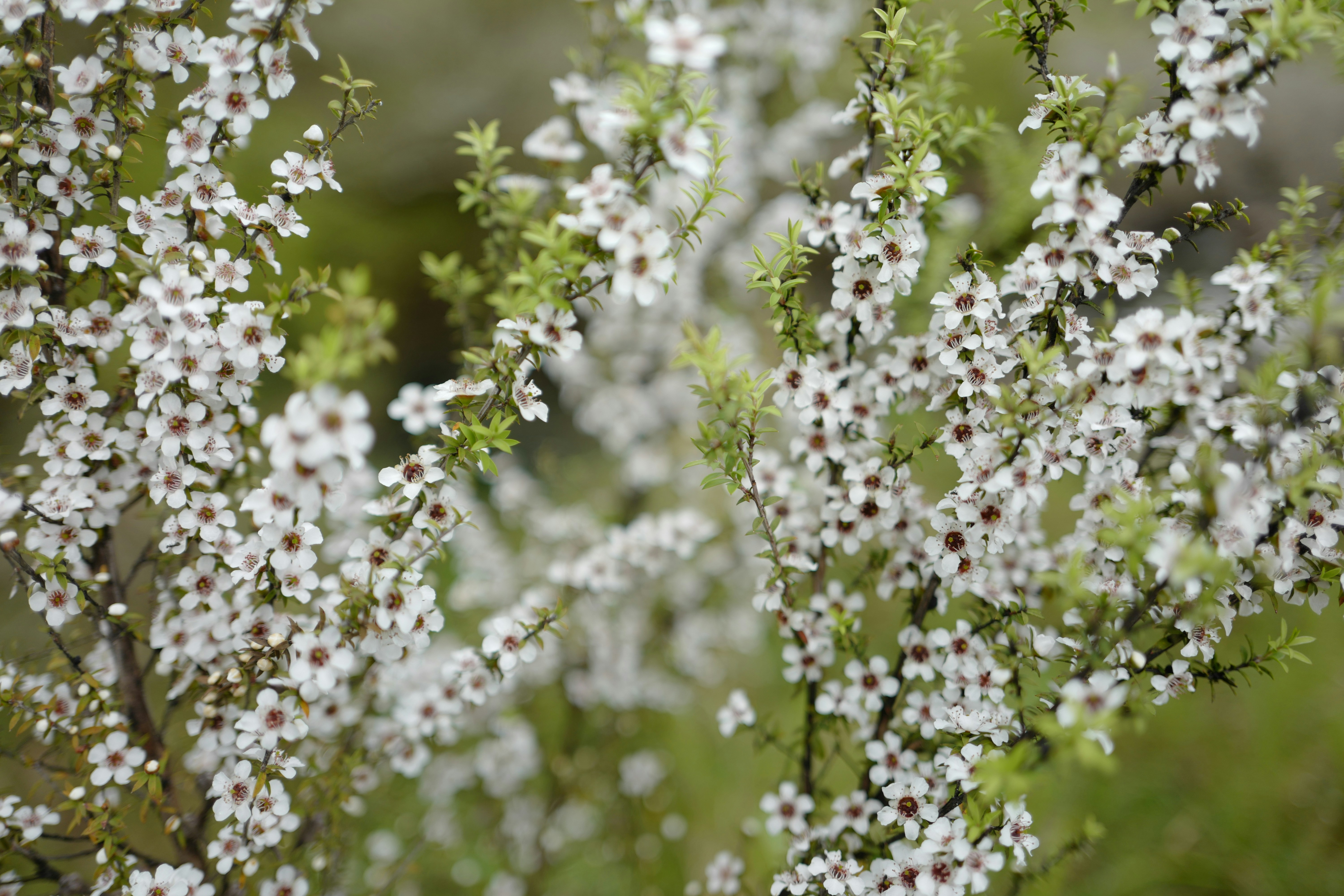
what happens to other insects in a natural mānuka shrubland ecosystem when exotic honey bees are
brought in.
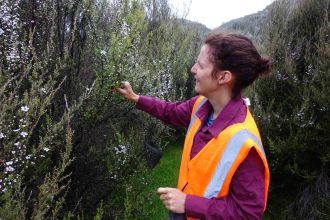
Three pairs of mānuka shrubland sites were selected in the central North Island – six sites in all. For each
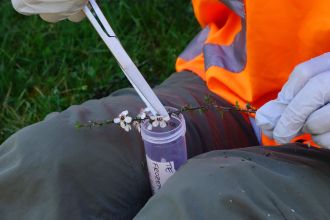
pair, one had an beehives and one didn’t. Flowers were collected and the insect DNA within flowers were
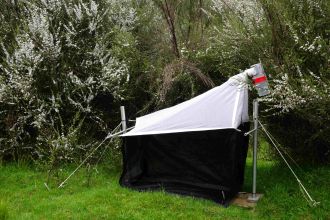
identified. Insects were trapped on the wing, and identified using morphology and DNA sequencing, to
ensure that the assessment of invertebrates was as complete as possible.
The total numbers of insects counted and identified was truly immense. Some 36,881 invertebrate
specimens were collected across the six sites, before being expert-identified as representing 14 orders of
insects and 137 separate species among the three most common orders. The DNA sampling detected more
than 9,000 different insect sequences, roughly equivalent to species.
The strongest evidence of a honey bee effect on invertebrate communities was provided by the insect DNA
on the flowers. The insect species mix detected on the flower samples was less rich in apiary sites than in
non-apiary sites. Lepidoptera (butterflies and moths) were noticeably less abundant at apiary sites, and
mānuka flower visits by other insects were also lower.
But some insects seemed to benefit from the bees. Thysanoptera (thrip) richness was 64% higher on and
within flowers from apiary sites than from sites without an apiary, suggesting transport of thrips between
flowers by honey bees.
Overall the researchers conclude that honey bees do consistently disrupt mānuka flower visits and
pollination by other invertebrates, although their effects on wider communities of invertebrates that are not
directly involved in pollination are more variable. These findings are important because knowledge of
impacts will enable evidence-based apiary placement across conservation and production lands.
Multimedia