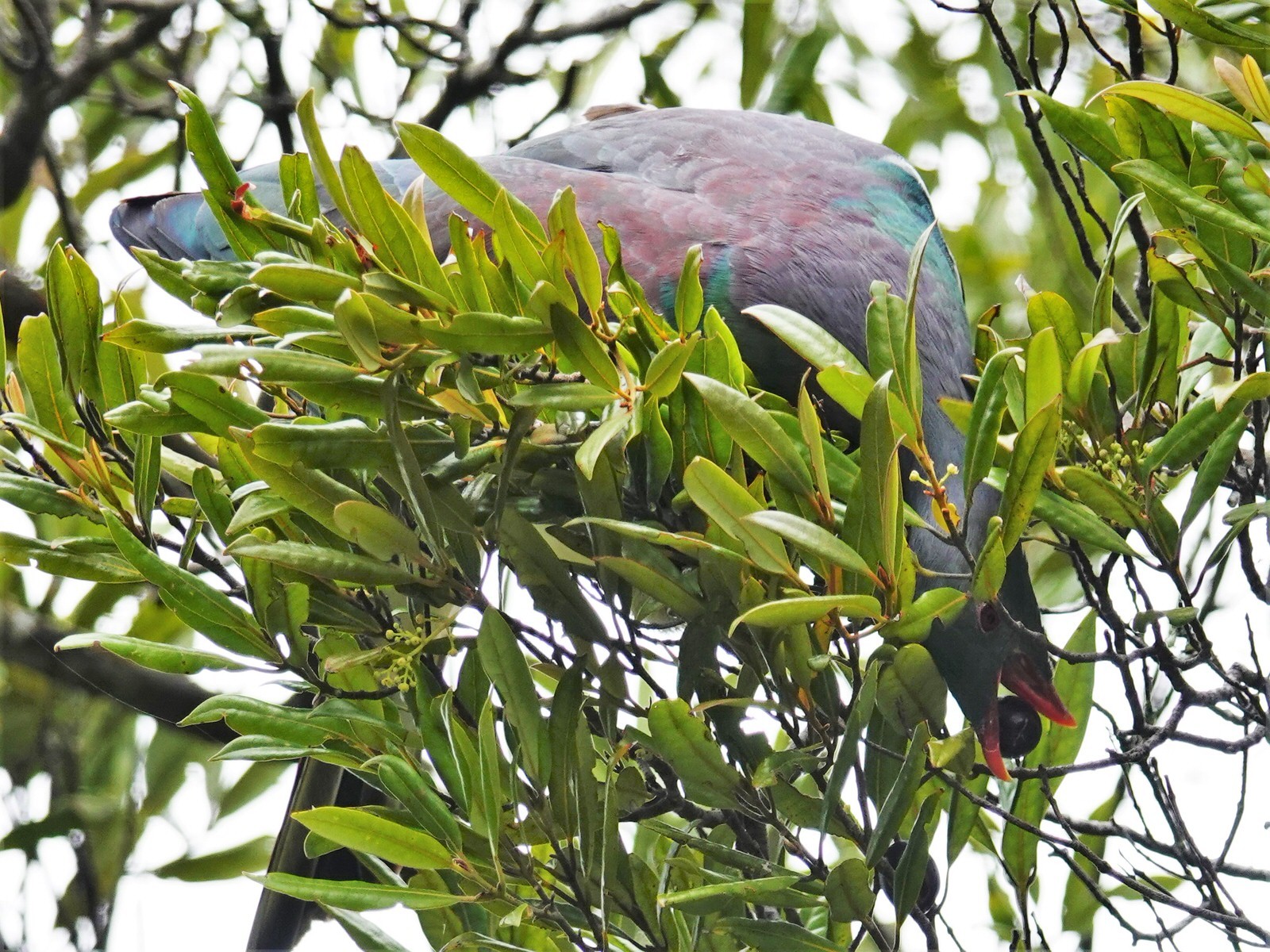
Smaller fruits, skinnier kererū in North Island forests

Publicly released:
New Zealand
By Jacqui Geux - https://www.inaturalist.org/observations/69904861, CC BY 4.0, https://commons.wikimedia.org/w/index.php?curid=166249836

Practitioners of mātauranga Māori (traditional knowledge) report changes to fruiting cycles in the Te Urewera and Whirinaki forests and their links to our warming world. Researchers interviewed Tūhoe Tuawhenua and Ngāti Whare forest practitioners for 14 years to capture their observations covering the last 75 years. For example, there is much less tawa fruit in the forest, whereas before the 1990s, it was possible to flick a couple of leaves and you would find fruit. The changes in the fruits and the timing of their fruiting cycles have had flow-on effects to the animals that eat them, such as kererū. The authors write that as climate change intensifies, traditional knowledge will become increasingly important for forecasting future changes to species.

Multimedia

Photo 1
Photo 1
Photo 2
Photo 2
Journal/
conference:
New Zealand Journal of Ecology
Organisation/s: Bioeconomy Science Institute, Umeå University, Sweden; Tūhoe Tuawhenua Trust; Te Rūnanga o Ngāti Whare;
Funder: The study was funded by Ministry of Business, Innovation and Employment grants (C09X0308; C09X1307; C09X2104) and Crown Research Institute Strategic Science Investment Funding.
Media Contact/s
Contact details are only visible to registered journalists.