 Sign In



 International
News release
From:
Race against time to save Alpine ice cores recording medieval mining, fires, and volcanoes
Glacier ice can reveal air pollution dating back to the Roman Empire — but the climate crisis is destroying this frozen archive
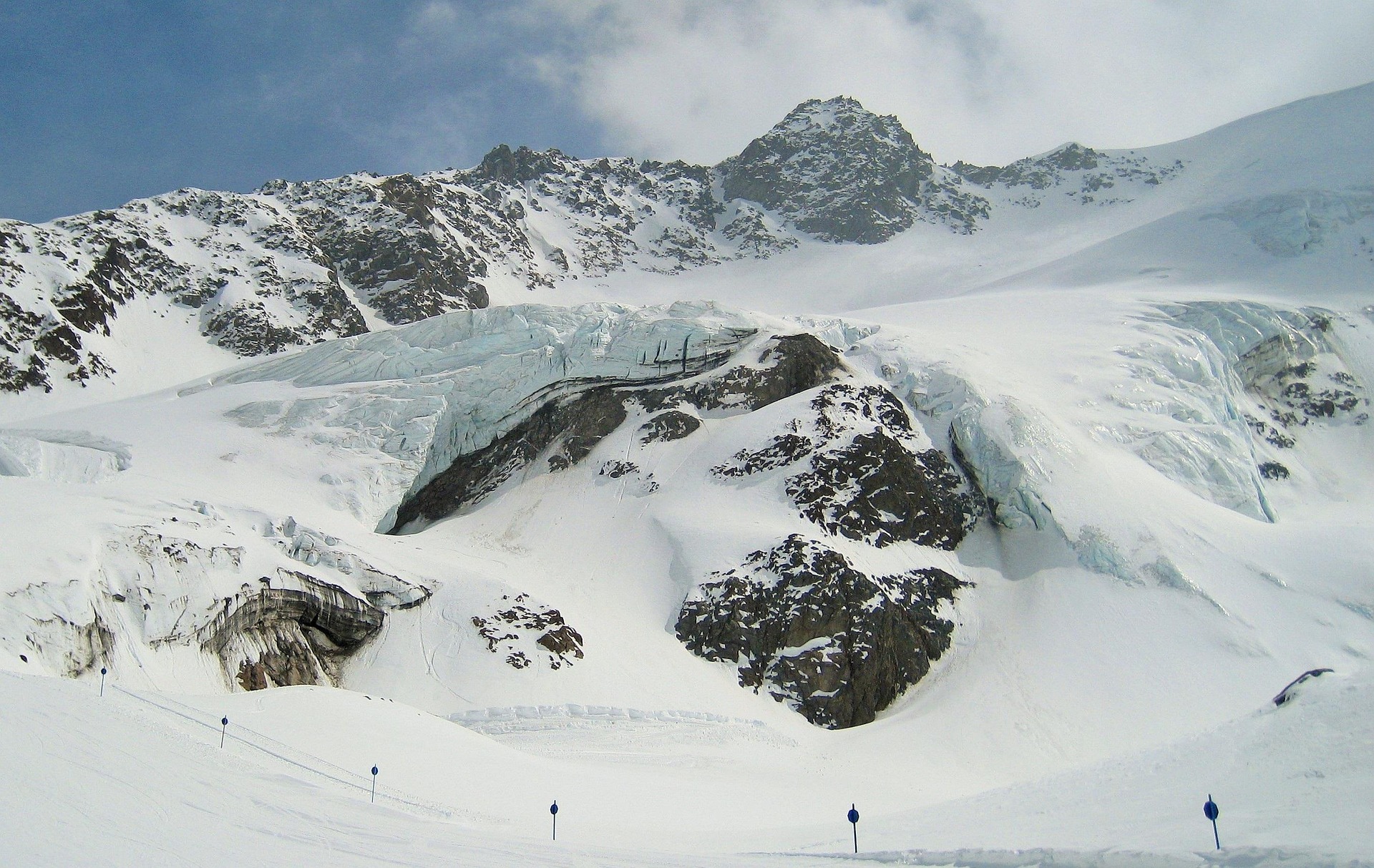
The Weißseespitze glacier preserves thousands of years of history crucial to understanding how our climate has changed in the past and modelling how it could change in the future. By studying trace elements found in ice cores from the depths of the glacier, scientists can chart fluctuations in air pollution over time, from the activity of local mines to the impact of faraway volcanoes. But while this glacier and others in the Alps have survived until now, rising temperatures are melting them rapidly. Scientists call for more research to preserve what we can, while we can.
Ice cores taken from glaciers reveal the air pollution of the past, using atmospheric particles incorporated in snow that fell on the glacier and became ice. Now, scientists have extracted a record of thousands of years’ worth of air pollution from 9.5 meters of ice at the Weißseespitze glacier, close to the border between Austria and Italy. But this ice is under threat from global warming, and scientists warn that it is now a race against time to capture critical climate information locked in these glaciers before it’s gone forever.
“These remarkable climate archives function much like a history book: past atmospheric conditions and environmental changes are recorded in their layers,” said Dr Azzurra Spagnesi of the University Ca’ Foscari of Venice, lead author of the article in Frontiers in Earth Science. “Alpine glaciers offer a unique opportunity to investigate the critical transition between pre-industrial and industrial times, because of their proximity to human settlements.”
Frozen in time
In 2019, the team visited Weißseespitze and drilled down to the bedrock to take an ice core nearly 10 meters long. They used argon isotope data to estimate the age of its layers, showing that the surface of the glacier formed between 1552 and 1708 CE, while the deepest layer dated back to 349 BCE and 420 CE. Then they analyzed the core for traces of 18 different elements, microcharcoal, levoglucosan — a chemical compound that forms when wood burns — and carboxylic and dicarboxylic acids.
“Between 700 and 1200 CE, lead and other metals showed very low concentrations, reflecting the regional background of a mostly unpolluted pre-industrial environment,” explained Spagnesi. “From roughly 950 CE onward, peaks in arsenic, lead, copper, and silver appear, corresponding to periods of intensified medieval mining and smelting in the Alps and other European regions.”
“Some of the strongest metal peaks also coincide with major volcanic eruptions, as well as periods of dry climate and increased dust transport,” Spagnesi added. “This suggests that both natural events and human activities contributed to the chemical signals preserved in the ice.”
The scientists found a striking peak in chemical pollution between approximately 902 and 1280 CE. They compared this to the levels of microcharcoal found in cores of peat taken from nearby swampy areas and found matching peaks, which confirms that fires were more common and more intense in this region during this period.
“The elevated fire signal we observe during the roughly century-long drought between about 950 and 1040 CE is likely the result of several interacting factors,” said Spagnesi. “Such dry conditions can promote cycles of vegetation growth followed by desiccation, creating highly flammable landscapes that are more prone to burning. At the same time, human activity in Alpine regions appears to have intensified. Historical and paleoenvironmental evidence points to increased grassland management, agricultural expansion, and land clearing, all of which commonly involved fire. Periods of conflict may have contributed locally, either through deliberate burning or accidental ignitions.”
“However, although the age–depth scale was substantially improved by adding 39Ar dating to the radiocarbon constraints previously used, the remaining uncertainties are still relatively large,” cautioned Spagnesi. “This makes it more challenging to link individual chemical peaks to specific events.”
Melting away
At Weißseespitze, local mining and other human activities drove peaks in pollution, while natural factors like volcanoes amplified them. But anthropogenic emissions can only account for about 7% of the air pollution recorded in the ice core. Emissions caused by humans appear as peaks against a comparatively stable, natural background — which is sadly not the case today.
The scientists have continued to return to Weißseespitze for research. But alarmingly, a visit to the drilling site in 2025 showed that the ice was now only 5.5 meters deep. Unless we act now to sample these disappearing glaciers, the information they carry will be lost.
“Glaciers in the Ötztal Alps are projected to disappear within the coming decades,” said Spagnesi. “If glaciers disappear, the chemical and physical information they contain will be lost forever, leaving gaps in our understanding of past climate variability. In this sense, preserving glaciers is not just about protecting ice. It is about safeguarding the memory of Earth’s climate.”
Multimedia

Attachments
Note: Not all attachments are visible to the general public. Research URLs will go live after the embargo ends.


