Sign In



 International
News release
From:
Mangrove habitats across the oil-rich Gulf region are facing significant threats despite ongoing efforts to conserve these salt-tolerant coastal forests, locally valued for their medicinal properties, ecological importance, and cultural heritage.
Researchers at the University of Sharjah warn that mangroves in the region’s littoral states remain vulnerable to development and pollution despite the relative success of a few restoration schemes in places like the United Arab Emirates (UAE).
“While specific total loss figures vary by study period, the region faces severe threats, especially from coastal development and pollution, despite successful restoration projects in places like Abu Dhabi,” the authors note in a study published in the journal Regional Studies in Marine Science.
The research reviews existing literature on mangroves in the Middle East in general, with a particular focus on the Arabian Gulf’s littoral states: Saudi Arabia, Iran, Oman, Yemen, Bahrain, Qatar, and the UAE.
Globally, there are about 80 species of this remarkable tree, renowned for its ability to withstand hypersalinity and extreme heat. Yet, mangrove coverage has been shrinking at an alarming rate from roughly 18.1 million square kilometers to 15 million worldwide, driven primarily by land conversion, aquaculture expansion, and rapid urbanization.
In the Arabian Gulf, the situation is equally concerning. A recent assessment by the International Union for Conservation of Nature (IUCN) classifies mangrove ecosystems as vulnerable, noting a 14.3% decline in total mangrove area since 1996. If current trends continue, the region’s mangrove coverage is projected to shrink by an additional 45% over the next 50 years, according to the report.
The harsh environmental conditions in the Arabian Gulf’s coastal states have limited the tree’s diversity to just two species: Avicennia marina (gray mangrove) and Rhizophora mucronata (red mangrove), with the former being more widespread and dominant.
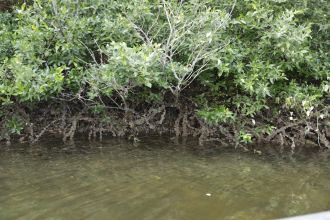
“The gray mangrove (Avicennia marina) is integral to coastal life in the arid Arab region,” the study explains. “It can thrive in extreme conditions such as high salinity, scorching temperatures, and drought. As a result, it supports a rich web of marine and terrestrial species and offers a natural shield against coastal erosion and storm surges. Its intricate root systems stabilize shorelines and help protect the coastal areas from the impacts of rising sea levels.
“In addition, Avicennia marina is deeply linked to the culture of the local people. Local communities have relied on its wood for fuel and construction for generations. Moreover, the gray mangrove is considered a symbol of resilience in regions with scarce resources, demonstrating the enduring strength and adaptability of those who have coexisted with it for centuries.”
Despite restoration, mangroves are in peril
Mangroves in the Arabian Gulf have long been intertwined with the livelihood and cultural heritage of the region’s coastal communities. Beyond their ecological importance, they sustain marine biodiversity, serve as a source of food, and supply timber and tannins. The forests play a critical role in soil formation, nutrient cycling, and maintaining ecosystem balance.
However, mangrove habitats across the Middle East have suffered loss and degradation. Studies and U.N. reports indicate a net loss of 272 square kilometers – approximately 48.8% from 1980 to 2020, driven largely by urbanization, oil industry activities, and aquaculture.
The United Arab Emirates hosts the region’s largest mangrove habitat, covering an area of about 183 square kilometers. Despite ambitious preservation initiatives, the country experienced habitat loss, primarily due to coastal development, dredging, rising sea levels, pollution, and land reclamation for artificial islands. Encouragingly, large-scale restoration projects are reversing some of this decline.
Other Gulf nations have faced similar challenges. Estimates suggest mangrove habitat reductions of over 50% in Saudi Arabia and around 44% in Iran, the two countries with the next largest coverage. “Preserving this species and the vital services it provides requires integrated conservation strategies that combine ecological science, traditional knowledge, and community stewardship,” the authors emphasize.
Balancing tradition, ecology, and tourism
Arabian Gulf countries are increasingly leveraging the ecological and economic benefits of their mangrove forests. While the primary goal remains to enhance biodiversity, safeguard ecosystems, and strengthen coastline defenses, nations such as the UAE are transforming these habitats into sustainable economic ventures.
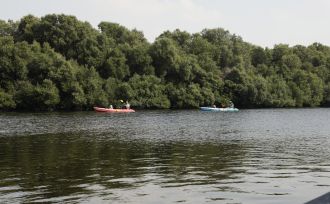
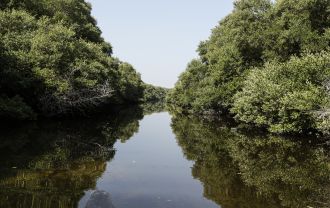
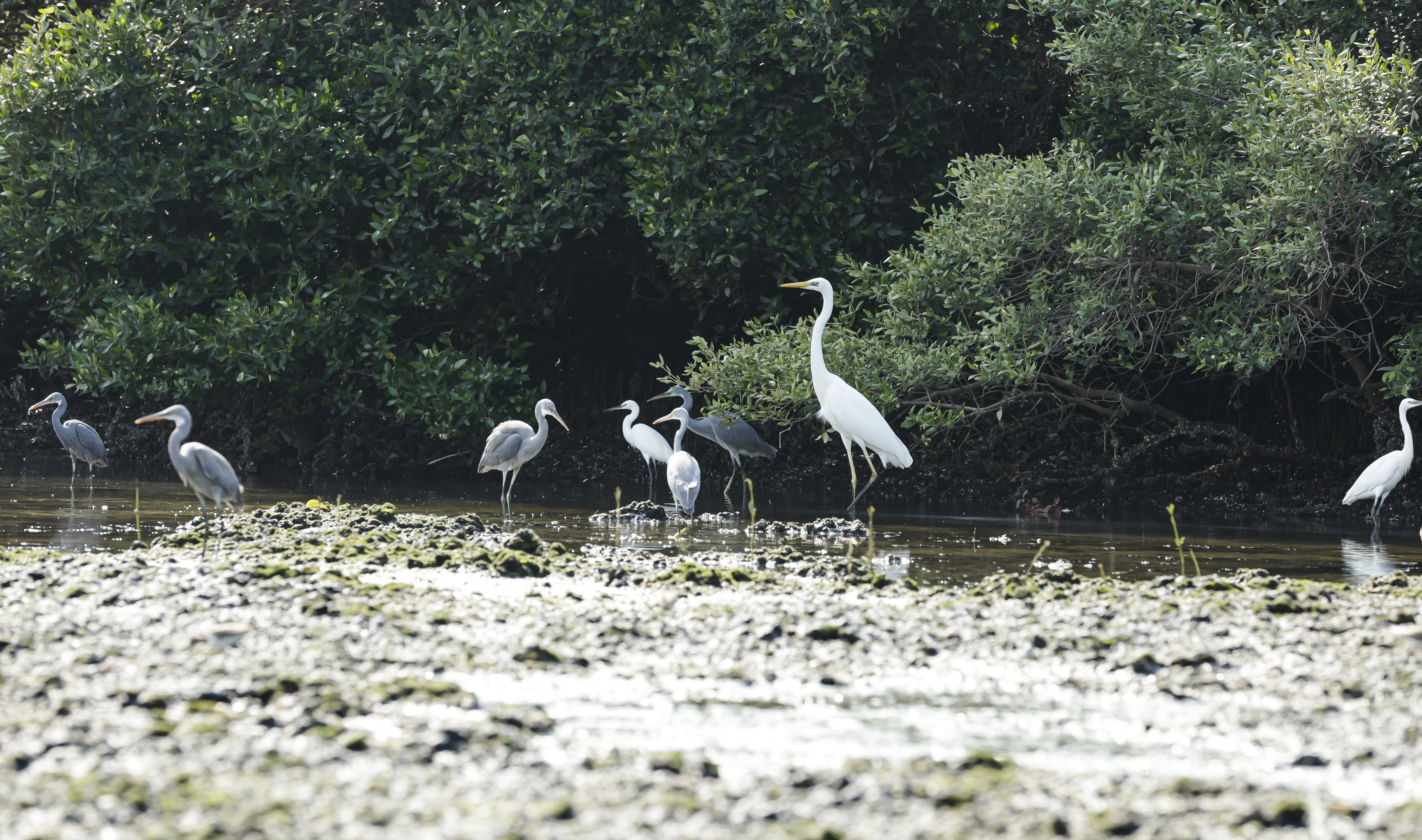
For example, the mangroves in Ajman have become a popular tourist destination, with an entry fee of approximately $50 per person. Visitors can explore lush waterways through guided kayaking and paddleboarding tours. The sanctuary wetlands, home to nearly 60 bird species, including flamingos, herons, and egrets, offer rich opportunities for birdwatching.
Local communities have long valued Avicennia marina. Before the influx of oil wealth, mangrove forests in the Gulf provided essential food and income, serving as critical breeding grounds for fish, crabs, and shellfish. The timber, prized for its resistance to pests and extreme heat, was widely used for firewood and in constructing boats, houses, and fences.
Shedding light on the history of mangroves, the authors mention that in local lore, the trees are “admired for their resilience and the bounty they represent … They stand as living symbols of endurance in harsh conditions and mirror the deep bond between people, nature, and the divine.
“Moreover, the local communities have long practiced sustainable management of Avicennia marina. Rather than cutting down living trees, they typically collected branches that had naturally fallen, ensuring that the forest could regenerate and thrive for future generations,” they explain. “These practices were also aligned with seasonal cycles; for example, certain areas were left undisturbed during critical periods such as fish breeding seasons to maintain ecological balance.”
Call for policy and community action
The authors, drawing on established scientific research, assert that Avicennia marina continues to face escalating threats from urban expansion, industrial growth, climate change, overharvesting, and the influence of fossil fuel activities.
To safeguard this species, which constitutes the majority of the region’s mangroves, the researchers propose a suite of conservation strategies that aim to “bridge ecological science, traditional knowledge, and community stewardship.” They also call for further phytochemical research to explore the tree’s pharmaceutical potential and create economic incentives that align conservation with development goals.
Among the priority actions outlined are the establishment and expansion of community-led nurseries in high-risk areas to promote participatory restoration. Given that mangrove ecosystems serve as highly effective carbon sinks, taking in carbon dioxide from the air, the authors urge national authorities to implement carbon credit schemes, an approach successfully adopted in mangrove-rich countries such as Kenya.
Such initiatives are relatively straightforward to introduce and can transform blue carbon stored in mangroves into an economically viable project that benefits local communities. Incorporating Avicennia marina into national carbon credit programs, the authors argue, can mobilize climate finance and incentivize long-term conservation.
In conclusion, the authors emphasize that mangroves in the Arabian Gulf represent not only a unique and resilient species but also a strategic entry point for advancing sustainability in the region. Mangroves in the Arabian Gulf, they write, are “a powerful entry point for advancing sustainability. [Their] protection requires a coordinated, interdisciplinary approach that is locally rooted, scientifically informed, and policy supported.”
Multimedia