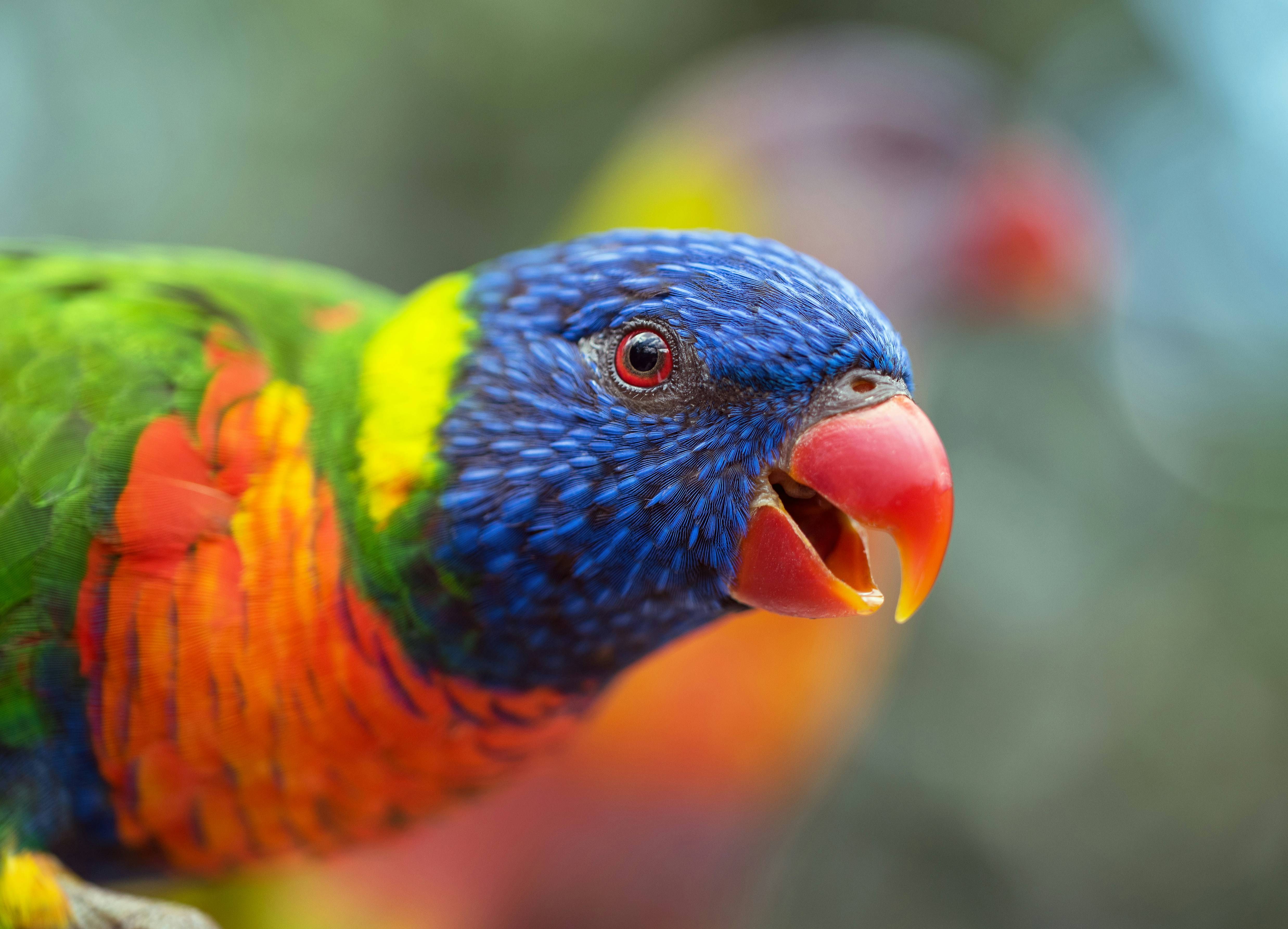
How Aussie birds have evolved to eat sugar all day

Publicly released:
Australia; NSW
Photo by David Clode on Unsplash

If we ate sugar like rainbow lorikeets, honeyeaters, and sunbirds do, we'd risk diabetes, but somehow these Aussie birds have evolved to thrive on a diet of fruit and nectar, and now Australian and international research have found the genes that help them do it. They have found that parrots, honeyeaters, sunbirds, and hummingbirds share evolutionary changes in genes involved in energy balance, sugar metabolism, insulin signalling, and even blood pressure regulation. The researchers say that some changes were also specific to some types of birds, suggesting that while natural selection targeted similar biological systems, it did so via multiple genetic routes.

News release

From: AAAS

Genomic adaptations to high sugar diets in sugar-consuming birds
Science


While high-sugar diets can trigger significant health issues for humans, some birds have independently evolved to flourish on sugar-rich nectar and fruit without ill effect. In a new study, researchers find that these bird species share convergent evolutionary changes in key physiological traits and metabolic genes that enable their high-sugar diets. High-sugar diets are harmful in humans and can lead to serious metabolic diseases like type 2 diabetes. However, several unrelated bird groups, such as hummingbirds, sunbirds, honeyeaters, and some parrots, have independently evolved to thrive on sugar-rich nectar and fruit. Birds differ from mammals in how they regulate blood sugar, maintaining naturally high glucose levels and relying less on insulin. Nectar-feeding species have further evolved specialized beaks, tongues, digestive enzymes, and water-balancing mechanisms to handle sugar-rich diets. Although previous studies, namely those in hummingbirds, have identified genetic changes linked to these traits, it remains unclear whether separate sugar-feeding lineages evolved similar adaptations through the same genes or via different molecular pathways.

To better understand how sugar-feeding bird species have genetically adapted to sweet diets, Ekaterina Osipova and colleagues generated high-quality reference genomes for five nectar- and fruit-eating species, alongside four related non-sugar feeding birds.  Comparative genomic screens across sugar-feeding species revealed convergent evolutionary changes in many of the same protein-coding and regulatory regions of genes involved in energy balance, sugar metabolism, insulin signaling, and even blood pressure regulation, suggesting that adaptation to sugar-loaded diets requires coordinated shifts across multiple physiological systems. According to Osipova et al., not all adaptations were unique to particular lineages, suggesting that while selection targeted similar biological systems, it did so via multiple genetic routes. Among the most prevalent genomic adaptations shared, which was observed across all studied sugar-consuming lineages, was repeated evolutionary change in MLCIPL, a transcription factor that regulates glucose metabolism and lipogenesis. Osipova et al. argue that alteration in this gene helps sugar-feeding birds efficiently convert excess glucose into fat for storage, then draw upon those reserves during fasting, which provides a specialized metabolic strategy that supports sugar-based diets.

Attachments

Note: Not all attachments are visible to the general public. Research URLs will go live after the embargo ends.

Research AAAS, Web page Please link to the article in online versions of your report (the URL will go live after the embargo ends).
Journal/
conference:
Science
Research:Paper
Organisation/s: University of Wollongong, Max Planck Institute for Biological Intelligence, Germany, LOEWE Centre for Translational Biodiversity Genomics/Senckenberg Research Institute/Goethe-University, Germany, Harvard University, USA
Funder: This work was supported by the LOEWE-Centre for Translational Biodiversity Genomics (TBG) funded by the Hessen State Ministry of Higher Education, Research and the Arts (LOEWE/1/10/519/03/03.001(0014)/52), the Max Planck Society and funding from the Putnam Expedition Grant (Harvard University) to M.W.B., and grants from the German Research Foundation (DFG) (HI1423/4-1 and SCHU 2546/7-1). E.O. was additionally supported by NSF DEB-1754397 to T.B.S. S.Y.W.S. and S.V.E. were supported by US National Science Foundation grant 1258828. K.M.P. and M.S. were supported by the DFG (project ID 415542650). K.M.P. was also supported by the Sonnenfeld Foundation Berlin. A.R.-G. was supported by the Walt Halperin Endowed Professorship and the Washington Research Foundation as distinguished investigator. We thank the support and expertise provided by the Protein Production Core Facility of the Max Planck Institute of Biochemistry. Genome sequencing of A. apus, N. hollandicus, L. galgulus, and P. penicillata was performed by the LongRead Project of the Max Planck Institute of Molecular Cell Biology and Genetics (MPI-CBG), as part of the DcGC Dresden-concept Genome Center, a core facility of the CMCB and Technology Platform of the TUD Dresden University of Technology, and was supported by the Next Generation Sequencing Competence Network (DFG project 423957469). The authors acknowledge support from the National Genomics Infrastructure in Stockholm funded by Science for Life Laboratory, the Knut and Alice Wallenberg Foundation and the Swedish Research Council, and NAISS/Uppsala Multidisciplinary Center for Advanced Computational Science for assistance with massively parallel sequencing and access to the UPPMAX computational infrastructure.
Media Contact/s
Contact details are only visible to registered journalists.