Sign In



 Australia; International; SA

News release
From:
Duckweed is the fastest-growing flowering plant, but new knowledge of duckweed genetics discovered by Adelaide University researchers could lead to even faster growing rates.
The research team, led by Professor Nikolai Borisjuk at the Institute of Cell Biology and Genetic Engineering in Kyiv, Ukraine, described for the first time the architecture of the duckweed 5S ribosomal DNA (rDNA) chromosomal locus at the nucleotide level.
“We have used a multidisciplinary approach for 5S rDNA loci, to understand their evolutionary trajectories and formulate principles for biological function in the biogenesis of ribosome, which is a cell structure responsible for protein synthesis in all eukaryotic organisms,” said study co-author Professor Maria Hrmova, from Adelaide University’s School of Agriculture, Food and Wine.
“The definition of plant rDNA loci in aquatic duckweed plant could impact protein design, creating more efficient and faster-growing plants.”
Duckweed is ubiquitous, flourishing worldwide in ponds, water reservoirs, and marshland areas. In these environments, duckweed purifies water by absorbing contaminants, such as nitrogen and phosphorus fertilisers, and using them as nutrients.
Duckweed’s rapid growing rate, free-floating form and high protein content have made it a popular plant among scientists looking for ways to supply astronauts with fresh food on long journeys away from the Earth’s surface.
Professor Hrmova said the research highlights the broad-ranging impacts of genetic research.
“Duckweed provides food and protection for aquatic life, controls wastewater treatment and the growth of algae, and serves as an alternate high-protein food source for humans and animals,” she said.
“Sequenced DNA enables the reading of the genetic code, essentially unlocking the blueprint of life, allowing for an understanding of complex biological functions.
“This knowledge could be applied to disease diagnostics and drug design, tracking pathogens, tracing evolution, and improving agriculture for food production, and, therefore, for humans.”
The research included the collaborators from Australia, China, Germany, Slovakia, Ukraine and the United States, and was published in the Nature Portfolio journal Communications Biology.
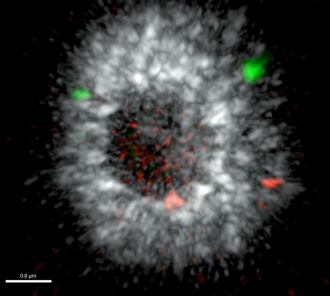
See an animation of fluorescence signals in a duckweed nucleus using 3D illumination microscopy here.
Multimedia