 Sign In



 New Zealand; International
News release
From:
Climate change: Glacier disappearance projected to peak mid-century
The number of glaciers disappearing worldwide each year is projected to sharply increase, peaking at 2,000–4,000 per year around the middle of the century, depending on the level of warming above pre-industrial levels, according to a modelling study published in Nature Climate Change. The authors note that limiting warming to 1.5 °C could more than double the number of glaciers that remain by 2100 compared to a 2.7 °C warming scenario and prevent near-complete loss under 4.0 °C warming.
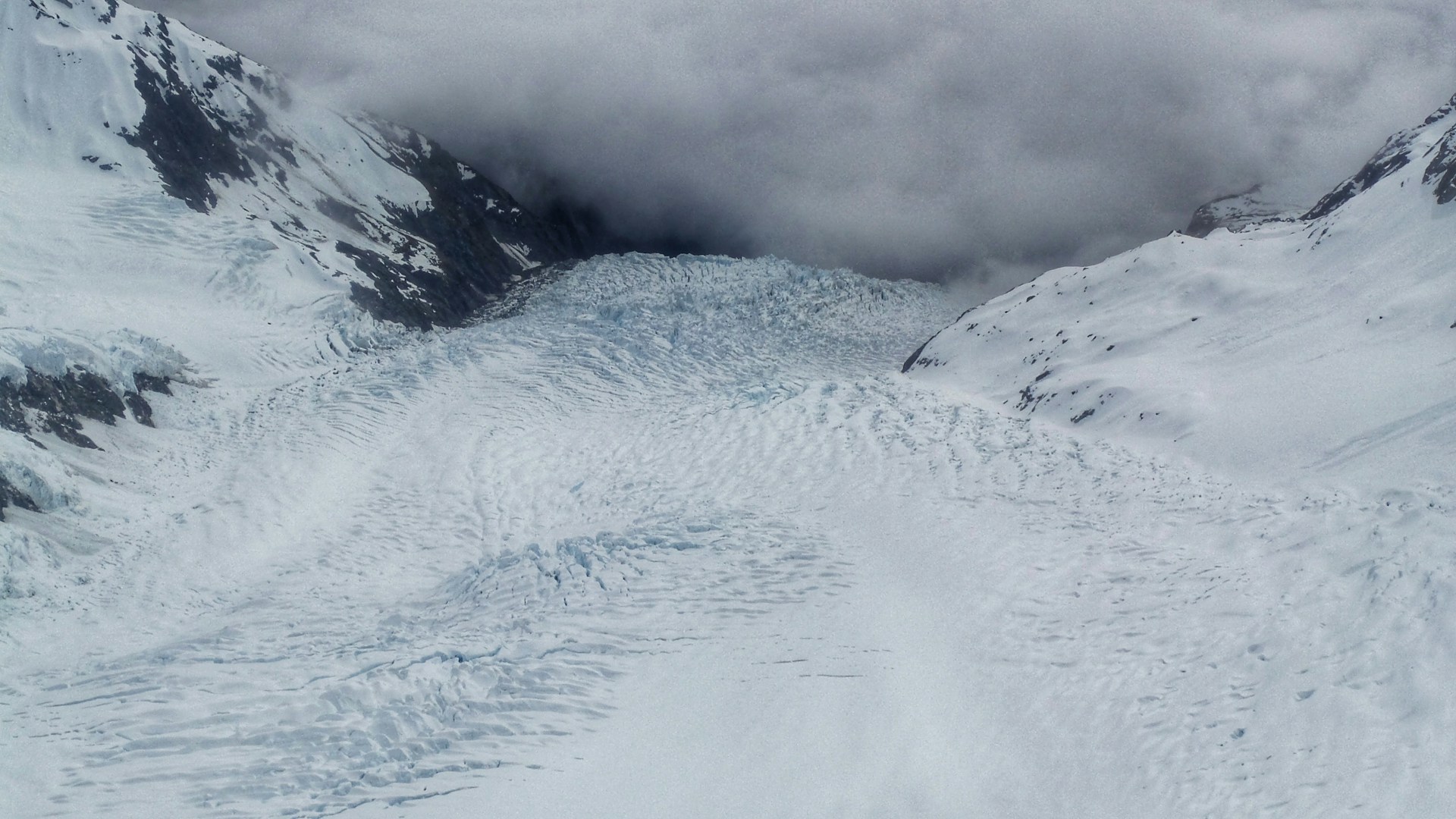
Glaciers are retreating rapidly across the globe, a trend that has been linked to rising sea-levels. However, the disappearance of individual glaciers also carries cultural, spiritual and economic consequences. Glaciers have a cultural and spiritual meaning in some communities, attract millions of visitors annually, and are an important source of water for downstream regions.
Lander Van Tricht and colleagues analysed more than 200,000 glaciers from a database of glacier outlines observed by satellites using three global glacier models under four warming scenarios: 1.5 °C, 2.0 °C, 2.7 °C and 4.0 °C above pre-industrial levels by 2100. They introduce the concept of ‘peak glacier extinction’ — the year when the largest number of glaciers vanish. Results show that under 1.5 °C warming, glacier disappearance will peak at around 2,000 glaciers per year in 2041. Under 4.0 °C warming, this peak occurs later due to the associated longer and stronger glacier area and volume loss, and could rise to about 4,000 glaciers per year by the mid-2050s. Regions dominated by small glaciers, such as the European Alps and the Subtropical Andes, are projected to experience early peaks with 50% of glaciers potentially disappearing in the next two decades. Areas with larger glaciers, including Greenland and the Antarctic periphery, are projected to experience peak glacier disappearance later in the century.
The findings highlight a turning point in glacier evolution with implications for ecosystems, water resources and cultural heritage. Future research may refine these projections, but the difference between losing a projected 2,000 and 4,000 glaciers annually mid-century depends on climate policy decisions made today, the authors argue.
Expert Reaction
These comments have been collated by the Science Media Centre to provide a variety of expert perspectives on this issue. Feel free to use these quotes in your stories. Views expressed are the personal opinions of the experts named. They do not represent the views of the SMC or any other organisation unless specifically stated.
Dr Lauren Vargo, Research Fellow, Antarctic Research Centre, Victoria University of Wellington
"This study takes a new approach by focusing on glacier extinction, where previous studies have focused on ice volume loss. For Aotearoa New Zealand, the key message isn’t new: with 3°C or more of warming, we'll likely lose about 90% of the glaciers that we have today. However, if we were to keep warming to 1.5°C, roughly half of our glaciers would survive, showing that every fraction of a degree matters for climate change mitigation. Notably, glaciers in Aotearoa are important taonga and are important for tourism, and their melt may impact freshwater resources and increase hazard risks."

Associate Professor Brian Anderson, Antarctic Research Centre, Victoria University of Wellington, comments:
“This new study provides an important assessment of the future of our glaciers, and it’s a sobering read. Mostly we talk about glacier loss in terms of the mass of ice loss, or the sea-level rise that will result from this loss, but the measurement in this study is the actual number of glaciers that will completely disappear.
“In Aotearoa New Zealand, we have already lost hundreds of glaciers – we counted 264 that had completely disappeared between the years 2000 and 2016. More have disappeared since then, with two being specifically documented in the Global Glacier Casualty list, and we know of 30 named glaciers that have likely disappeared. But, we still have almost 3000 glaciers that can be preserved.
“The message here is not just what we still stand to lose - the glaciers with their ecological, cultural, and economic importance. But it is also how many glaciers we can still preserve - the outcomes are vastly different between whether we continue our pathway of emissions which will result in most glaciers in Aotearoa New Zealand being lost. Alternatively, if we limit greenhouse gas emissions strongly, stick to the Paris agreement, we still have around half of our glaciers at the end of this century.”
Associate Professor Heather Purdie, School of Earth and Environment, University of Canterbury, comments:
"This is an important study that has quantified the current rapid demise of glaciers globally from a ‘numbers’ perspective, rather than using more common metrics like changes to area or mass. This is important because losing any glacier whether small or large has consequence. Glaciers are intricately linked to water resources and climate processes that impact landscapes and ecosystems. The lives and livelihoods of people are interwoven with glaciers, through cultural connections, recreation and tourism.
"An interesting result from this new study is the order of magnitude difference in the number of glaciers expected to vanish depending on whether climate warming is limited to 1.5 °C or 2.7 °C, a value aligned with current policy pledges. For glaciers in New Zealand, this is the difference between losing around 1700 glaciers compared to 2800 (80%) glaciers by 2100. I have been studying glaciers in the New Zealand Southern Alps for over two decades and am witness to the accelerating pace and
scale of glacier demise. My recent study published in a special issue on Vanishing Glaciers in the Annals of Glaciology, explains how the Rolleston Glacier, located in Arthurs Pass National Park will likely join the Global Glacier Casualty list by mid-2060. Small glaciers, like the Rolleston, will disappear first leaving behind large debris-covered glaciers that respond more slowly to climate change.
"Every tenth of a degree in temperature matters. Society needs to actively pursue lifestyle and policy choices that will minimise warming, because if we don’t, it won’t just be glaciers going extinct."
Attachments
Note: Not all attachments are visible to the general public. Research URLs will go live after the embargo ends.

