 Sign In



 Australia; International; SA
News release
From:
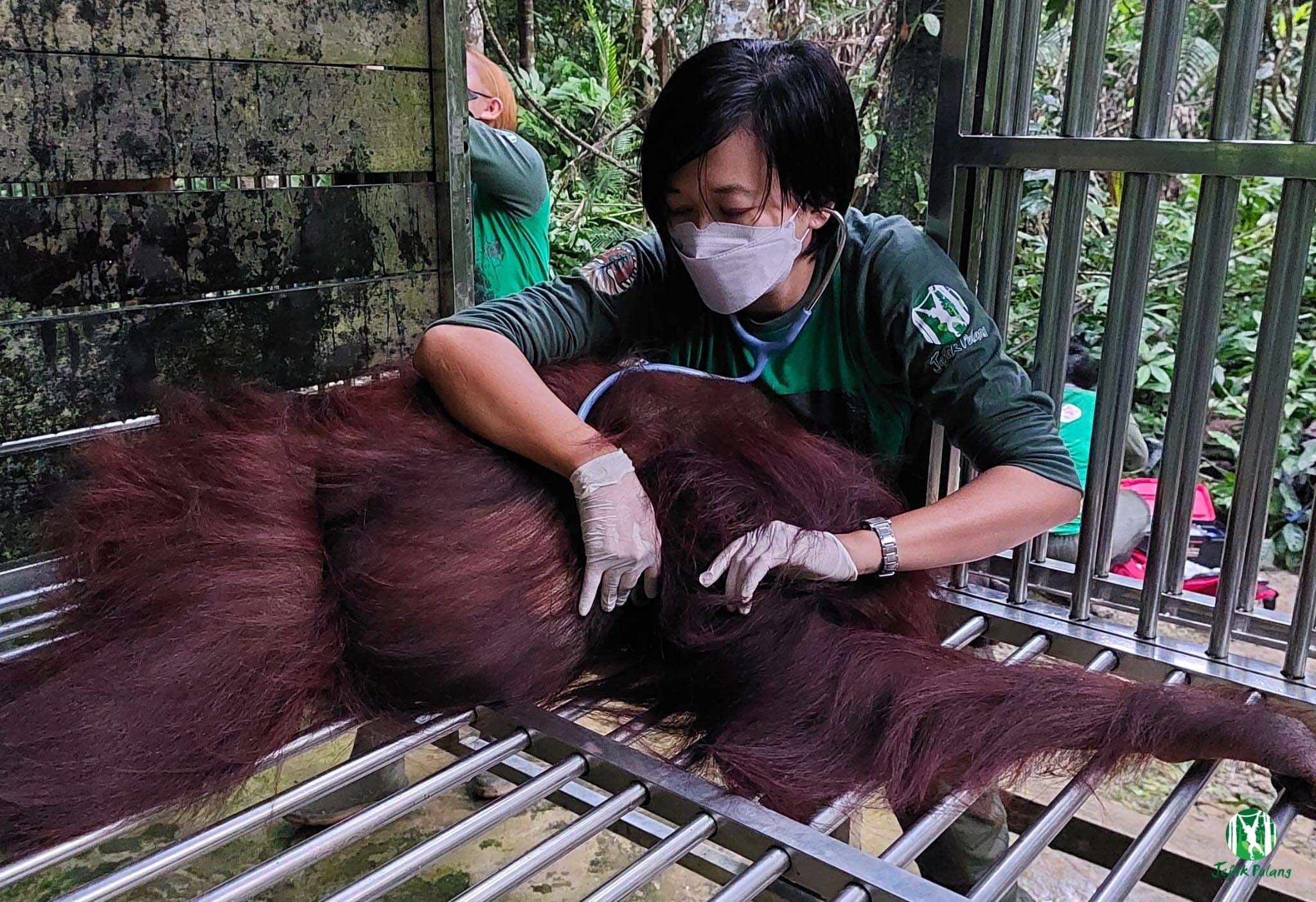
An Adelaide University researcher is leading a PhD project examining health challenges of orangutans in rehabilitation centres in Indonesia to improve long-term outcomes for the guardians of the forest.
“Orangutans, like the other great apes, are threatened with extinction, and this is mainly caused by anthropogenic pressures such as habitat loss, poaching and diseases,” said veterinarian Dr Fransiska Sulistyo, from the University’s School of Animal and Veterinary Sciences in the College of Science.
“Forest clearing for extractive industries and monoculture continues, and natural disasters like forest fire and landslides also contribute to the need to rescue them. Often, by the time they are rescued the animals are in poor condition.”
There are more than 1000 orangutans in rehabilitation centres or that have been reintroduced into the wild, but little is known about the unique health challenges they face.
“This is such a big population, and yet there is so little information on what are the most important health issues, such as diseases, injuries and other abnormalities,” Dr Sulistyo said.
“Understanding the main health problems will help us to make better plans to prevent and address them, and in turn we can improve the success of orangutan reintroduction and conservation.”
Dr Sulistyo will work with multiple orangutan rehabilitation centres in Indonesia to collect and analyse data from medical records and biological samples for pathogen testing.
“The information I collect will be crucial for practitioners and decision makers in rehabilitation centres to improve how they manage the health of the orangutans,” Dr Sulistyo said.
“I hope this work will serve as a pilot project for wildlife health surveillance in Indonesia, where we combine research and conservation activities to gain better understanding about the health of the wildlife, which links with the health of human and the environment.”
Rehabilitation centres are crucial for the success of impacted orangutans – particularly young rescues.
“Young orangutans need to master a range of forest skills that they would otherwise naturally learn from their mothers up until around 7-9 years old,” Dr Sulistyo said.
“Rehabilitation centres try to mimic this through many strategies, such as providing surrogate mothers – either human or orangutan – and forest schools.
“It takes years of training and care to rehabilitate orangutans to the point that we are confident enough that they will be able to survive on their own in the forest again.”
Dr Sulistyo, who has begun her project in Adelaide and will travel to Indonesia in May, said there are many obstacles to success for orangutan rehabilitation centres.
“I’ve been working in this field for more than 15 years, and when I started the main issue was overcrowding and the difficulty in finding suitable forests for reintroduction sites,” she said.
“The number of centres has increased, but it is still a challenge to manage the reintroduced population and make sure they thrive, their habitat is protected, and that they serve their function in the ecosystem as guardians of the forest.”

