Sign In



 New Zealand
News release
From:
New tips for establishing forest giants
Across the motu (country), people from diverse backgrounds are working tirelessly to restore native forests. Making these projects a long-term success involves a complex web of environmental, social and economic factors. It’s often a case of the more you know, the more questions you have.
Dr Sarah Bürli joined the research team from AUT’s Living Laboratory programme to address three questions about big canopy trees to help unlock faster, cheaper and more successful forest restoration efforts:
- Can we establish big canopy trees at the same time as fast growing, nurse species?
- Which planting layout best supports big canopy trees?
- Which environmental factors affect big canopy tree survival?
Why focus on the big canopy trees?
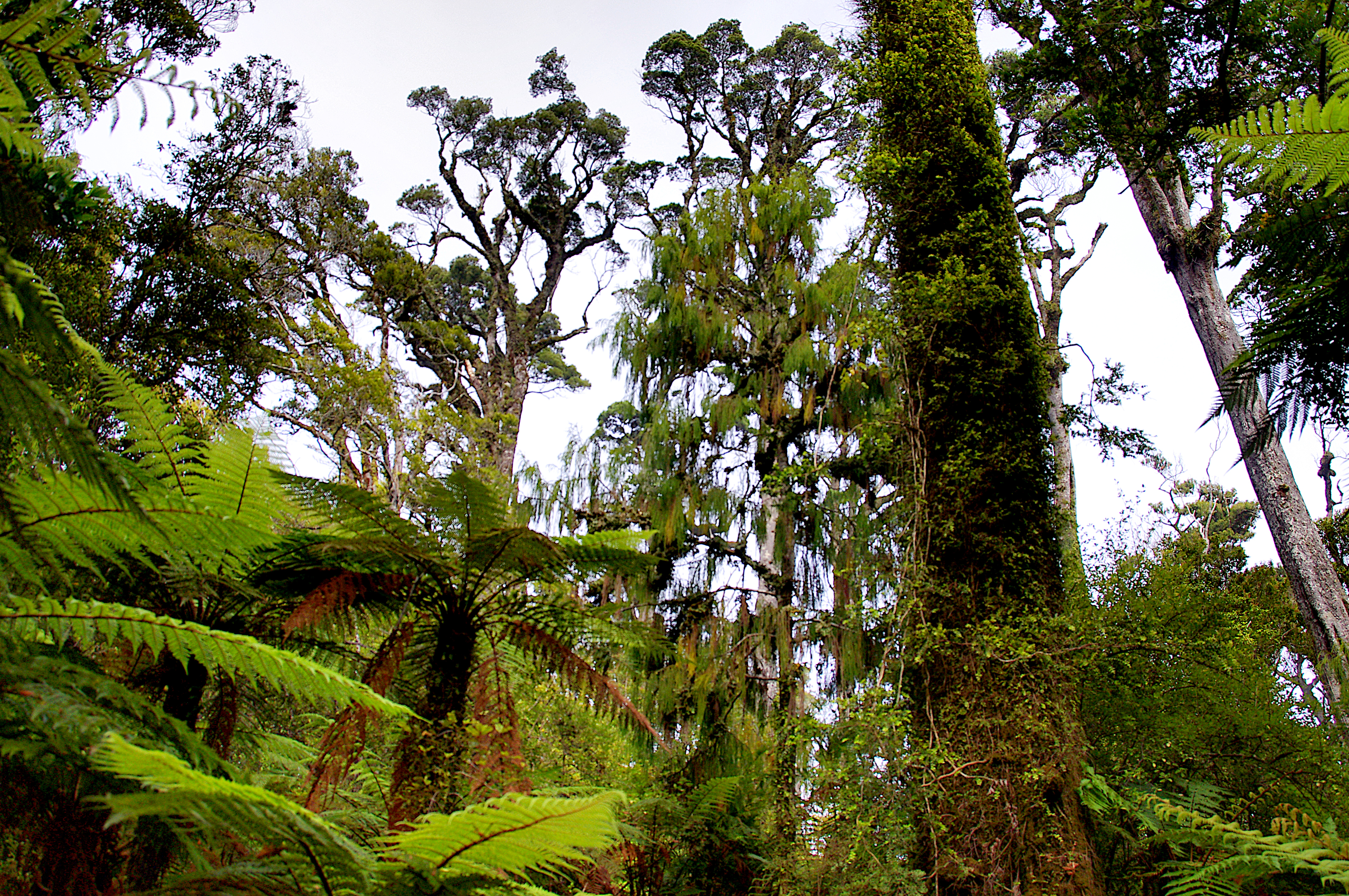
Big canopy trees, also known as late-successional trees, are essential in the restoration of native forests. They play important roles in providing habitat, storing carbon, shaping forest structure, and supporting long-term ecosystem health.
But these species are often difficult to establish in open, early-stage restoration sites, and there isn’t much practical guidance on when and how best to plant them.
Sarah says, “Usually to restore a forest, it is said that we should plant early successional trees first - those nurse plants that come early when a forest develops.
“Then only at a later stage, it is recommended to plant later successional trees – the ones that allow the forest to have multiple layers, fulfil ecosystem services and support biodiversity.”
This staged restoration approach can require more time and may be costing more money than necessary if big canopy trees can be planted at the start – at the same time as their smaller counterparts.
“We were curious to examine what happens if you plant early and late successional trees at the same time,” says Sarah. “Can you achieve a high survival rate when you plant everything at once?”
Tracking trees
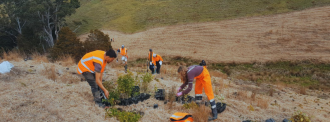
Sarah and the Living Labs team tracked the survival of 1,840 individual canopy trees for three years, which were planted across three forest restoration sites in the greater Tāmaki Makarau Auckland region: Te Muri, Pūkorokoro, and Te Pourewa. Each site had a combination of up to four big canopy species among the following: kahikatea, pūriri, rewarewa, rimu, taraire and tōtara.
Early planting is a strong option
Good news! Four of the six big canopy species (pūriri, rewarewa, kahikatea and tōtara) had high survival rates when planted at the same time as nurse species.
“We only did survival monitoring for the first three years, but this is already very promising to have four species with a very high survival rate” says Sarah.
This suggests that, for some species, we might not need to wait before planting the big canopy species. This means simpler restoration plans and lower costs. However, two species (rimu & taraire) had much lower survival, showing that this approach is not suitable for all species or all sites.
Spacing of nurse species is important
The researchers identified spacing of nurse plantings as a major factor influencing survival of the big canopy trees.
“We found that the most optimal spacing is two metres,” Sarah says, “at smaller spacing, there is likely increased competition and shading of the late successional trees.
“But with spacing larger than two metres, the big canopy trees are likely more exposed to environmental stress”
These results align with existing local guidance called the “Tīmata method” and provides new evidence that two-metre spacing can be an effective approach for establishing big canopy trees.
One more important tip
Ground-level vegetation also turned out to be important for the survival of the big canopy trees. Both living plants and dead plant material around seedlings helped the young plants to survive. This vegetation can help retain moisture, buffer temperature extremes, and reduce the impact of harsh sunlight and wind.
“We conclude that vegetation on the ground, both dead and living, creates a nice, cozy environment for native plantings” says Sarah. “However, kikuyu grass is not part of the vegetation that has a positive impact, as we observed it can smother young plants.”
Right plant, right place prevails
Other findings from the study support the idea that restoration success depends on matching plant species to the right micro-sites, rather than using a single uniform planting approach.
A perfect example was soil conditions affecting survival in different ways at different sites. In some study locations, richer soils supported better survival, while in others, poorer soils were linked to higher survival.
These contrasting patterns suggest that local soil chemistry and microbial communities can strongly influence outcomes, and it is wise to get to know these factors at your site.
The takeaways
Your forest restoration project could benefit from planting nurse and big canopy species at the same time, with two-metre spacing, while paying close attention to local site conditions such as soil, exposure, and ground cover.
Multimedia