Walking with dinosaurs: T rex preferred a slower trek than we thought

Publicly released:
International
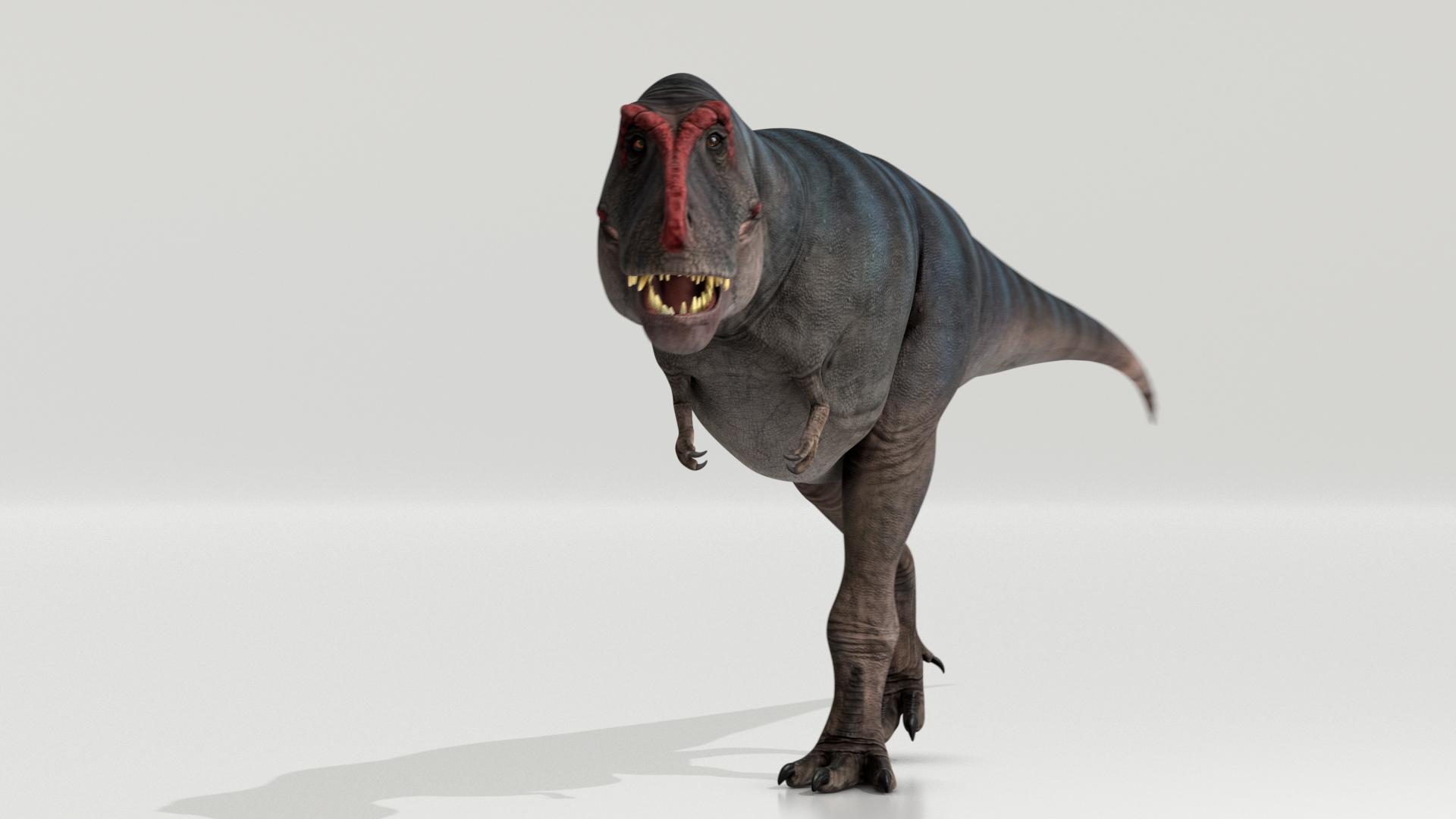
T. rex Trix life reconstruction, perspective view CREDIT Rick Stikkelorum, Arthur Ulmann _ Pasha van Bijlert

The Tyrannosaurus rex may have walked the prehistoric Earth at a slower pace than first thought, roaming the earth at a leisurely 4.6km/h. Using a 3D tail reconstruction and biomechanical model, Dutch researchers estimated the rhythm of T. rex’s swaying tail combined with its stride length and found that the tyrant lizard king had a ‘preferred walking speed’ of 1.28 metres per second - or 4.6 km/h, similar to the natural walking speed of emus, elephants, horses and humans. Dinosaurs that walked on two legs such as the T.rex have tails suspended by spring-like ligaments, and they sway up and down with each step. By matching their walking pace to this natural swinging frequency it reduces the amount of mechanical work required. Some previous estimates had suggested that Therapod dinosaurs such as the T.rex walked at almost double this speed

Media release

From:

  • Walked this way – The Tyrannosaurus rex may have walked the prehistoric Earth at a more leisurely pace than first estimated. Using a 3D tail reconstruction and biomechanical model, Dutch researchers estimated the rhythm of T. rex’s swaying tail, combined with its stride length they calculated a ‘preferred walking speed’ of 1.28 m/s−1. “The walking speeds found here are lower than earlier estimations for large theropods,” the authors said. (Images, animations and explainer video available)

Natural Frequency Method: estimating the preferred walking speed of Tyrannosaurus rex based on tail natural frequency

Royal Society Open Science

Researchers from the Netherlands have developed a new method to estimate the preferred walking speed of Tyrannosaurus rex. Animals tend to walk in ways that minimise energy expenditure, by using resonance of their body parts. While walking, bipedal dinosaurs relied on their tail muscles, but the tail was suspended by spring-like ligaments. The tail would sway up and down with each step, and would resonate when stepping in sync with the tail’s natural frequency. To estimate this frequency, the researchers performed a 3D tail reconstruction of the thus far undescribed T. rex specimen known as Trix. They concluded that its preferred speed was lower than previously thought for such large dinosaurs.

Attachments

Note: Not all attachments are visible to the general public. Research URLs will go live after the embargo ends.

Journal/
conference:
Royal Society Open Science
Research:Paper
Organisation/s: Vrije Universiteit Amsterdam, The Netherlands
Funder: Funding. Nothing to declare
Media Contact/s
Contact details are only visible to registered journalists.