Turtles don't know where they're going when they migrate

Publicly released:
Australia; International; VIC
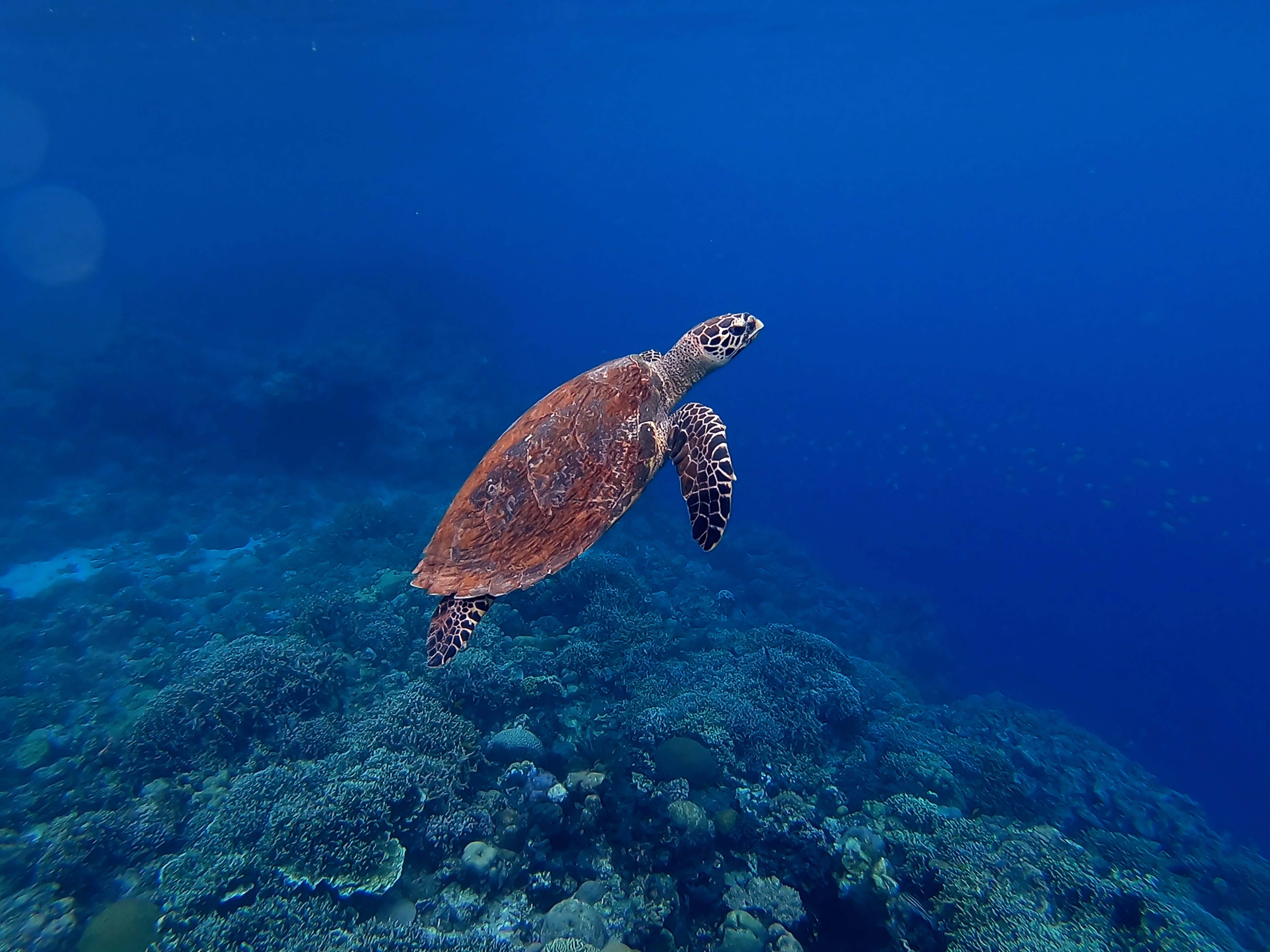
Photo by Olga Tsai on Unsplash

When hawksbill turtles migrate across the oceans they don't really know where they're going, according to Australian and international researchers. The team used GPS tracking data to understand how these turtles are able to navigate long distances to find small, remote islands. Looking at the distance they travelled, the researchers say it's mostly by swimming in circles until they find somewhere to stop, for example one turtle travelled 1306 kilometres to find an island just 176 kilometres away. 

Media release

From: The Royal Society

Travel routes to remote ocean targets reveal the map sense resolution for a marine migrant

Journal of the Royal Society Interface

How animals navigate across the ocean to isolated targets remains perplexing >150 years since this question was considered by Charles Darwin. We used high-resolution Fastloc-GPS tracking for post-breeding hawksbill turtles (Eretmochelys imbricata) to show individuals often followed circuitous paths when migrating short distances, which provides compelling evidence that they only have a relatively crude map sense in the open ocean.

Attachments

Note: Not all attachments are visible to the general public. Research URLs will go live after the embargo ends.

Research The Royal Society, Web page The URL will go live after the embargo ends
Journal/
conference:
Journal of the Royal Society Interface
Research:Paper
Organisation/s: Deakin University
Funder: This work was supported by the Bertarelli Foundation as part of the Bertarelli Programme in Marine Science (grant no. BPMS-2017-4).
Media Contact/s
Contact details are only visible to registered journalists.