 Sign In



 International
News release
From:
Palaeontology: Examining the transition from scales to feathers in a feathered dinosaur
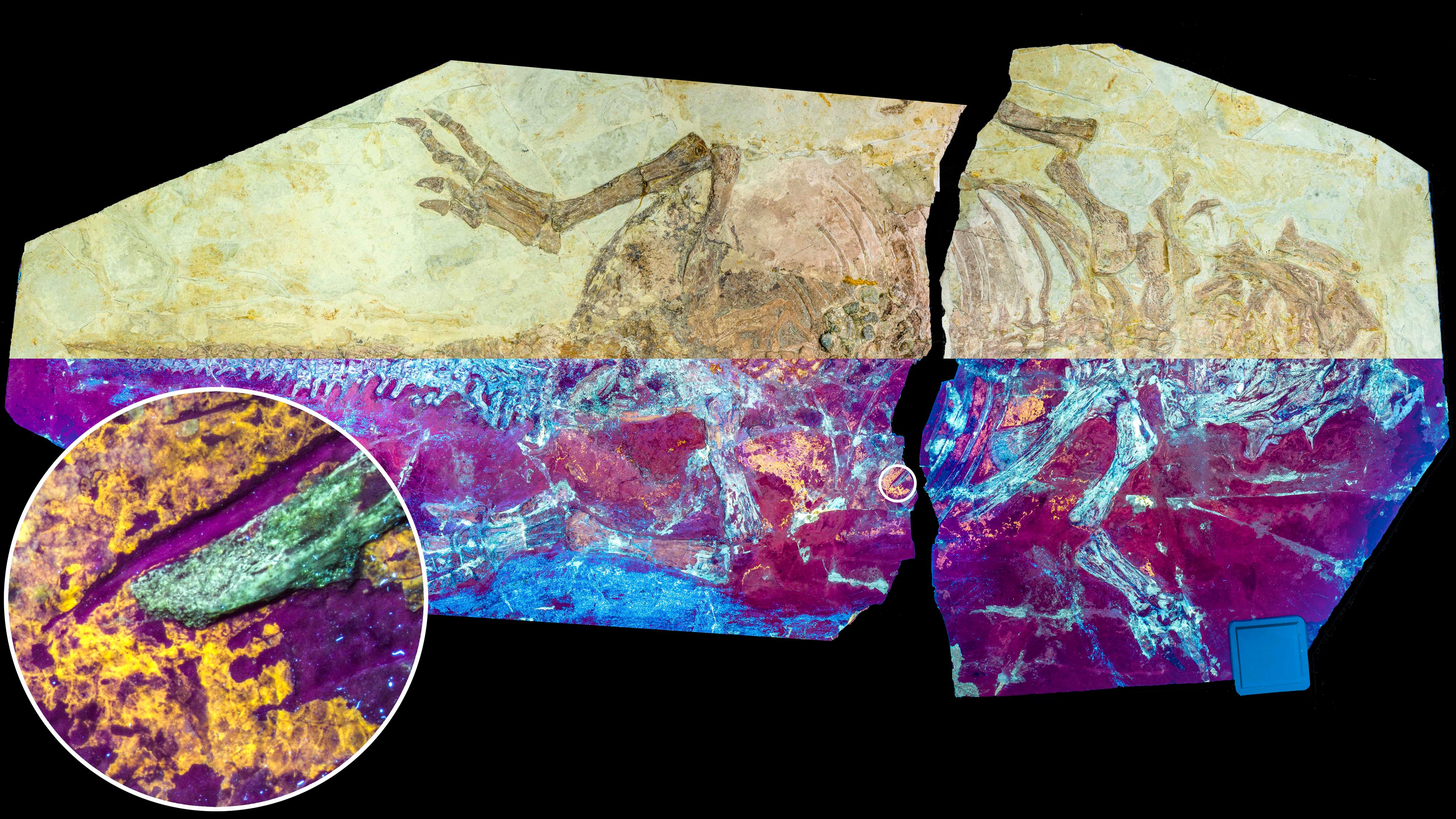
The feathered dinosaur Psittacosaurus possessed areas of reptilian scales on its skin, according to a Nature Communications paper published this week. These insights may help to improve our understanding of the evolution of reptile and bird skin.
Feathers are associated with complex skin adaptations to facilitate feather growth, flight, and heat regulation, making feathered skin distinct from scaley, reptilian skin. However, the details of the transition between these two skin types in early, feathered animals is unclear.
Zixiao Yang and colleagues investigated skin evolution using samples from a fossilised Psittacosaurus from the Early Cretaceous Jehol Biota of China, a feathered dinosaur that lived about 130 million years ago and preserves feathers only on the tail. They were then able to explore the structure of the skin cells using ultraviolet fluorescence and electron microscopy.
The samples showed two layers of skin, which strongly resemble the epidermis and corneocyte layers of living reptiles, as well as being distinct from the skin of birds living today. They also found preserved melanosomes (the remains of skin pigment), which may indicate regions of colour patterning consistent with the scales of living reptiles. These findings support the hypothesis that Psittacosaurus retained the scaley, reptilian skin of its ancestors on the parts of its body without feathers, and that the features of modern avian skin were only present in the feathered areas of its body.
The authors suggest that the retention of this reptilian skin during the early stages of feather evolution could have protected skin function and illustrates an important adaptive transition during feather evolution.

