 Sign In



 International
News release
From:
Climate change: Amazon rainforest may be approaching tipping point *PRESS BRIEFING*
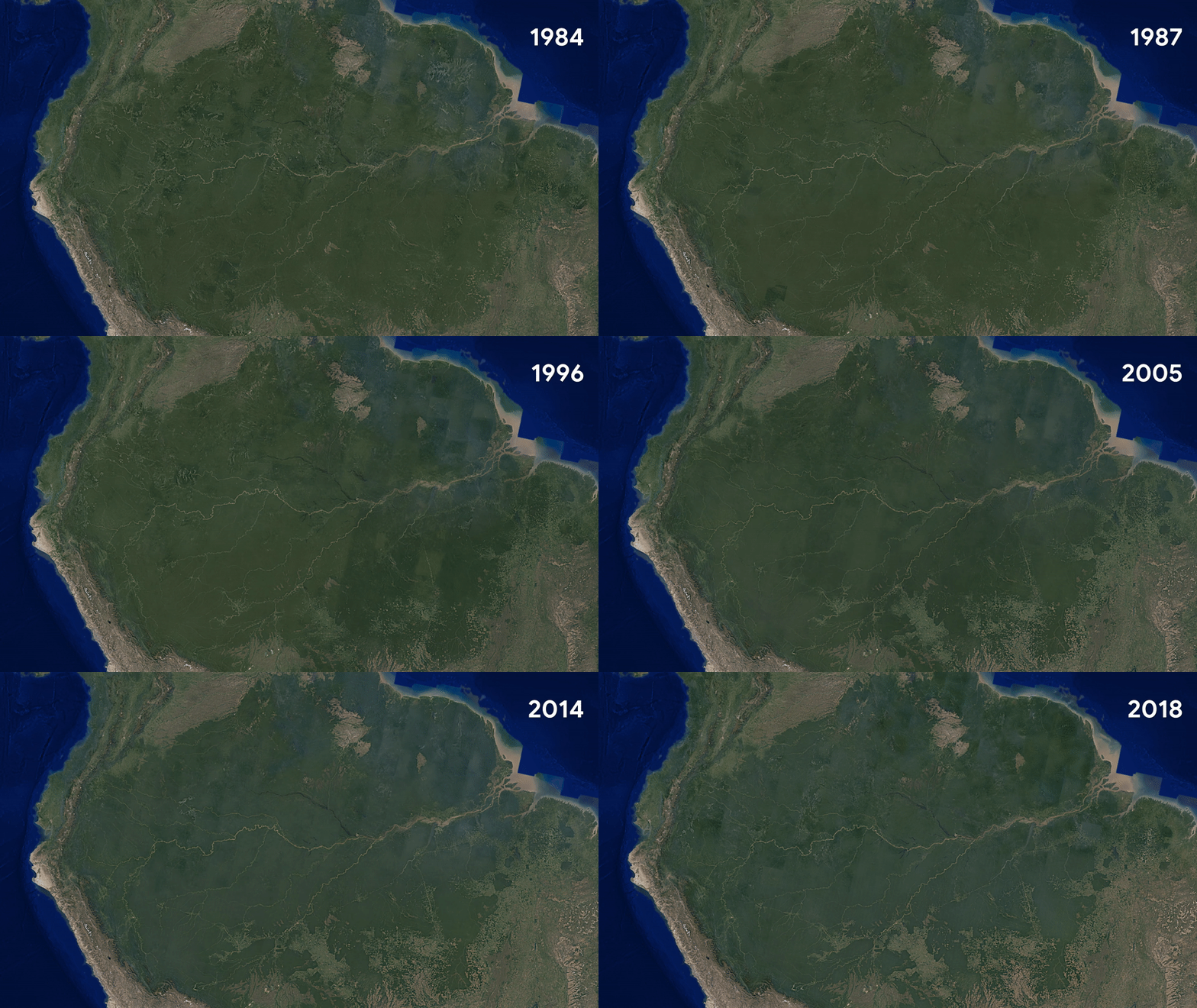
The Amazon rainforest may be nearing a tipping point of rainforest dieback —the point where rainforest will turn to savannah — with signs of resilience loss being found in over 75% of its area since the early 2000s, according to observational evidence presented in Nature Climate Change.
Tropical forests such as the Amazon play a critical role in climate regulation. Climate change and human-induced activities such as deforestation, however, have been putting increasing pressure on the Amazon rainforest in recent decades.
Using satellite remote sensing data, Chris Boulton and colleagues determine changes in the resilience —the ability of an ecosystem system to recover from a disturbance — of the Amazon rainforest between 1991 and 2016. The team combine this information with data on forest cover as a measure of the mean state of the ecosystem, as well as climate data. Analyses reveal that 75% of the Amazon has been losing resilience since the early 2000s, indicating that the forest may be approaching a critical transition. Loss of resilience is most prominent in areas that are closer to human activity, as well as in those that receive less rainfall. Importantly, loss of resilience does not coincide with a loss in the forest cover, implying that the forest could be nearing a tipping point without showing changes in its mean state.
The authors conclude that these findings are important as they provide observational evidence that drier conditions and deforestation are likely pushing the Amazon towards a critical threshold.
**Please note that an online press briefing for the paper below will take place UNDER STRICT EMBARGO on Thursday 03 March at 3pm London time (GMT) / 10am US Eastern Time**
Author Chris Boulton will discuss the research. This will be followed by a Q&A session.
To attend this briefing you will need to pre-register by following the link here. Once you are registered, you will receive an email containing the details for the briefing. You will also be provided with the option to save the details of the briefing to your calendar.
Attachments
Note: Not all attachments are visible to the general public. Research URLs will go live after the embargo ends.


