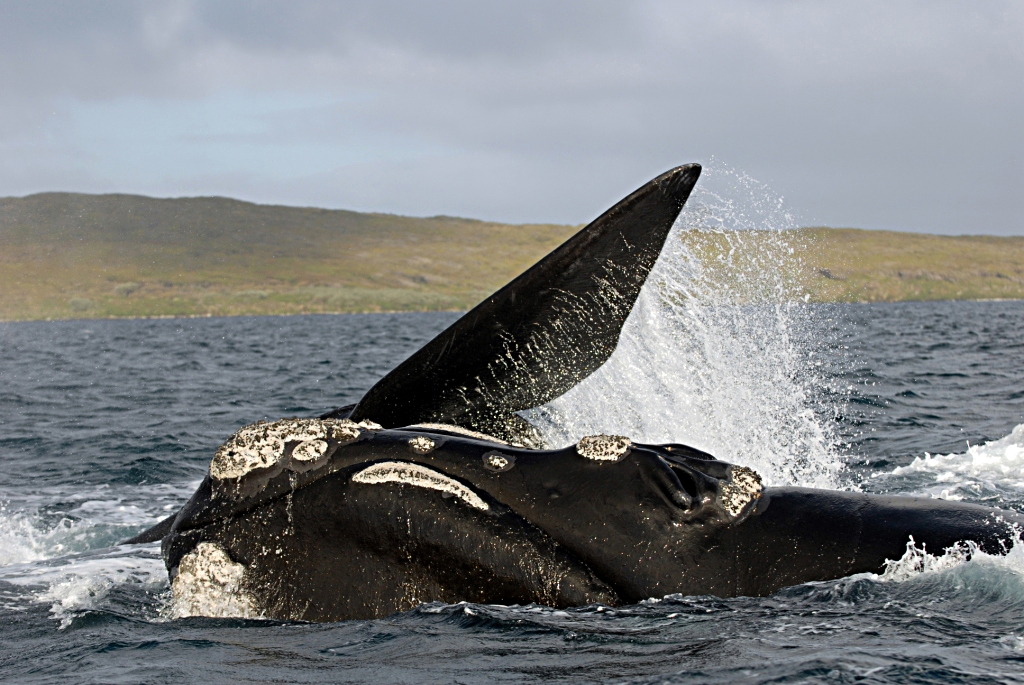
Southern right whales may choose nurseries to avoid eavesdroppers

Publicly released:
Australia; International; SA
 Auckland Islands Team 2009, Oregon State University
Auckland Islands Team 2009, Oregon State University

Places such as the Head of the Bight, off the Nullarbor plain in South Australia, could be selected as nursery grounds by whales because they are spots where mums and calves can hear each other, but other animals can’t listen in, according to international research.  The study found that in the shallow water nursery grounds where they congregate, southern right whale calls can only be heard from a very short distance away, making it difficult for distant predators to detect them.  The authors say choosing habitats to avoid eavesdroppers may be an overlooked adaptation in a variety of species.

News release

From: The Royal Society

Preferred shallow-water nursery sites provide acoustic crypsis to southern right whale mother-calf pairs

Royal Society Open Science

Animals that communicate using sound must balance the need to be heard by their intended audience and the risk of being overheard by eavesdroppers such as predators. We found that southern right whale mothers and calves spend time in specific locations where they can hear each other, but other animals can’t hear them. In the shallow water nursery grounds where they congregate, right whale calls can only be heard from a very short distance away, making it difficult for distant animals to detect them. Choosing habitats to avoid eavesdroppers may be an overlooked adaptation in a variety of species.

Attachments

Note: Not all attachments are visible to the general public. Research URLs will go live after the embargo ends.

Research The Royal Society, Web page Please link to the article in online versions of your report (the URL will go live after the embargo ends).
Journal/
conference:
Royal Society Open Science
Research:Paper
Organisation/s: Syracuse University, USA
Funder: SoundTrap deployment in Brazil was supported by the Marine Mammal Commission, grant no. MMC17-230. Additional financial support was provided by Cetacean Society International and VIVA Baleias, golfinhos e cia. This work was partially supported by funding from the US Navy Living Marine Resources Program (LMR). JMZ was supported by an NDSEG Fellowship.
Media Contact/s
Contact details are only visible to registered journalists.