Sea-level rise likely to skyrocket if Paris Agreement targets not met

Publicly released:
International
CC:0  https://pixabay.com/photos/glacier-ice-sheet-icecap-iceland-280/
CC:0 https://pixabay.com/photos/glacier-ice-sheet-icecap-iceland-280/

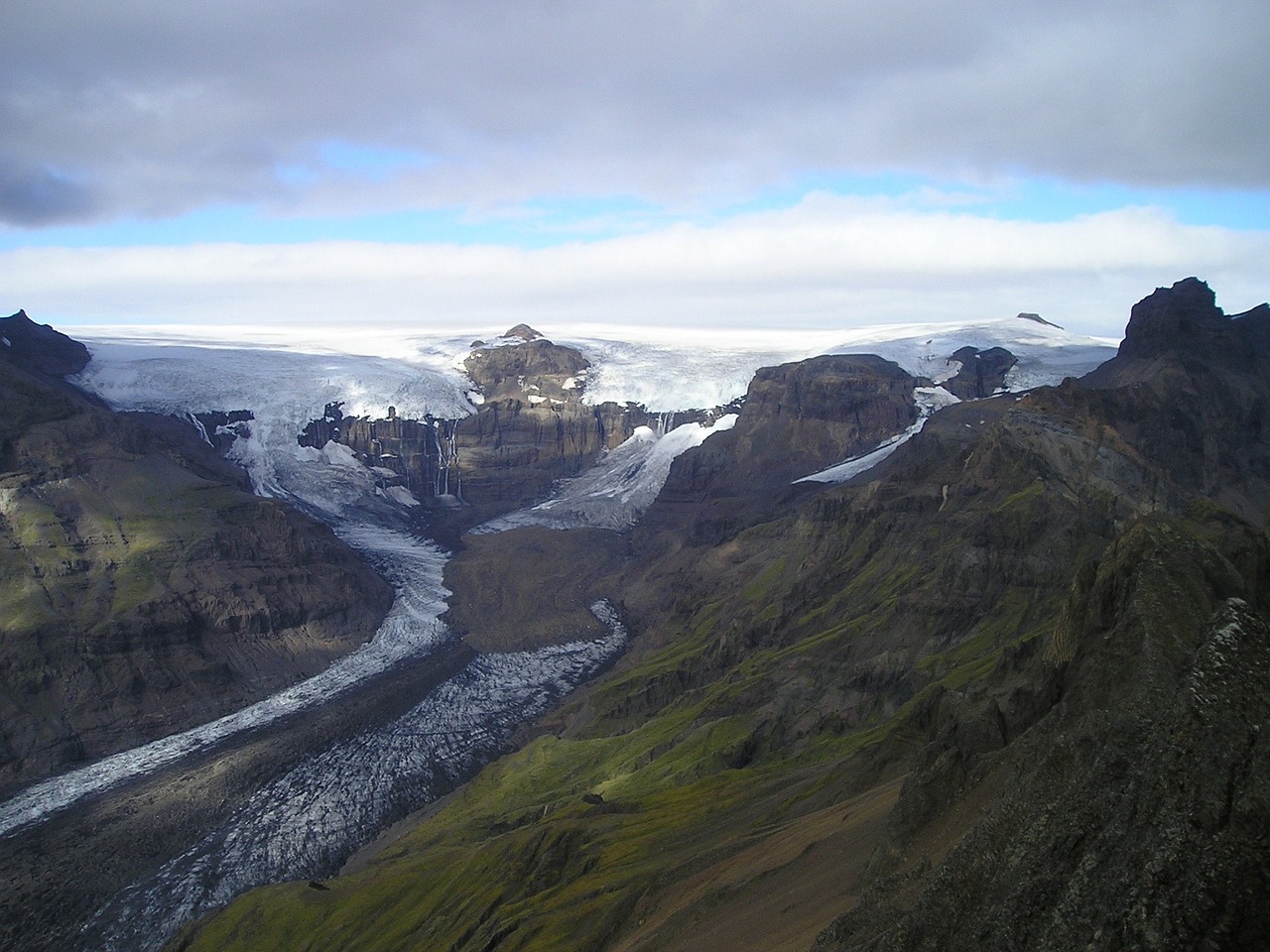
International researchers have forecast a big loss of the Greenland ice sheet if global warming goes over 2°C. Past estimates suggest the melting of the Greenland ice sheet contributed more than 20% of sea-level rise since 2002, they say, and we are in for an abrupt ice-sheet loss if the global average temperature rises between 1.7°C and 2.3°C above pre-industrial levels. However, all may not be lost - the team says their analysis also suggests the loss can be mitigated - even if we got to 6°C above pre-industrial levels - if we reduce our warming back down to 1.5°C within a few centuries.

Media release

From: Springer Nature

Assessing the future stability of the Greenland ice sheet

The Greenland ice sheet is projected to undergo abrupt losses due to melting if global warming exceeds temperatures of around 2 °C above pre-industrial temperatures, according to a modelling study published in Nature. Subsequent cooling to below 1.5 °C may mitigate ice loss, but only if the cooling takes place within several centuries.

The Greenland ice sheet is estimated to have contributed more than 20% to the observed sea-level rise since 2002 as a result of melting due to rising temperatures. However, it is unclear how the ice sheet will respond to future temperature increases. Modelling and paleoclimate evidence, for example, have suggested that the ice sheet may stabilize at multiple different configurations along warming or cooling trajectories.

Nils Bochow and colleagues modelled the behaviour of the Greenland ice sheet under future warming scenarios in which temperatures first exceed critical thresholds for ice-sheet stability, followed by a reduction in the global mean temperature. The authors suggest that the stability of the ice sheet is influenced by both the length of time for which temperatures are exceeded and the extent by which they are elevated. They found that abrupt ice-sheet loss is likely if the global mean temperature threshold is between 1.7 °C and 2.3 °C above pre-industrial levels. The analyses indicate that this loss can be mitigated — even for maximum warming of up to 6 °C or more above pre-industrial levels — if global mean temperatures are subsequently reduced to 1.5 °C within a few centuries. Timing, though, is crucial: if the return to cooler temperatures after an ‘overshoot’ of the threshold takes more than a few centuries, then the ice sheet is still likely to contribute several metres to sea-level rise.

Attachments

Note: Not all attachments are visible to the general public. Research URLs will go live after the embargo ends.

Research Springer Nature, Web page The URL will go live after the embargo ends
Journal/
conference:
Nature
Research:Paper
Organisation/s: The Arctic University of Norway, Norway
Funder: This is TiPES contribution #209; the TiPES (‘Tipping Points in the Earth System’) project has received funding from the European Union’s Horizon 2020 research and innovation programme under grant agreement no. 820970. This work was supported by the UiT Aurora Centre Program, UiT The Arctic University of Norway (2020) and the Research Council of Norway (project number 314570). The simulations with PISM-dEBM were performed on the Fram supercomputer provided by Sigma2 - the National Infrastructure for High Performance Computing and Data Storage in Norway under the projects NN8008K and NN9348K. N.Boe. acknowledges further funding by the Volkswagen Foundation and the European Union’s Horizon 2020 research and innovation programme under the Marie Skłodowska-Curie grant agreement no. 956170, as well as from the German Federal Ministry of Education and Research under grant no. 01LS2001A. A.R. received funding from the European Union (ERC, FORCLIMA, 101044247). Development of PISM is supported by NSF grants PLR-1644277 and PLR-1914668 and NASA grants NNX17AG65G and 20-CRYO2020-0052.
Media Contact/s
Contact details are only visible to registered journalists.