 Sign In



 Australia; QLD
News release
From:
Queensland Museum and James Cook University scientists are using AI to unlock the mysteries of our fossil past.
The scientists have developed an AI-based technique that has sped up the analysis of fossils, taking a months-long process to just days, which is outlined in the recent scientific paper Accelerating segmentation of fossil CT scans through Deep Learning published in Scientific Reports.
Queensland Museum palaeontologist and JCU Senior Lecturer Dr Espen Knutsen, alongside JCU Deep Learning expert Senior Lecturer Dmitry Konovalov have been working on how to rapidly analyse fossils encased in rock.
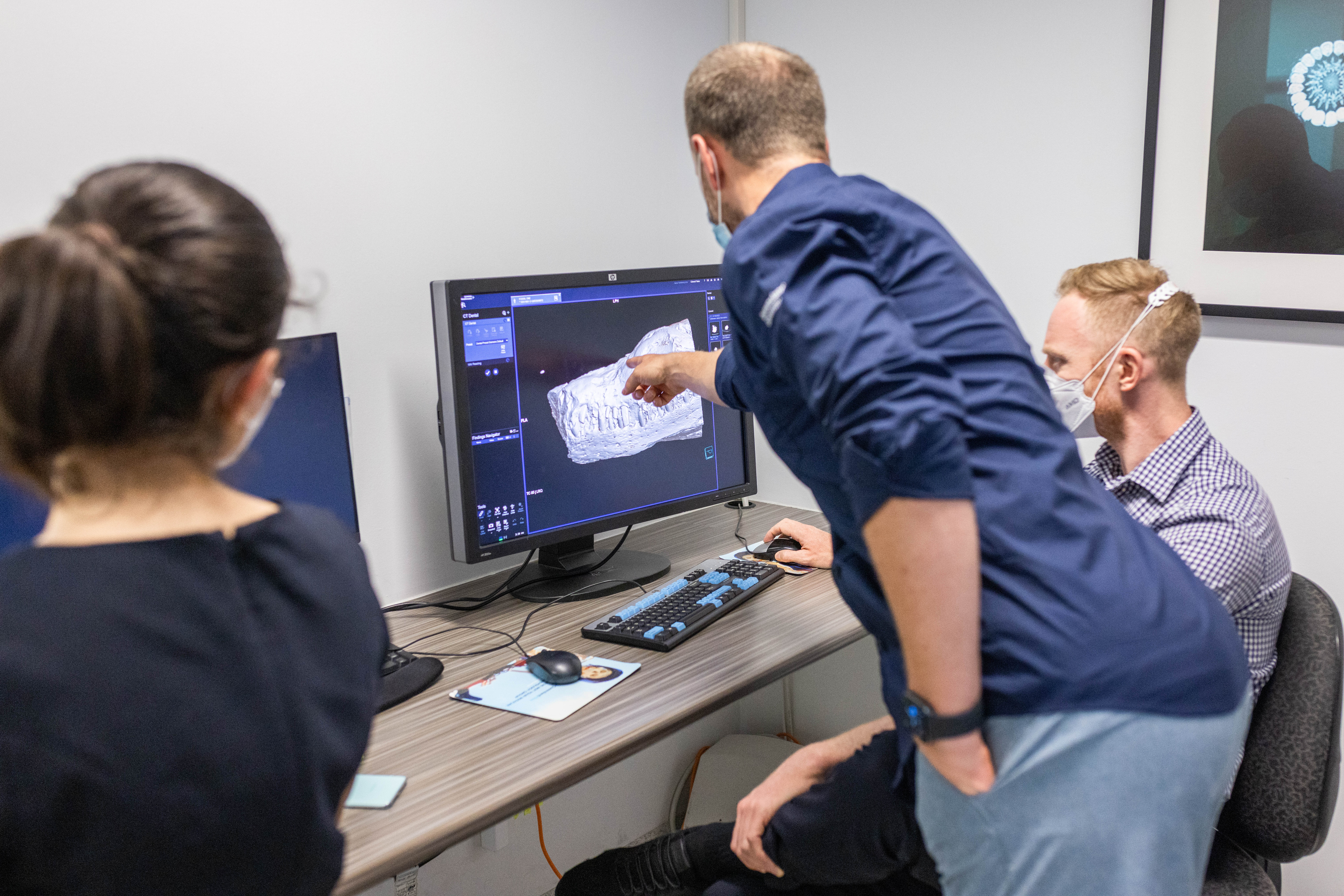
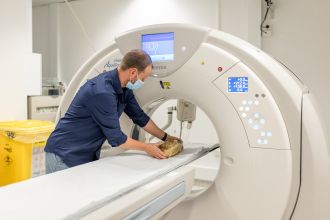
“Computed Tomography (CT) scanning provides palaeontologists with a way to look inside bone and study fragile fossil material without the need for physically removing the surrounding rock,” Dr Knutsen said.
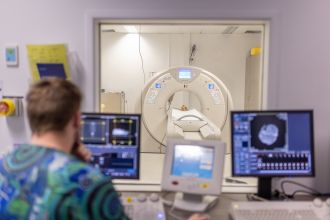
Dr Knutsen said the CT datasets consist of a stack of x-ray image slices which are imported into a computer - but then need to be manually told what parts of each slice is fossil and what is rock before it can produce a 3D model.
“With ever-improving equipment, the size of datasets and image resolution have significantly increased, which means a significant amount of time invested in manually segmenting data,” Dr Knutsen said.
“With datasets often exceeding 2000 images per sample, this process can take months to complete.”
Instead, the scientists manually segmented around two per cent of 2000 image slices and used these to train a Deep Learning model which completed the task by itself.
“We achieved a highly precise 3D representation of a tiny Triassic reptile from Queensland that was around 240 million-years-old. This was completed in days rather than months,” Dr Knutsen said.
The research removes a huge bottleneck in modern palaeontology, allowing researchers to rapidly generate more data from fossil collections and spend more time exploring our ancient past.
The researchers will now work to expand the capability of their Deep Learning model to be used on other and more diverse fossil material. The paper Accelerating segmentation of fossil CT scans through Deep Learning was recently published in Scientific Reports (DOI: 10.1038/s41598-024-71245-1).
Multimedia

Attachments
Note: Not all attachments are visible to the general public. Research URLs will go live after the embargo ends.


