Sign In



 Australia; VIC
News release
From:
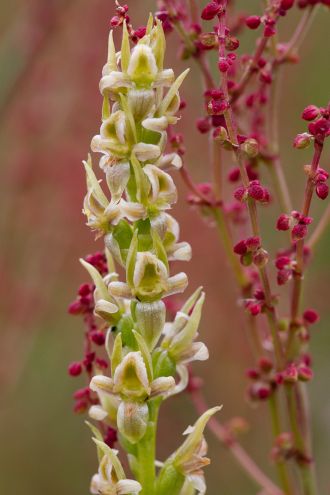
Royal Botanic Gardens Victoria, together with a team of scientists, have released a new scientific paper showing that the previously presumed extinct species called Prasophyllum morganii, commonly known as mignonette leek orchid, has in fact been hiding in plain sight.
Prasophyllum morganii was first collected from a single population in the sub-alps of Victoria, Australia in 1929, but has not been collected since 1933, despite extensive surveys by orchid enthusiasts. It is considered extinct under the Flora and Fauna Guarantee Act 1988 (Vic) and by the Threatened Species Scientific Committee Advice.
In 2000, a similar looking orchid was described from Kosciuszko National Park, New South Wales, and named Prasophyllum retroflexum, commonly known as the Kiandra leek orchid, however the team has now shown that it is in fact Prasophyllum morganii.
Co-author of the paper and Senior Research Scientist at Royal Botanic Gardens Victoria, Dr Noushka Reiter, says that the findings will improve efforts to conserve this species into the future.
“It was a pleasant surprise to learn that Prasophyllum morganii is still in existence, however, it is still endangered, and we need to protect it.”
She says that good taxonomy, which is the accurate description of plants and animals, strengthens the conservation of rare and threatened plants such as these.
“When we better understand orchid species, their characteristics, distribution and ecology, we can improve our ability to conserve them,” said Dr Reiter.
The team analysed original type specimens from Prasophyllum morganii and 33 herbarium and field collected specimens to arrive at the result.
Co-author, Dr Bronwyn Ayre, says that this work would not have been possible without specimens stored in the State Botanical Collection at the National Herbarium of Victoria.
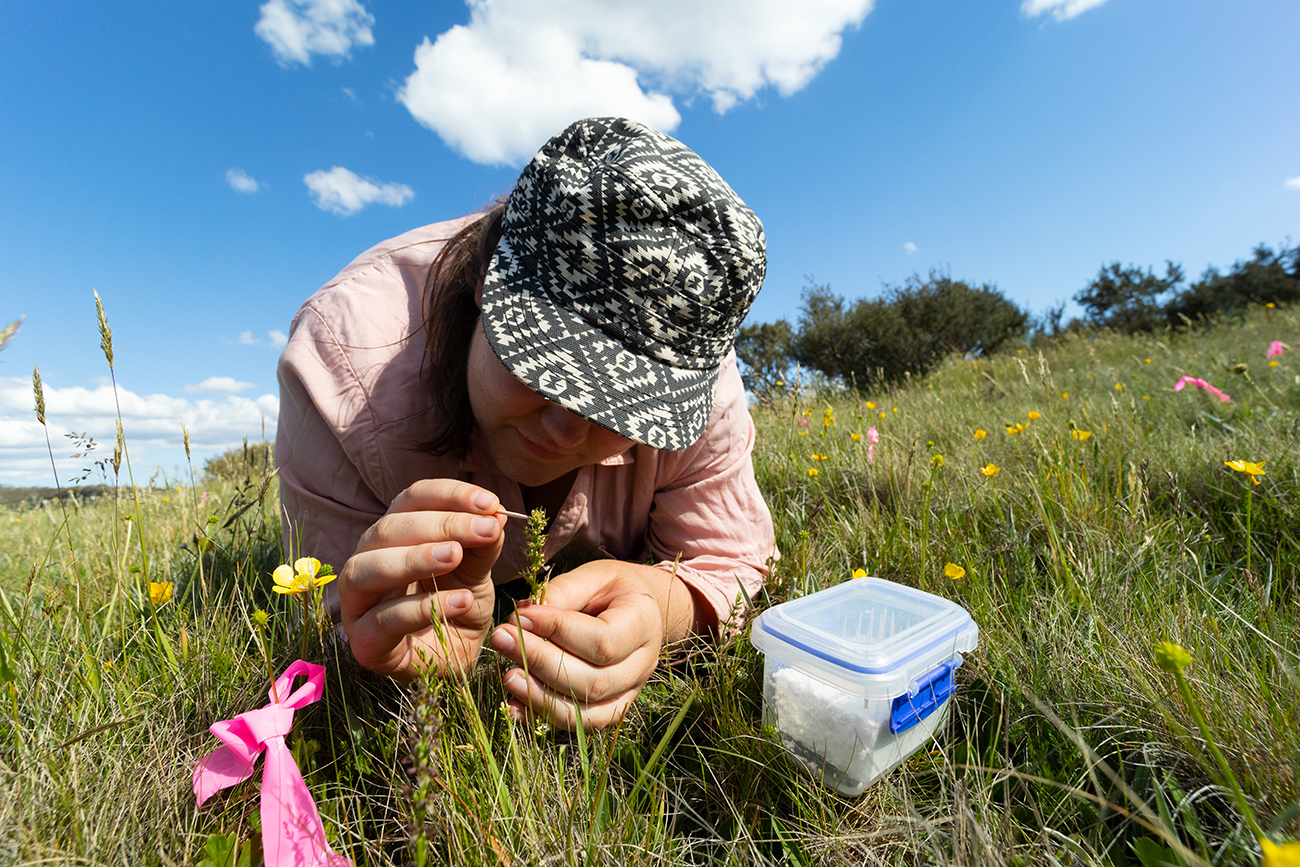
“It was amazing to be able to compare flowers collected over 90 years ago, to ones we just collected ourselves,” she said.
Victoria’s State Botanical Collection comprises 1.5 million dried plant, algae and fungi specimens and is the largest such collection in the region.
Prasophyllum is a genus of the Orchidaceae, or orchid, family and are found mostly in south-eastern Australia. There are an estimated 207 species of Prasophyllum with many of these yet to be formally described. 39 are listed nationally as either critically endangered, endangered, or vulnerable under Australia’s Environment Protection and Biodiversity Conservation Act 1999.
The team thank the Department of Environment, Land, Water and Planning, and the individuals named in the paper for their assistance. This work was supported by funding from the Australian Government’s Wildlife and Habitat Bushfire Recovery Program.
The authors:
· Dr Noushka Reiter: Royal Botanic Gardens Victoria (Corresponding author)
· Bronwyn M. Ayre and Ryan D. Phillips: Department of Ecology, Environment and Evolution, La Trobe University, Melbourne
· Tobias Hayashi: Ecology and Evolution, Research School of Biology, ANU College of Science, Australian National University
Link to the paper: https://www.biotaxa.org/Phytotaxa/article/view/phytotaxa.528.2.1
Image caption: Variation in colour, number of flowers, and density of Prasophyllum retroflexum inflorescences, compared with an illustration of Prasophyllum morganii.
(a) Prasophyllum morganii illustration from Nicholls, W.H. (1969) The complete orchids of Australia. Nelson, Melbourne, 44 pp.(d, h) Photos by L. and M.J. Carrigan. Other photos by T. Hayashi.
Multimedia