 Sign In



 Australia; NSW; WA; ACT
News release
From:
To transition to a green economy, we require more critical metals such as copper, rare earth elements and cobalt than are currently available. Therefore, we need to find new resources formed in different ways in areas that have not yet been explored.
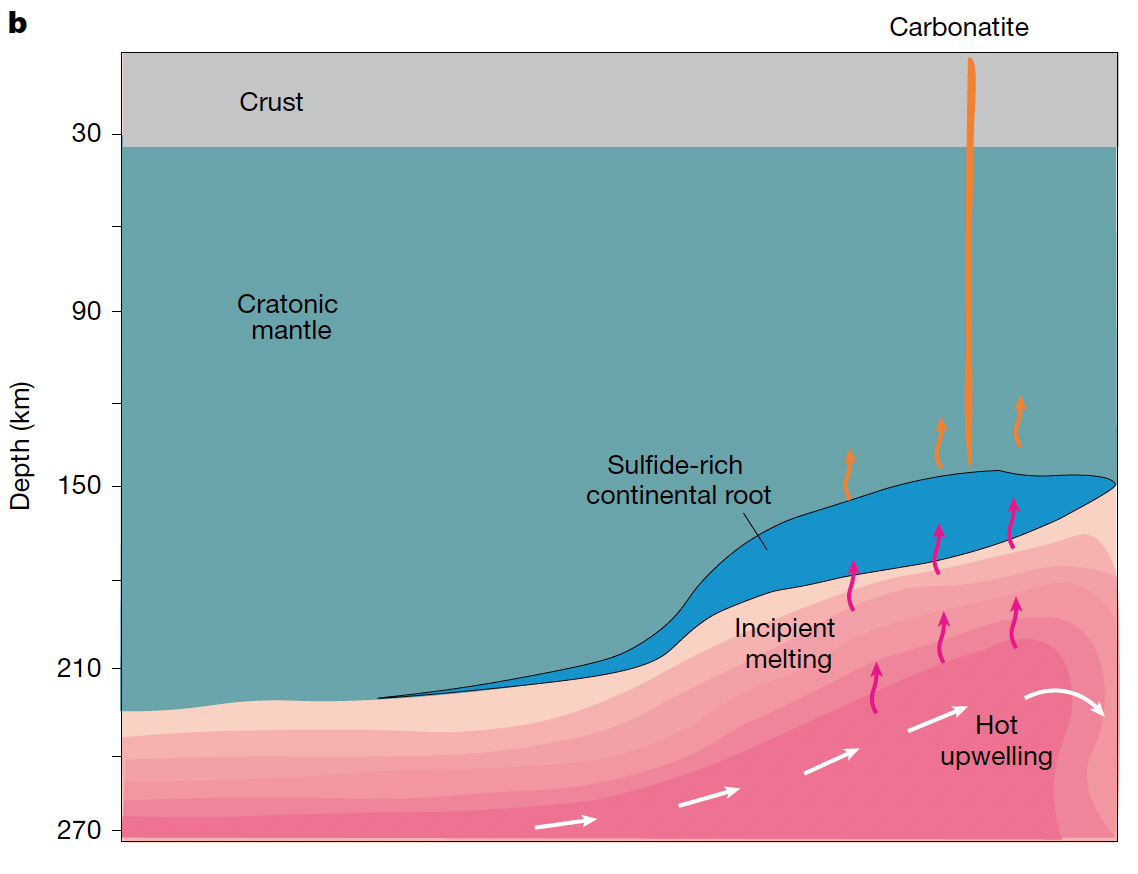
New research results published on 8 January 2025 in Nature led by Dr Chunfei Chen’s post-doctoral research in the Earth Evolution research group at Macquarie University, explain the probable locations and mechanisms of accumulations of critical metals at the margins of old cores of continents.
“These cores are the thickest, bowl-shaped, parts of tectonic plates. Melts that form below their centres will flow upwards and outwards towards the edges, so that volcanic activity is common around their edges,” says Chen.
Previous high-pressure experiments in the Earth Evolution group have shown that initial melts at around 200 kilometres depth are rich in carbonate but contain much less silica than most rock melts.
The new experiments by Dr Chen and colleagues show that these melts will lose silica and become almost pure carbonate as they flow upwards and outwards beneath the continental cores.
Distinguished Professor Stephen Foley from Macquarie’s School of Natural Sciences explains the link to critical metals lies in this change in melt composition.
“The initial melts can carry lots of critical metals and sulfur, but our new results show that these are dropped by the melt as it loses silica. This causes concentrations of critical metals and sulfur in linear arrangements around the edges of thick continental cores,” says Professor Foley.
The research also confirms that mantle samples brought to the surface in volcanoes in these areas do indeed contain more sulfur and copper than elsewhere on the continents.
This new work explains recent observations by researchers at the Australian National University and Geoscience Australia that found critical metals are accumulated around the edges of continent cores, and brings these areas into sharp focus for future exploration activities.

