Promising signs for mRNA vaccines as a pancreatic cancer treatment

Publicly released:
International
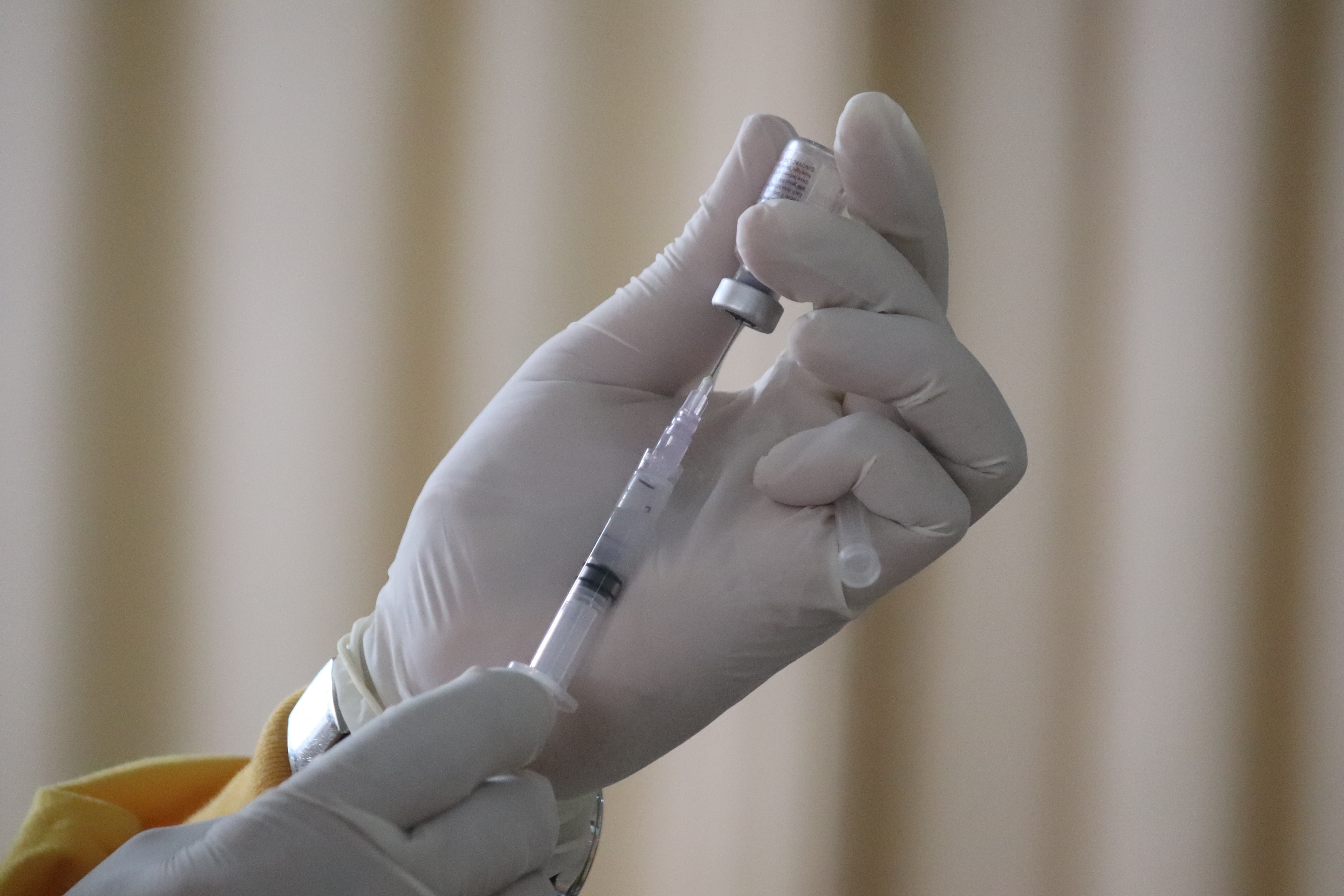
Photo by Mufid Majnun on Unsplash

Personalised mRNA vaccines for a small group of pancreatic cancer patients have helped slow relapses, according to an international study. The team developed personalised mRNA vaccines that target neoantigens that can emerge on the surface of tumours and make it harder to delay cancer recurrence. The researchers used these vaccines on 16 pancreatic cancer patients also receiving chemo and immunotherapy. They say half the patients had strong T-cell responses after the vaccine, indicating their immune response improved. Over the course of 18 months, the researchers say those who developed these immune responses had slower times to relapse compared to the patients who didn't respond to the vaccine, indicating these vaccines could be a tool in treating pancreatic cancer.

Media release

From: Springer Nature

Cancer: Personalized mRNA vaccines show promise in pancreatic cancer (N&V)

A personalized mRNA vaccine induces a substantial immune response and potentially delays relapse in patients with a form of pancreatic cancer called pancreatic ductal adenocarcinoma (PDAC), when used in conjunction with other treatments, reports a study published in Nature.

PDAC is the third largest cause of cancer death in the United States and has poor survival rates, which have remained at 12% for the past 60 years. A combination of surgical and medicinal therapies can delay recurrence, but they have poor rates of success. Recent literature has suggested that most PDACs harbour increased levels of neoantigens, which are cell-surface proteins that can emerge on the surface of tumours following certain types of DNA mutations. These proteins can be targeted by personalized vaccine therapies with the aim of boosting T cell activity and improving outcomes.

In a phase I clinical trial, Vinod Balachandran and colleagues administered a personalized mRNA vaccine called adjuvant autogene cevumeran in combination with chemotherapy and immunotherapy in 16 patients with PDAC. They observed substantial T cell responses in 50% of patients, indicating that the vaccine can induce an improved immune response. After an 18-month follow-up, the elevated immune responses in patients correlated with longer times to relapse, whereas patients that showed no response to the vaccine experienced progression at a median of 13.4 months after the initial assessment.

These results demonstrate the potential of individualized mRNA vaccines in treating PDAC, as well as providing evidence of their general effectiveness as a therapeutic tool in treating disease. The authors note that despite the limited sample size, these early results indicate that larger studies of such vaccines for PDAC are warranted.

Attachments

Note: Not all attachments are visible to the general public. Research URLs will go live after the embargo ends.

Research Springer Nature, Web page The URL will go live after the embargo ends
Journal/
conference:
Nature
Research:Paper
Organisation/s: Memorial Sloan Kettering Cancer Center, USA
Funder: This work was supported by a Stand Up to Cancer Convergence Award (to B.D.G. and V.P.B.), the Lustgarten Foundation (to B.D.G., and V.P.B.), the NIH U01 CA224175 Pancreatic Cancer Microenvironment Network Cancer Moonshot Award (to V.P.B.), the Damon Runyon Clinical Investigator Award (to V.P.B.), the Ben and Rose Cole Charitable PRIA Foundation (to V.P.B), the Mark Foundation ASPIRE Award (to B.D.G.) and the Pershing Square Sohn Prize-Mark Foundation Fellowship (to B.D.G.). M.Ł. is a Pew Biomedical Scholar. Services of the Integrated Genomics Core were funded by the NCI Cancer Center Support Grant (CCSG, P30 CA08748), Cycle for Survival, and the Marie-Josée and Henry R. Kravis Center for Molecular Oncology. The team at MSK sponsored the clinical trial. The imCORE Network, Genentech, BioNTech, Stand Up To Cancer, the Lustgarten Foundation, and the National Cancer Institute Pancreatic Cancer Microenvironment Network funded the clinical trial and the biomarker studies.
Media Contact/s
Contact details are only visible to registered journalists.