Mummified cheetahs suggest reintroducing them to the Arabian Peninsula could succeed

Publicly released:
Australia; International; SA
Ahmed Boug et al./Communications Earth & Environment. Story by Dr Joe Milton, Australian Science Media Centre

International scientists, including an Australian, say the discovery of seven naturally-mummified cheetahs (Acinonyx jubatus) and 54 sets of skeletal remains in caves in northern Saudi Arabia suggest reintroducing the species to the Arabian Peninsula could succeed. The mummies are from two subspecies of the endangered cats, which have been locally extinct on the Arabian Peninsula since the 1970s. The oldest skeletal remains are around 4,000 years old, while the mummified remains are roughly 130 and 1,870 years old. DNA analysis found the most recent specimen is genetically closest to the Asiatic cheetah, which was thought to be the only subspecies on the peninsula, but the oldest cheetahs are from a different subspecies, the Northwest African cheetah (Acinonyx jubatus hecki). The findings suggest subspecies other than the Asiatic cheetah could flourish if introduced to Saudi Arabia at the same time, providing a deeper gene pool and increasing the chances of the big cats surviving long term, the authors conclude.

News release

From: Springer Nature

Mummified cheetahs discovery gives hope for species’ Arabic reintroduction

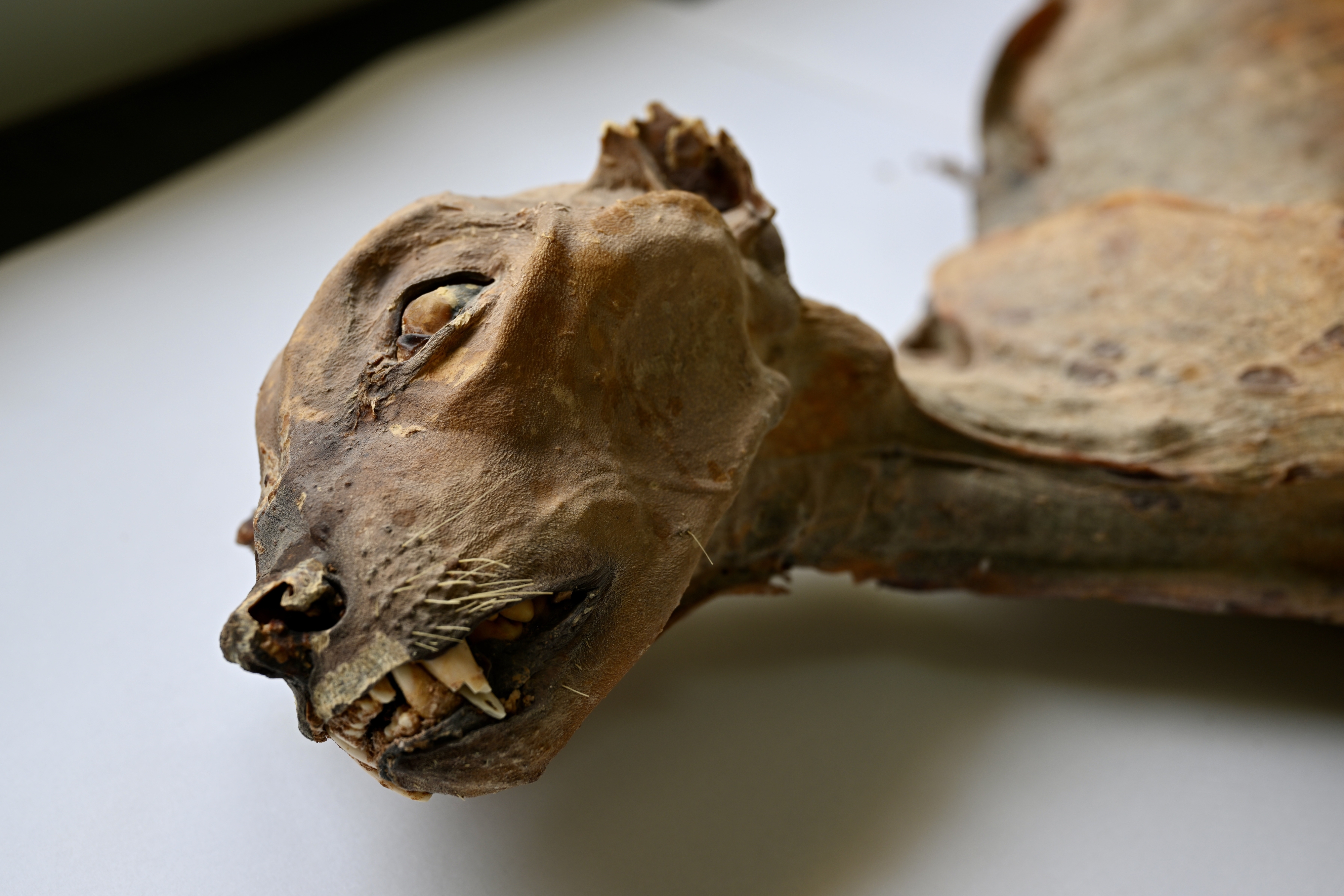
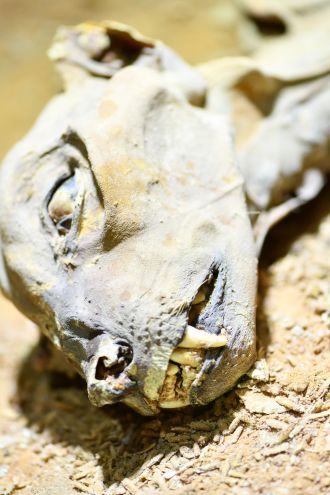
The discovery of seven naturally-mummified cheetahs (Acinonyx jubatus) in caves in northern Saudi Arabia reveals that at least two subspecies of the endangered cats inhabited the Arabian Peninsula before their local extinction. The findings, reported in Communications Earth & Environment, may open new possibilities for the reintroduction of cheetahs to the peninsula.

Cheetahs once inhabited much of Africa as well as Western and Southern Asia, but now live in just 9% of their historic range. In Asia their range has decreased by 98%, and they are thought to have been locally extinct on the Arabian Peninsula since the 1970s. Although there are five cheetah subspecies, the Asiatic cheetah (Acinonyx jubatus venaticus) — thought to have been the only subspecies present in Saudi Arabia — is critically-endangered, with only a single small wild population remaining in Iran. Therefore, the feasibility of reintroducing cheetahs to the peninsula is debated.

Ahmed Boug and colleagues discovered seven naturally-mummified cheetahs, along with the skeletal remains of 54 additional cats, in five caves near the city of Arar in northern Saudi Arabia in 2022 and 2023. The authors dated samples from two of the mummified specimens and five sets of the skeletal remains. The oldest skeletal remains date from approximately 4,000 years ago, while the mummified remains date from approximately 130 and approximately 1,870 years ago. The authors also extracted complete genome sequences from three of the seven sampled specimens — the first time this has been done in naturally-mummified big cats. Although the most recent specimen is genetically closest to the Asiatic cheetah, the two older cheetahs — including the oldest dated specimen — are most similar to the Northwest African cheetah (Acinonyx jubatus hecki).

The authors say that their results show that subspecies other than the Asiatic cheetah could support the re-establishment of cheetahs in Saudi Arabia, as an increased available genetic pool makes rewilding efforts more feasible. They also suggest that their method shows that ancient DNA records from similar specimens could be used to inform future reintroduction plans for other species.

Multimedia
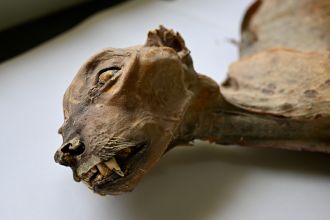
One of the mummified cheetahs preserved in a laboratory
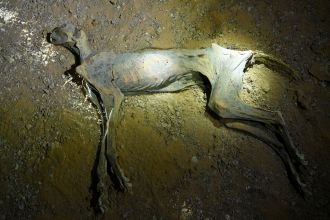
One of the mummified cheetahs as it was found in situ
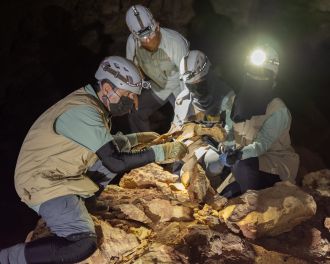
Researchers collecting one of the mummified cheetahs from its place of discovery
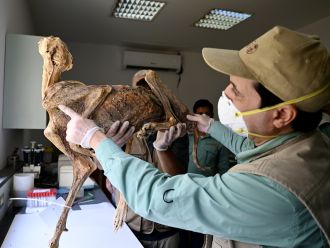
Examining the mummified cheetahs in the lab
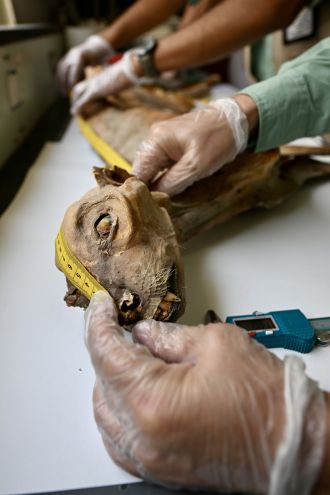
Taking body measurements of one of the mummified cheetahs
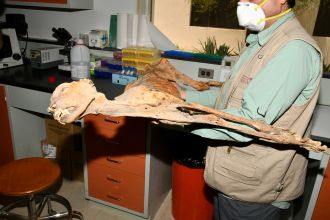
A researcher with one of the mummified cheetahs in the laboratory
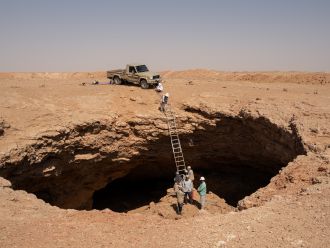
An above ground view of one of the caves where a mummified cheetah was found
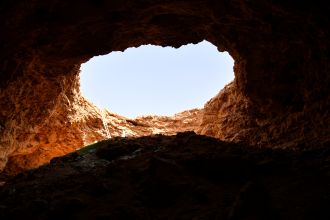
A below ground view of one of the caves where a mummified cheetah was found
A mummified cheetah’s head, pictured in situ at its place of discovery
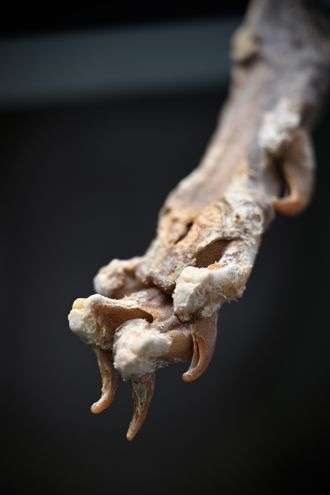
A mummified cheetah’s claws
Cave exploration and lab analysis of one of the mummified cheetahs

Attachments

Note: Not all attachments are visible to the general public. Research URLs will go live after the embargo ends.

Research Springer Nature, Web page The URL will go live after the embargo ends
Journal/
conference:
Communications Earth & Environment
Research:Paper
Organisation/s: Flinders University, National Center for Wildlife, Saudi Arabia
Funder: P.A.B. acknowledges funding by the Austrian Science Funds (FWF) project I5081-B for the genetic analysis.
Media Contact/s
Contact details are only visible to registered journalists.