 Sign In



 Australia; Pacific; QLD
News release
From:
Majestic manta rays dive deep to survive
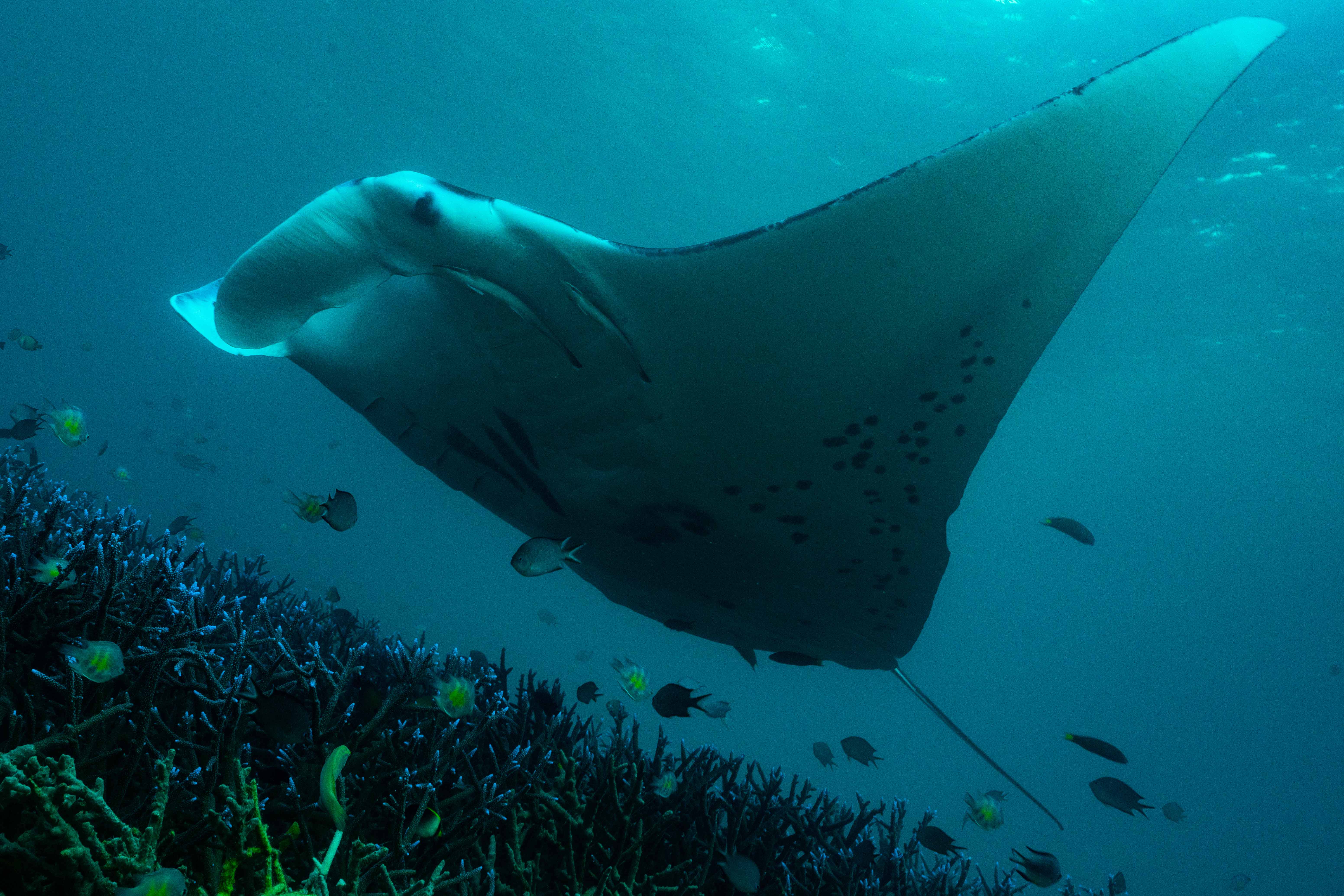
New research led by the University of the Sunshine Coast has found that reef manta rays are diving deep in storm events to find food and stay alive.
As World Environment Day is celebrated around the globe this Friday 5 June, the findings offer hope for the future of a species listed as vulnerable to extinction.
Lead author Anna Knochel said the team was surprised to record no long-distance travel among the mantas in southeastern Papua New Guinea after they tagged and tracked the “conspicuously large” marine animals via satellite for three years.
“Despite two distinct monsoons, 75 percent of the group stayed within 10km of the tagging site in Milne Bay and the furthest swum only 87km – much shorter than their capabilities,” said the UniSC PhD student.
“The data shows that the mantas expanded their vertical use of the water column rather than leaving the region to find prey (tiny animals called zooplankton).
“This suggests that they can change their behaviours in response to variations in oceanographic conditions while remaining close to home, which may also help protect them from threats other than climate, such as overfishing and bycatch.”
The research examined Mobula alfredi rays, which weigh up to 850kg, have wingspans up to 4.5m, and are found in tropical and subtropical Indian and Pacific Oceans.
The findings have been published in a paper in international journal PLOS One.
Collaborators included PhD supervisor Dr Guy Stevens of The Manta Trust, Dr Mark Erdmann of Conservation International Asia-Pacific and Re:wild US, Dr Joanna Harris of University of Plymouth UK, Shannon Murphy of Columbia University US, and Dr Annie Murray of The Manta Trust.
Dr Stevens, co-founder and CEO of The Manta Trust, said: “This study provides the first detailed picture of how reef manta rays use coastal waters in Papua New Guinea, and the results are extremely valuable for conservation.
“The fact that these animals remain closely associated with the Samarai Islands and surrounding waters highlights just how important this habitat is for the species.
“By identifying the areas that manta rays rely on most, we can better inform conservation measures and support the long-term protection of these vulnerable animals in Papua New Guinea.”
Ms Knochel said this was believed to be the first study of the behaviour and ecology of the ray species in Papua New Guinea.
“The results can also inform the development of economically valuable manta ray tourism practices and a sustainable management plan in the region,” she said.
Attachments
Note: Not all attachments are visible to the general public. Research URLs will go live after the embargo ends.


