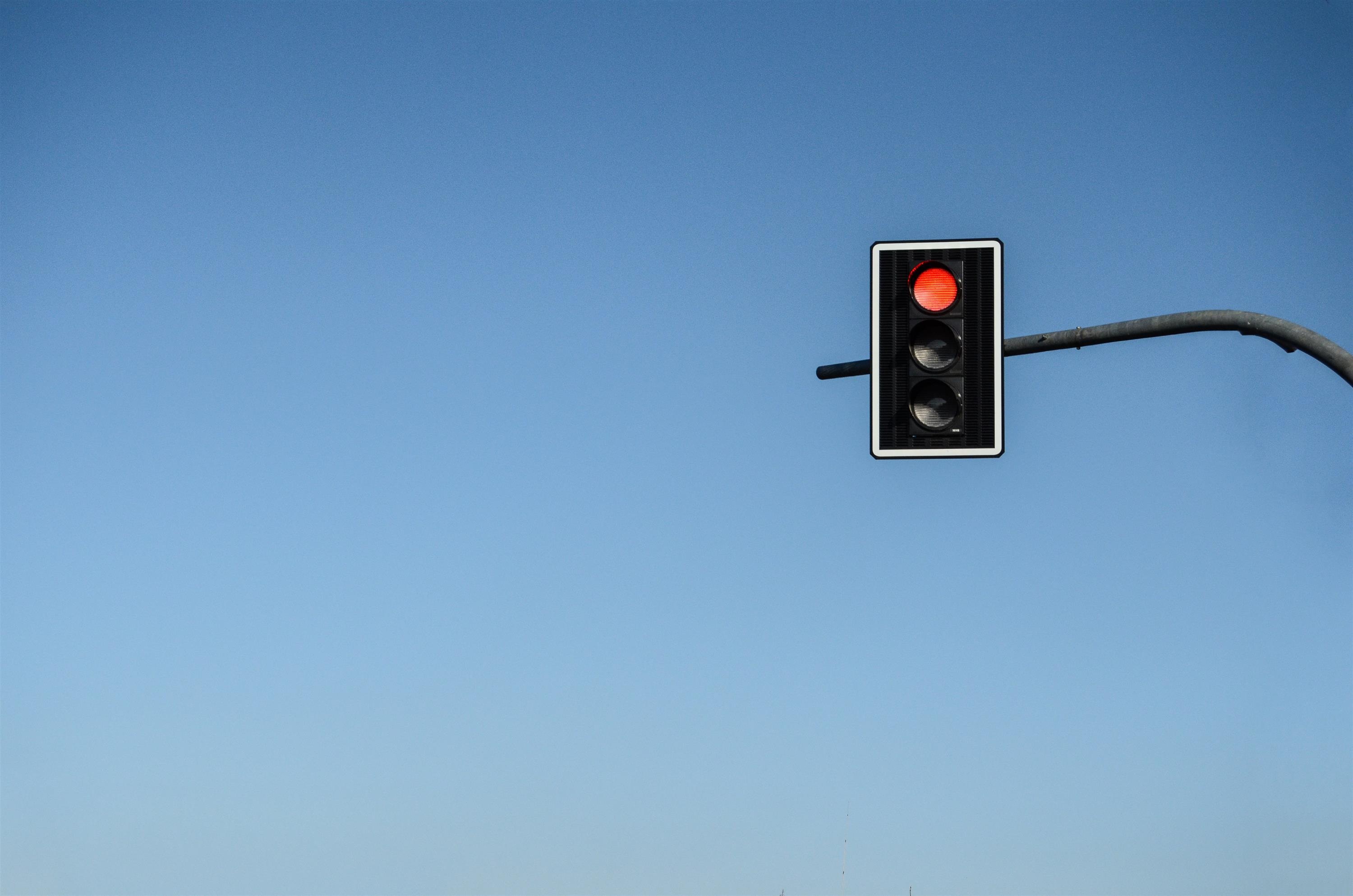
More red lights for cars might mean more green lights for sustainable transport

Publicly released:
International
CC:0
CC:0

International researchers might be playing devil's advocate here, but they have found that reducing the amount of green-light time people in cars are given could encourage them to switch to more sustainable transport methods. The researchers used traffic-grid simulations, and worked out that the timing of traffic lights strongly shapes a person's travel time. They say most commuters adapt to choose the fastest travel option, which, with reduced green-light time for cars and increased green-light time for buses, bicycles and pedestrians, could potentially make people switch over to these more sustainable ways of getting about.

News release

From: The Royal Society

Traffic Light Cycles for a Sustainable City

Cities worldwide struggle with traffic congestion, pollution, and car dependency. Surprisingly, traffic light timing, a factor often overlooked, can strongly influence travel choices. Using a new traffic model, we explore the traffic light paradox: giving more green time to cars can actually increase driving times, as extra drivers create congestion that outweighs individual savings. Our simulations show that modest reductions in car-prioritized green time shift commuters toward walking, cycling, and public transport without costly infrastructure changes. These findings reveal that traffic lights are not just flow regulators but powerful tools to promote sustainable urban mobility and healthier, more efficient cities.

Green light go - Reducing the amount of green‑light time for cars at traffic lights could encourage commuters to switch to more sustainable transport. Using grid‑based simulations, researchers found that traffic‑light timing strongly shapes travel times, and commuters adapt to choose the fastest travel option. Small reductions in green light time for cars, alongside more time for buses or pedestrians, proved most effective in encouraging commuters to switch to more sustainable modes of transport.

Attachments

Note: Not all attachments are visible to the general public. Research URLs will go live after the embargo ends.

Research The Royal Society, Web page The URL will go live after the embargo ends
Journal/
conference:
Royal Society Open Science
Research:Paper
Organisation/s: University of Parma, Italy
Funder: A.C. is supported within the framework of the ’Sustainable Mobility Centre’ (CNMS) Spoke 9, WP3, Task 3.2. Funder: Project funded under the National Recovery and Resilience Plan (NRRP), Mission 4 Component 2 Investment 1.4 ‑ Call for tender No. 3138 of 16/12/2021 of Italian Ministry of University and Research funded by the European Union – NextGenerationEU. Award Number: Project code CN00000023, Concession Decree No. 1033 of 17/06/2022 adopted by the Italian Ministry of University and Research, CUPD93C22000400001, ’Sustainable Mobility Center’ (CNMS). J.L., G.P.V. and R.P.C. are funded by the Austrian Federal Ministry for Climate Action, Environment, Energy, Mobility, Innovation and Technology (2021‑0.664.668) and the Austrian Federal Ministry of the Interior (2022‑0.392.231).
Media Contact/s
Contact details are only visible to registered journalists.