Sign In



 Australia; WA
News release
From:
A new study from Murdoch University has found that the introduced plant disease Phytophthora dieback is indirectly hindering quendas in Western Australia’s jarrah forests, by reducing their habitat quality and consequently decreasing their digging activity.
The impact of Phytophthora dieback on native plant communities has been widely studied across Australia.
One of the plants most affected by dieback is the iconic Australian grasstree, which provides shelter and habitat for a range of native animals via their dead leaves which form around the trunk of the plant.
There is mounting evidence that the loss of plant species due to dieback such as the grasstree is leading to negative flow-on effects on fauna.
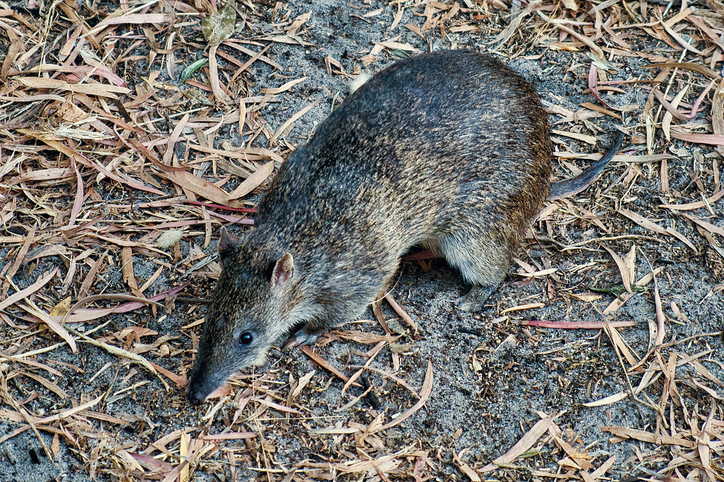
“Quendas and other related bandicoot species prefer habitat with dense shrubby vegetation like grasstrees, which provides refuge from predators and habitat for nesting,” said lead author Dr Tom Mansfield.
“We wanted to understand whether dieback was changing the way quendas use the landscape, such as their foraging activity and their access to habitat and food resources.”
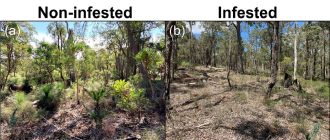
Over a year-long field study, the research team surveyed five heavily dieback-infested bushland reserves in the Shire of Mundaring, east of Perth, and compared healthy areas with dieback infested areas. They measured shrub cover, the abundance of grasstrees, the amount of bare ground, and quenda digging activity by counting their foraging pits.
The study found that compared with healthy forests, dieback-infected areas had 46% less low shrub cover, 45% fewer habitable grasstrees, and 40% more bare ground.
They also found that quenda digging activity was 33% lower in dieback-infested areas.
“The results supported our theory that dieback creates less favourable habitat for quendas, leading to reduced foraging activity,” Dr Mansfield said.
“One more promising finding was that quendas still entered infestations to dig, and they may be using surviving grasstrees and shrubs as habitat,” he said.
“So, they may enter infestations more if habitat is provisioned with restoration or installation of refuges.”
“We found inconclusive evidence that food resources such as truffle-like fungi were fewer, but the cover of graminoids and herbs which may form bulbs and tubers for quendas to eat were not impacted.”
“Together, this suggests that quendas are spending less time in dieback-degraded areas because they may be more exposed to predators, rather than because there's less food available.”
Dr Mansfield said the quenda’s reduced digging activity was concerning.
“Quendas are ecosystem engineers, with their diggings providing a range of ecosystem benefits,” he said.
“Every time they dig for food, they turn over soil, help water soak into the ground, bury seeds, and spread beneficial fungi that support healthy forests.”
“They are one of the few remaining digging mammals still performing these functions in south-west WA, so if dieback continues to remove the shrubs and grasstrees that provide refuge for quendas, there may be cascading effects throughout the ecosystem as these natural processes are diminished.”
Dr Mansfield said the findings provide practical guidance for future dieback management and habitat restoration efforts.
“Our findings suggest that restoring shelter habitat - particularly dense understorey vegetation and grasstrees - could help make dieback-affected forests more suitable for quendas again,” he said.
“Local and small-scale initiatives like revegetation groups and fauna-friendly gardens can go a long way to counter the habitat impacts that dieback has on fauna like quendas.”
“Protecting surviving grasstrees, preventing further disease spread, identifying dieback-resistant plants for restoration, and exploring the use of artificial refuges within dieback-degraded areas should be priorities if we want to maintain healthy quenda populations and the ecosystem benefits they provide.”
Dr Mansfield expressed his appreciation to the Shire of Mundaring Environmental team for their support and proactive drive to manage and understand the impact of dieback across their reserves.
The paper, Exotic Plant Pathogen Reduces Habitat and Foraging Activities of a Digging Mammal, was published in the journal Austral Ecology.
Multimedia