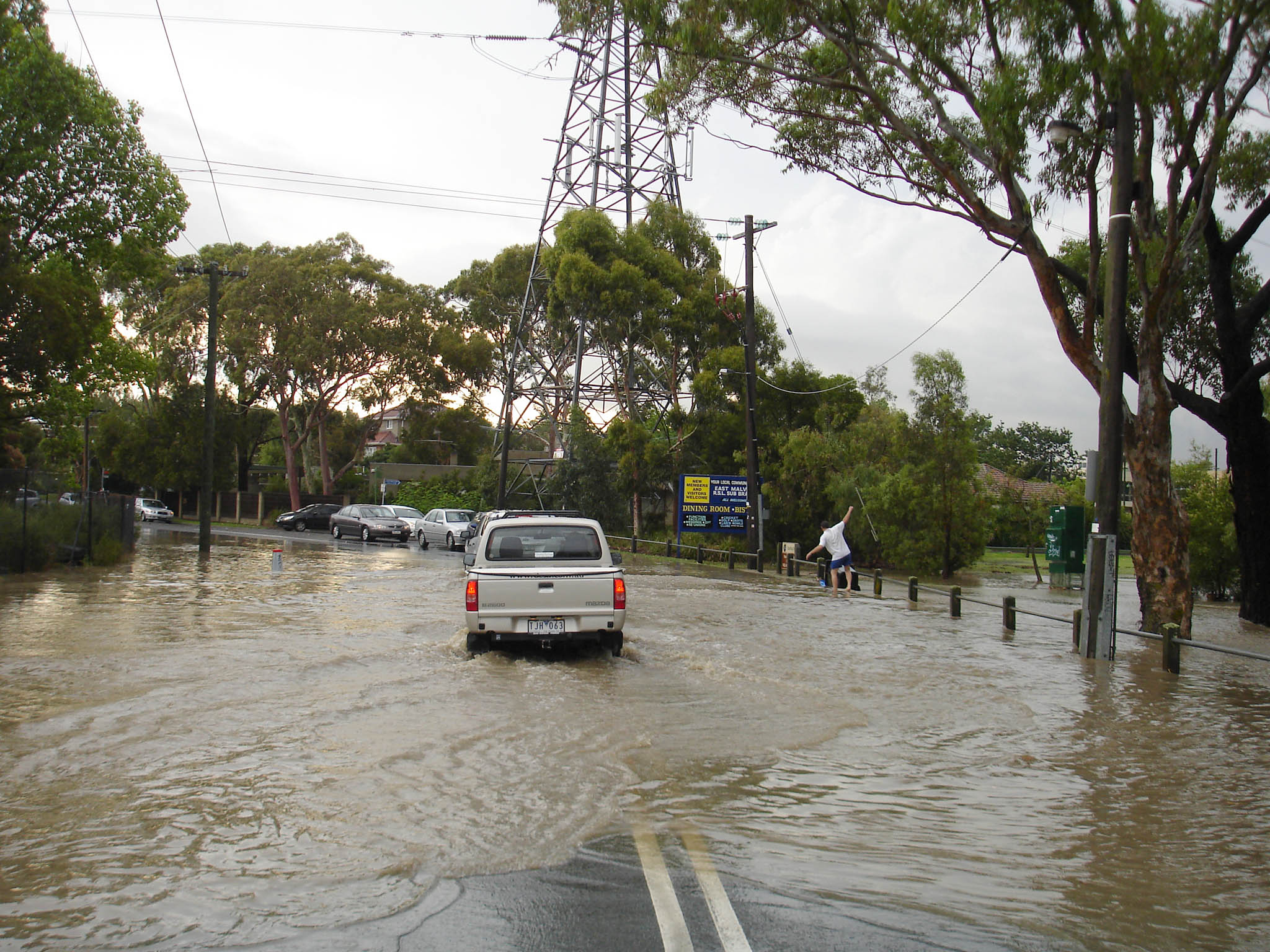
More back to back La Niña years likely with climate change

Publicly released:
Australia; International
Shootthedevgru at English Wikipedia, CC BY-SA 3.0 <https://creativecommons.org/licenses/by-sa/3.0>, via Wikimedia Commons

Back-to-back La Niña events are likely to become more frequent under future greenhouse-gas emissions scenarios - with a 33% increase predicted for a high-greenhouse gas emissions scenario, according to Australian and international research. The study found that under a high emissions scenario, the frequency of multi-year La Niña increases from one event every 12.1 years in 1900–1999 to one event every 9.1 years in 2000–2099. The authors say their finding of a probable future increase in multi-year La Niña frequency strengthens calls for an urgent need to reduce greenhouse-gas emissions to alleviate the adverse impacts.

Media release

From:

Attachments

Note: Not all attachments are visible to the general public. Research URLs will go live after the embargo ends.

Research Springer Nature, Web page Please link to the article in online versions of your report (the URL will go live after the embargo ends).
Journal/
conference:
Nature
Research:Paper
Organisation/s: CSIRO, Laoshan Laboratory, China, Ocean University of China
Funder: This study is supported by the Science and Technology Innovation Project of Laoshan Laboratory (LSKJ202203300) and the Strategic Priority Research Program of Chinese Academy of Sciences (XDB 40030000). T.G. is supported by National Natural Science Foundation of China (NSFC) projects (42206209, 42276006) and China National Postdoctoral Program for Innovative Talents (BX20220279). F.J. is supported by the National Key Research and Development Program of China (2020YFA0608801), LSKJ202202402, NSFC (41876008) and Youth Innovation Promotion Association of Chinese Academy of Sciences (2021205). B.G. is supported by LSKJ202202602 and NSFC (42276016). S.L. is supported by NSFC (42006173 and 92058203). Pacific Marine Environmental Laboratory (PMEL) contribution number 5457.
Media Contact/s
Contact details are only visible to registered journalists.