Milking might spread bird flu between cows

Publicly released:
International
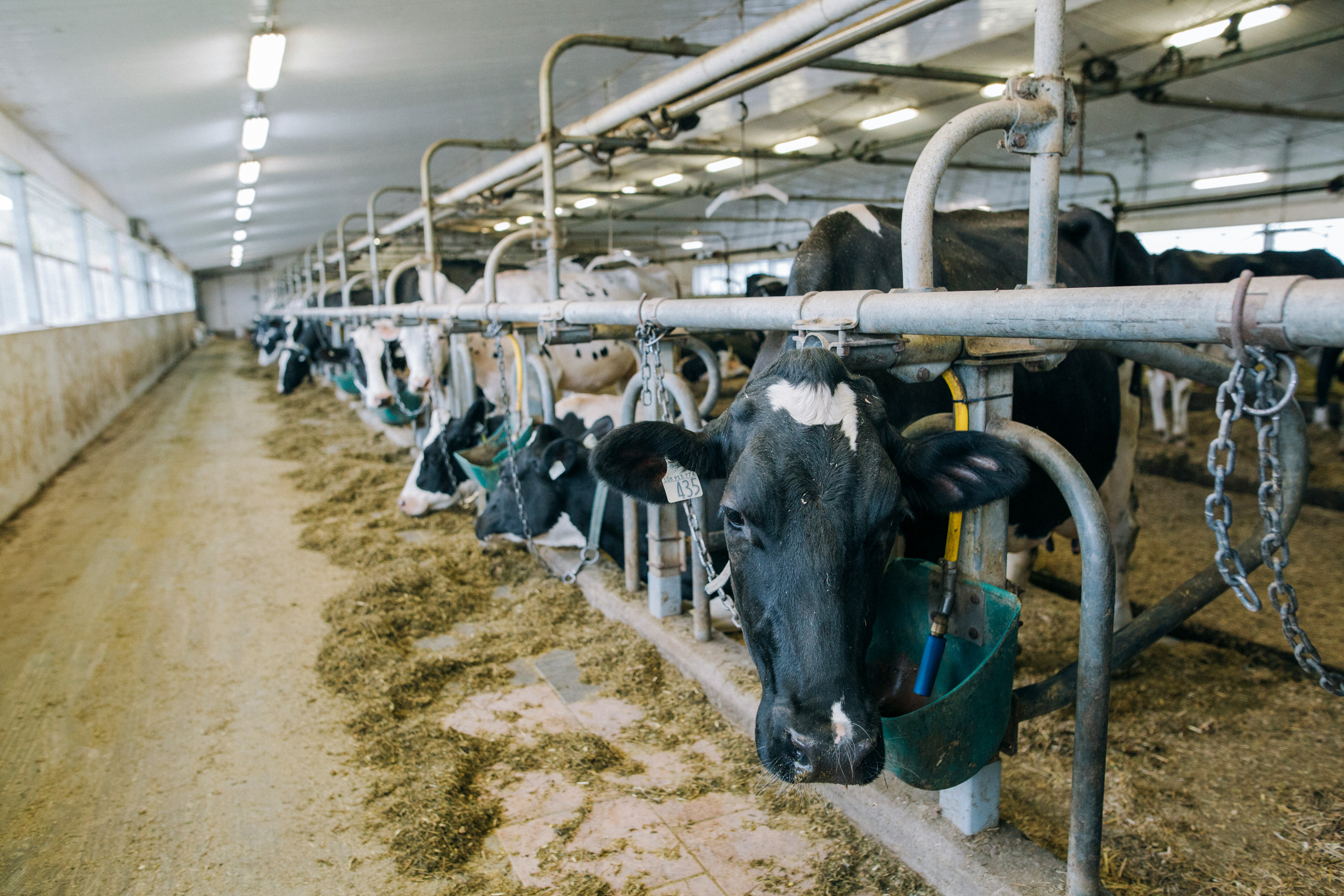
Photo by MRC Témiscamingue on Unsplash

New research suggests the H5N1 influenza virus is mainly spreading in US dairy cows through their milk and the process of milking them, rather than respiratory spread. Researchers used the bird flu strain currently circulating among US cattle to infect six calves via the nose and mouth. They also infected six lactating cows via their udders, three with the same US strain and three with a strain circulating in Europe. The calves had mild respiratory symptoms and didn't transfer it to others, while the lactating cows with either strain had severe udder infections and high levels of virus in their milk for several days, but no evidence of infection in other organs such as the respiratory tract. The study authors say this also suggests other strains of bird flu have the potential to replicate in cows' udders.

News release

From: Springer Nature

Milking procedures are likely to be the primary routes of H5N1 influenza virus transmission between dairy cows, suggests a paper published in Nature this week.

Highly pathogenic H5N1 avian influenza was detected in cattle in the USA in the spring of 2024 and has affected more than 190 dairy cattle farms in at least 13 states. Milking equipment may be a likely route of transmission, but more detailed evaluation is needed.

Jürgen Richt, Martin Beer and colleagues experimentally infected calves and lactating cows with H5N1 clade 2.3.4.4b, currently circulating in cattle in the USA, to provide insight about likely modes of transmission. They compared susceptibility and transmission in nine calves infected via the oral and nasal cavity, and three lactating cows via inoculation of the mammary glands; an additional three dairy cows were inoculated with a strain of bird flu circulating in Europe (H5N1 euDG).

Infection of the calves resulted in mild clinical presentation, with moderate viral replication but no transmission to co-housed calves. By contrast, the dairy cows displayed severe mammary gland infection, including fever, mastitis and abrupt reduction in milk yield. A drastic increase in the levels of virus in the milk was observed, but no evidence of systemic infection or nasal shedding in the nasal passages were detected. These findings indicate that the milk and milking procedures, rather than respiratory spread, are the likely primary routes of H5N1 transmission between cattle.

Attachments

Note: Not all attachments are visible to the general public. Research URLs will go live after the embargo ends.

Research Springer Nature, Web page URL will go live after the embargo lifts
Journal/
conference:
Nature
Research:Paper
Organisation/s: Friedrich-Loeffler-Institut, Germany
Funder: This work was supported by USDA NACA #58-3022-3-004, National Bio and Agro-Defense Facility (NBAF) Transition Fund from the State of Kansas, the USDA Animal Plant Health Inspection Service’s NBAF Scientist Training Program, the AMP and MCB Cores of the Center on Emerging and Zoonotic Infectious Diseases (CEZID) of the National Institutes of General Medical Sciences under award number P20GM130448, and the NIAID supported Centers of Excellence for Influenza Research and Response (CEIRR, contract number 75N93021C00016). This work was further funded by the DURABLE project, co-funded by the European Union, under the EU4Health Programme (EU4H), Project no. 101102733, and the Kappa-Flu project, under the Horizon Europe Programme (grant agreement KAPPA-FLU no. 101084171) and the German Federal Ministry of Education and Research within the project 'PREPMEDVET' grant no. 13N15449
Media Contact/s
Contact details are only visible to registered journalists.