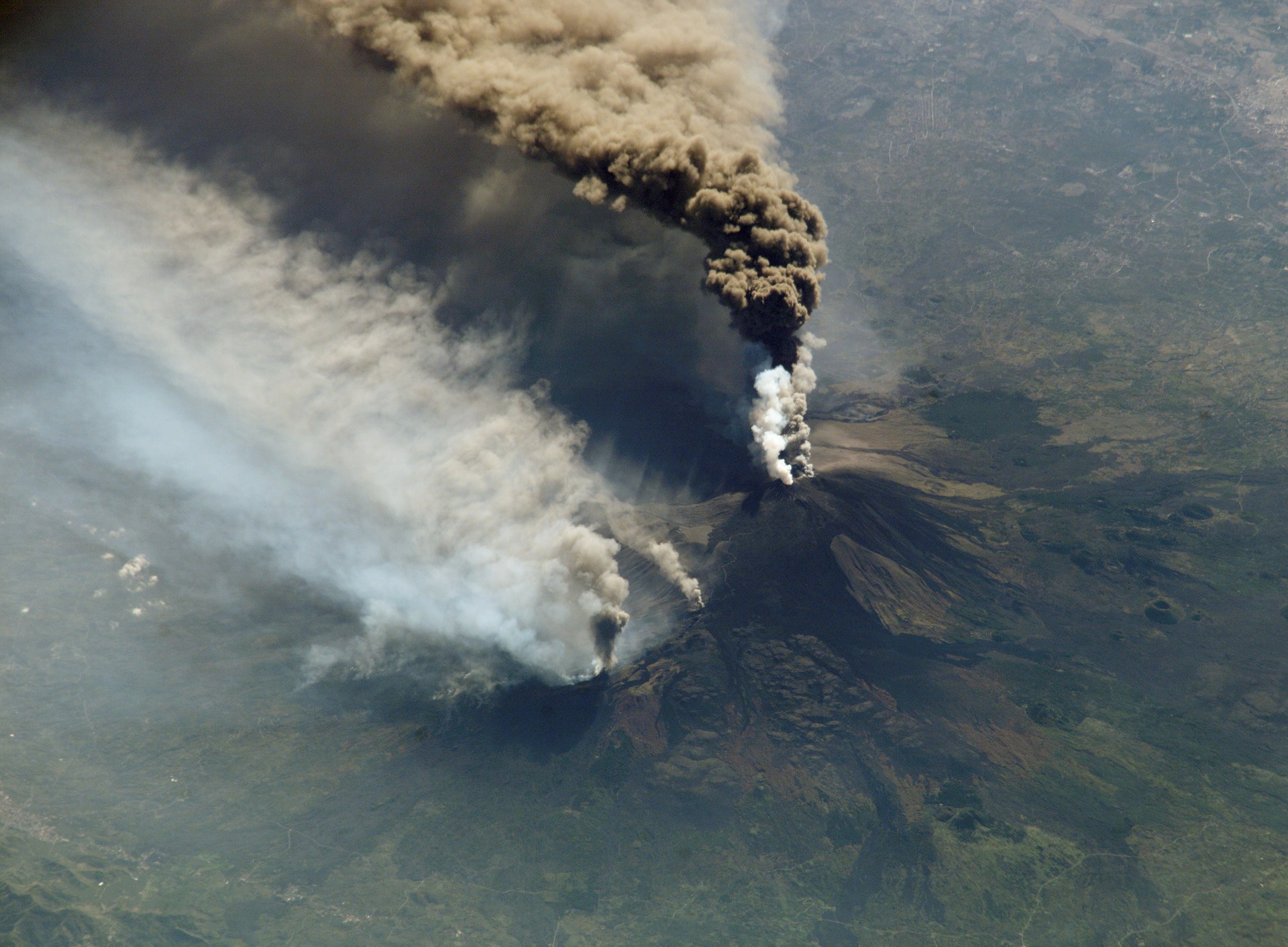
Many ancient Chinese dynasties may have been ended by volcanic eruptions

Publicly released:
International
Image by WikiImages from Pixabay

Many ancient Chinese dynasties may have been ended by volcanoes, according to international researchers who analysed the dates of dynasty collapses in china over the past 2000 years, and found that they may be related to volcanic eruptions. According to the researchers, 62 of the 68 dynasty collapses were preceded by at least one volcanic eruption. They say that volcanic eruptions are known to be a key cause of sudden changes in the climate, often leading to cooler and drier growing seasons and reducing agricultural productivity. They note that the collapse of the Tang Dynasty in 907 C.E. and the Ming Dynasty in 1644 C.E. have both previously been linked to episodes of drought and cold, which could be related to volcanoes.

Media release

From: Springer Nature

Geoscience: Chinese dynastic collapses linked to volcanic eruptions

Volcanic eruptions may have caused abrupt climate changes that contributed to the collapse of many Chinese ruling dynasties over the past 2,000 years, according to an article published online in Communications Earth & Environment. The findings suggest that major eruptions can profoundly impact unstable or vulnerable regions.

In the pre-industrial period, volcanic eruptions were a key cause of sudden changes in the climate, often leading to cooler and drier growing seasons and reducing agricultural productivity. The collapse of the Tang Dynasty in 907 C.E. and the Ming Dynasty in 1644 C.E. have both previously been linked to episodes of drought and cold. Nevertheless, the impacts of abrupt, short-term climate fluctuations on societal collapses have been difficult to establish, as records of both climate and societal change are not often sufficiently well dated.

Francis Ludlow and colleagues compiled the dates of dynasty collapses in China over the past 2,000 years, and compared these to reconstructions of volcanic eruptions. They found that at least one volcanic eruption preceded 62 of the 68 identified collapses. Pre-existing societal stress, such as ongoing warfare, and large eruptions were found to increase the risk of dynastic collapse. However, the severity of societal impacts and length of time between eruption and collapse were found to vary, highlighting the complexity of the underlying causes.

Attachments

Note: Not all attachments are visible to the general public. Research URLs will go live after the embargo ends.

Research Springer Nature, Web page URL will go live after the embargo lifts
Journal/
conference:
Nature Communications
Research:Paper
Organisation/s: Zhejiang University, China
Funder: C.G. is supported by the National Natural Science Foundation of China grant 41875092. A.R. is supported by U.S. National Science Foundation grants AGS-1430051, AGS- 1617844, and AGS-2017113. A.R.S. was supported by NSF P2C2 award AGS-1903674 and by NSF award ICER-1824770. F.L. acknowledges support from an Irish Research Council Laureate Award (CLICAB, Award IRCLA/2017/303). F.L.’s contribution was additionally supported by fellowships at the Harvard University Center for the Environment (Ziff Environmental Fellowship), Rachel Carson Center for Environment and Society, LMU Munich, and Yale Climate & Energy Institute, with further support from the Initiative for the Science of the Human Past at Harvard (SoHP). M.S. acknowledges funding from the European Research Council (ERC) under the European Union’s Horizon 2020 research and innovation program (THERA project, grant agreement ID 820047). J.A.M. acknowledges funding from the ERC (NorFish project, grant agreement ID 669461).
Media Contact/s
Contact details are only visible to registered journalists.