 Sign In



 Australia; ACT
News release
From:
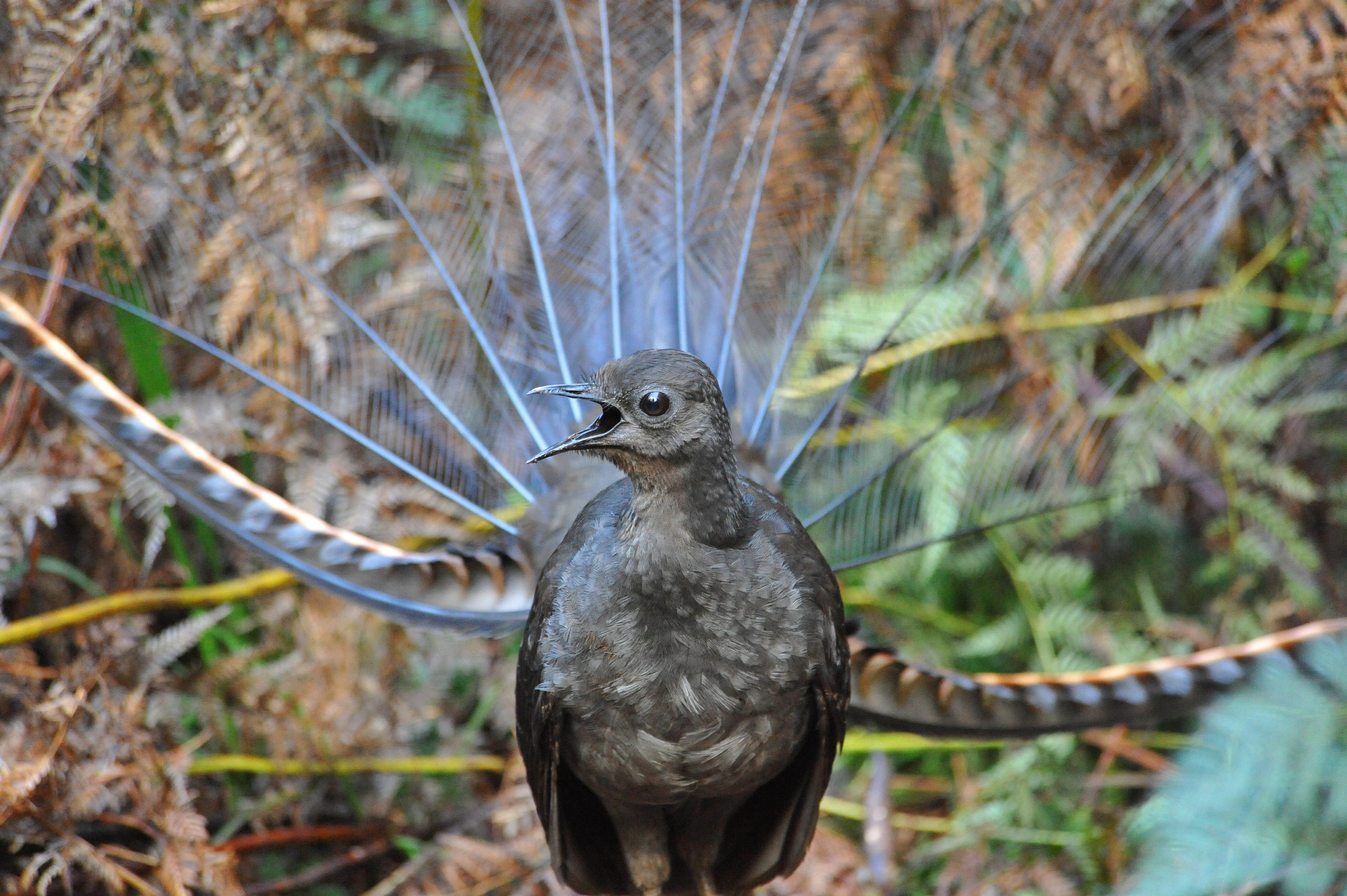
Male lyrebirds use clever mimicry to increase their chances of sexual success, according to a new study involving researchers from The Australian National University.
Lyrebirds are famous for their ability to mimic complex sounds of other species, including “human” sounds like chainsaws. Now biologists think they’ve discovered what drives this skill -- it’s a trick to get mates to reproduce.
According to study co-author, ANU Professor Robert Magrath, wild males have two main types of mimicry.
“They are famous for mimicking the songs of other birds in breathtaking recitals,” Professor Magrath said.
“But we found they use a different type of mimicry at their display mounds, where females visit for sex. They use this mimicry when a female tries to leave without mating, and during the act itself – to create the illusion of a nearby threat.”
Lead author Dr Anastasia Dalziell, a Visiting Fellow at ANU, says this suggests it’s a deceptive part of male lyrebirds’ sexual strategy.
“They mimic what’s known as mobbing – a common anti-predator ploy. It involves a loud alarm call to attract other birds to harass a predator, eventually forming a noisy flock,” Dr Dalziell said.
“The male lyrebirds not only imitate the alarm calls of several species of songbird, they pattern the calls to create the illusion of many birds calling at the same time, even including the sound of wingbeats. It’s a very convincing illusion – so convincing it fools other birds into responding.”
This mimicry has the characteristics of a “sensory trap” – with the male attempting to trick the female into responding as though there’s a predator threat.
“Mimicking when the female attempts to leave may be a bit like saying “it’s dangerous outside, stay”, while mimicking during copulation could extend the duration, like saying “freeze”, making sure the sperm is transferred,” Dr Dalziell said.
The findings were a surprise to the research team.
“At first it seemed absurd, but we quickly realised that mimicking a mobbing flock during copulation was the norm for male lyrebirds. It happened during every single copulation we filmed,” Dr Dalziell said.
“The more we researched it the more remarkable this behaviour became. Copulation calls are not common among songbirds, and songbirds very rarely copulate for longer than two seconds. The lyrebirds in our study averaged 45 seconds.”
Dr Dalziell is currently a postdoctoral Research Fellow at the University of Wollongong, as well as a Visiting Fellow at the University of Western Sydney and Cornell University in the US.
The team will now examine how female lyrebirds respond to both real and mimicked mobbing flocks.
Their work is published in the journal Current Biology.

