Sign In



 Australia; NSW; TAS
News release
From:
New research has uncovered a crucial clue to understand the spread of ‘barrens’ in the Great Southern Reef, which are threatening the reef ecosystem.
‘Barrens’ are areas of low, or no, seaweed cover in the reef. Barren habitat has lower productivity and absorbs less carbon dioxide than the seaweed forest it replaces. In New South Wales, barrens can form in areas where there is an overrepresentation of long-spined sea urchins*.
It’s assumed that large fish – believed to be a key predator of urchins – play a significant role in controlling long-spined urchin populations and in turn, barrens. However, this study found almost no evidence of large fish preying on these urchins in the Great Southern Reef.
The unexpected findings are critical to inform future reef management strategies, particularly now that barrens are emerging further south in Tasmania, decreasing productivity for local marine environments.
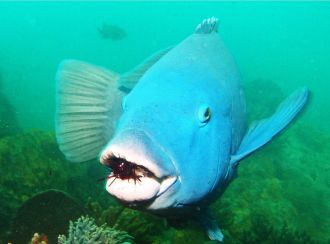
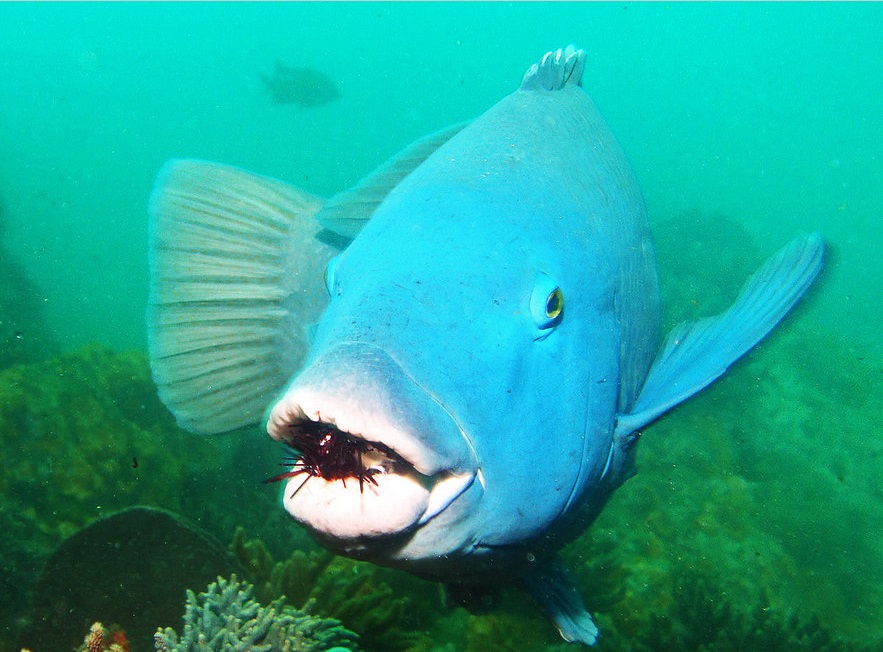
The research, led by University of Newcastle PhD candidate Jeremy Day, found that key predatory fish—blue groper and pink snapper—consume very few long-spined sea urchins, despite being thought to play a major role in controlling their numbers.
"We investigated the stomachs of blue groper and pink snapper from the Great Southern Reef and were surprised to find almost no evidence that these fish prey on long-spined urchins specifically," Mr Day said.
"However, they do seem to consume other species of sea urchins in significant quantities.”
The University of Newcastle research team analysed the stomach contents of 39 blue groper and 111 pink snappers, which were donated for science by recreational fishers in 2021 and 2022.
“They were fished from an area spanning 1,250km along the Great Southern Reef, where long-spined sea urchins are a naturally abundant, native species to that region,” Mr Day said.
While it’s been observed that those species of fish do eat long-spined sea urchins, the aim of this study was to shed light on how regularly it happens in the wild, without human interference. Mr Day said their findings suggest it’s much less than thought.
Their results revealed a clear trend: in blue groper, long-spined sea urchins were detected in just 5.1 per cent of fish, while other sea urchin species were present in 30 per cent. Similarly,pink snapper consumed very few long-spined urchins (2.7 per cent of fish), yet other urchins were present in 13 per cent
“This tells us it’s likely pink snappers and blue gropers help control other sea urchin populations to an extent. But their role in managing long-spined sea urchins in the Great Southern Reef appears far less significant than previously assumed,” Mr Day explained.
Mr Day said the study challenges the assumption that larger fish, due to their stronger jaws and feeding abilities, help control populations of long-spined sea urchins.
“It’s been suggested, based off limited evidence, that a decline in large predatory fish populations is contributing to the spread of urchin barrens across NSW,” Day said.
“This study suggests food-webs in the Great Southern Reef are more complex.”
The findings come at a contentious time for informing management strategies of long-spined sea urchins – in 2023 a Senate inquiry recommended a $55 million investment towards this.
“Our research is an important piece of the puzzle to help inform future management strategies of long-spined sea urchins,” Mr Day said.
This study relied on visual analysis of stomach contents to identify urchin remains.
“Further research using other methods of dietary analysis will help us build a more complete picture of urchin predation,” Mr Day said.
The study was co-authored by Senior Lecturer in Marine Science, Dr Megan Huggett, and Associate Dean Engagement and Outreach with the School of Environmental and Life Sciences, Associate Professor Troy Gaston from the University of Newcastle. Through its research, the University of Newcastle is committed to finding solutions to protect next generation resources to bring the world closer to a sustainable future.
The research was published in the journal Estuaries and Coasts.
* Centrostephanus Rodgersii or “centro”
Multimedia