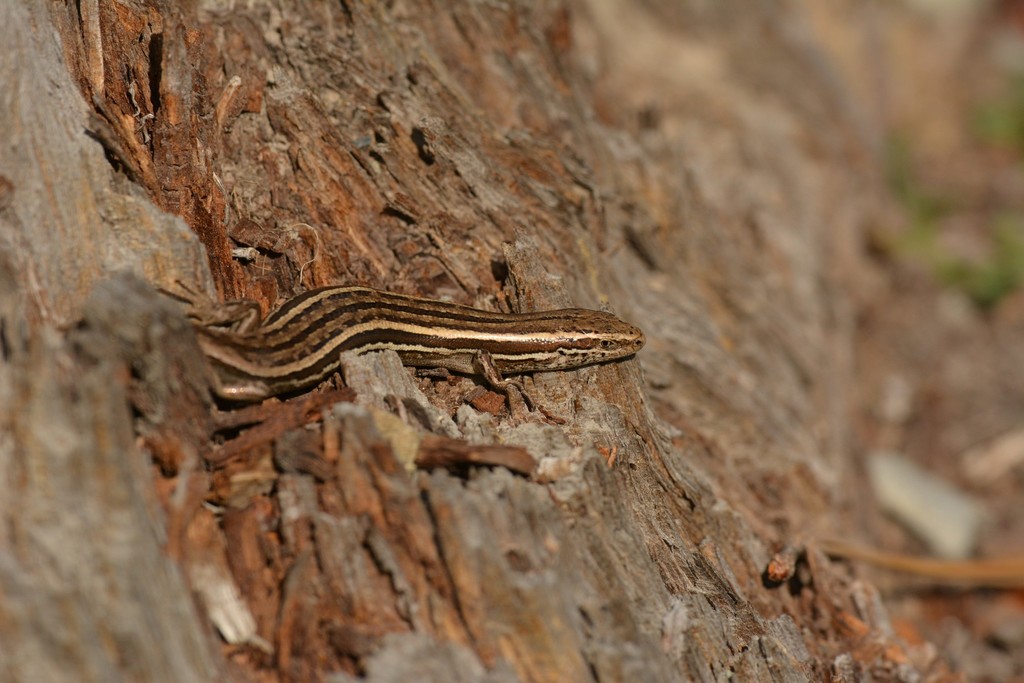
Lizard housing: some might do well in manmade rockpiles

Publicly released:
New Zealand
PHOTO: By Christopher Stephens from iNaturalistNZ (copyright: CMKMStephens) - https://www.inaturalist.org/photos/23849480, CC BY-SA 4.0, https://commons.wikimedia.org/w/index.php?curid=78837303

Ten years ago, a gold mining company wanted to develop a new open pit and waste rock piles in eastern Otago. Assessments found that three native lizard species would be negatively impacted, so to mitigate the loss of the lizards and their habitats, the company was required to build large rockpile habitats nearby. The company funded research to study the rock piles for the next two-and-a-half years, with hundreds of sightings of McCann’s skinks observed. The team says more research is needed, but since McCann’s skinks appeared to use the piles the most -- compared to the other two species studied -- this technique may be capable of creating habitat for McCann's skinks.

Journal/
conference:
New Zealand Journal of Ecology
Organisation/s: Victoria University of Wellington, EcoGecko Consultants Ltd, NZ; Southern Scales Herpetology, NZ; Beca, NZ
Funder: This project was funded by OceanaGold (New Zealand Ltd). Conflicts of interest: Trent Bell, Carey Knox, and Sarah Herbert carried out this piece of work as employees (all) and Directors (TB and SH) of EcoGecko Consultants Ltd. EcoGecko Consultants were contracted by OceanaGold (New Zealand Ltd) from 2013 to 2019 to provide expert advice on, and to carry out aspects of, the lizard mitigation programme for the Coronation Project. Debbie Clarke is a current employee of OceanaGold. This manuscript was written up without funding, but its release for publication was subject to approval from OceanaGold (New Zealand Ltd).
Media Contact/s
Contact details are only visible to registered journalists.