 Sign In



 Australia
News release
From:
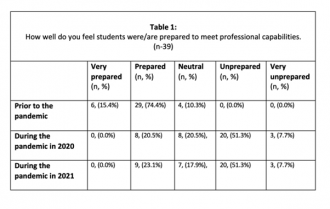
Online learning during the Covid-19 pandemic left many radiography and radiation therapy students unready to enter the workforce, a nation-wide survey of clinical educators has found. Clinical educators – senior healthcare workers who supervise student placements in healthcare settings – who believed students were prepared to meet professional standards dropped from 90 per cent before the pandemic, to less than 25 per cent in 2020 and 2021. These are grim findings, given Australia is already facing shortages in both the radiography and radiation therapy fields.
Students missed out on clinical time, patient interaction, and exposure to a variety of clinical experiences.
Radiographers and radiation therapists are a vital part of Australia’s health workforce. They deliver more than 30 million diagnostic imaging services, and 75,000 courses of radiation therapy to cancer patients each year.
Key findings of the study:
- 84% of clinical educators said students had insufficient opportunities to gain hands-on experience.
- 70% said virtual training was not enough to prepare students for placement.
- 74% said graduating students would need extra support when starting work.
- 44% said clinical sites weren’t failing students who did not meet necessary standards.
Radiographers and radiation therapists must meet professional standards set by the Medical Radiation Practice Board of Australia (MRPBA). These include applying different methods of imaging and treatment, delivering patient care, communicating with patients and working well with other health practitioners.
This study comes as the World Health Organisation warns more than 30 pathogens could trigger the next global pandemic.
Carolyn Heyes, President of the Australian Society of Medical Imaging and Radiation Therapy, says the study's results raise questions about how we tackle the unavoidable effect of lost clinical training during pandemics.
“Placements are vital in giving medical radiation students the hands-on experience they need. The healthcare training system as a whole needs to invest in tailored upskilling for graduates and supported workplace orientation programs as pandemic conditions lift,” she said.
“The knock-on effect of missed clinical placement experience can be felt for years to come.”
The study was lead by Adam Steward and is published here: https://onlinelibrary.wiley.com/doi/10.1002/jmrs.847
Multimedia

Attachments
Note: Not all attachments are visible to the general public. Research URLs will go live after the embargo ends.


