Large-scale interventions may delay decline of the Great Barrier Reef and buy us some time

Publicly released:
Australia; NSW; QLD; TAS
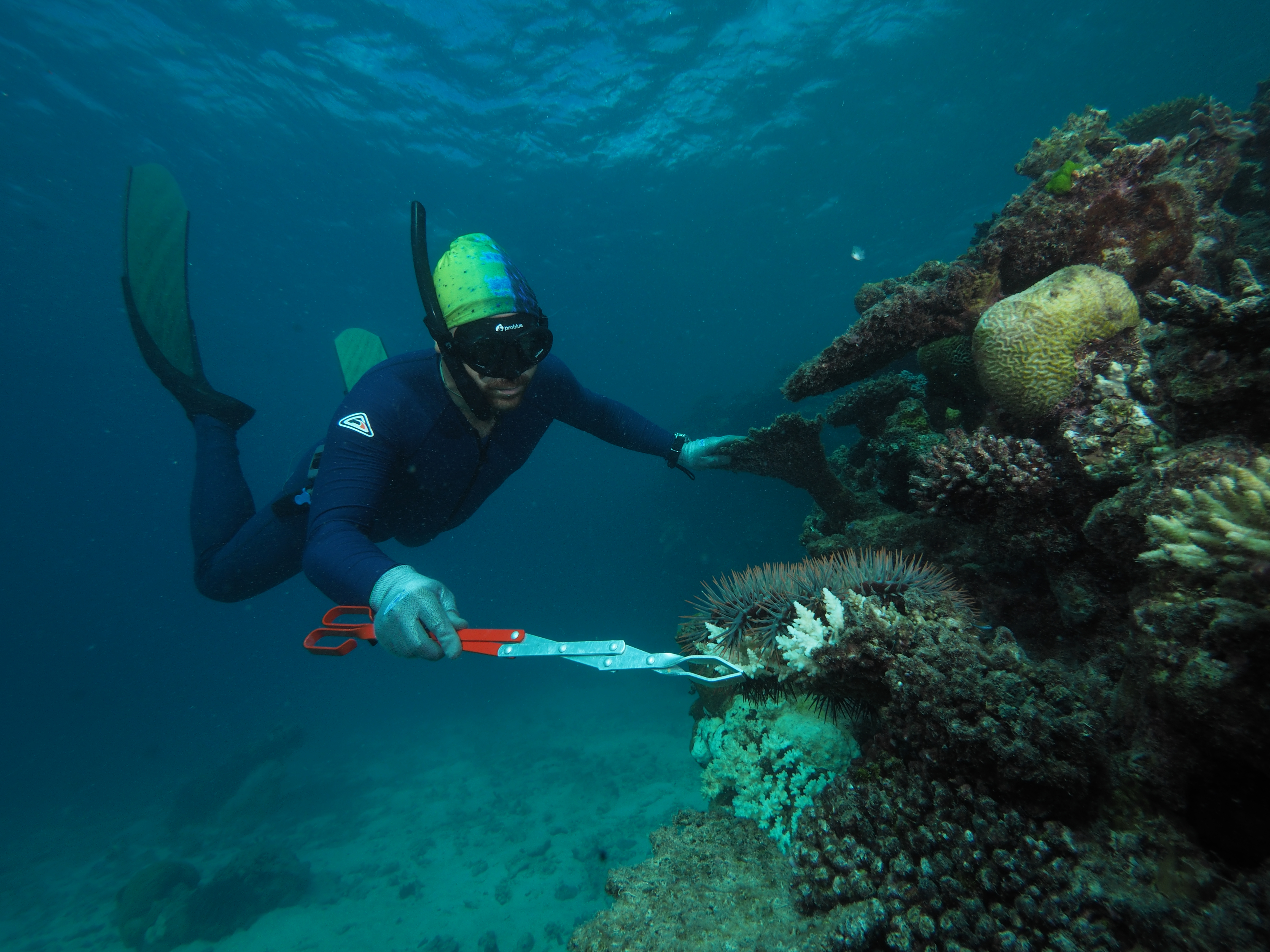
A diver collects a starfish for research Credit David Westcott CSIRO

Large-scale interventions, such as shading parts of the reef and expanding control of crown of thorns starfish, may help delay the decline of the Great Barrier Reef, buying us a bit of time for global climate action. The Aussie researchers modelled the impact of a range of interventions on the reef and found that large scale combinations that protected coral from the crown of thorns starfish and from heat stress were the most effective. The authors say a combination of the interventions could at best slow the decline of the reef by one to two decades.

News release

From: The Royal Society

Large-scale interventions may delay decline of the Great Barrier Reef

Australia's Great Barrier Reef is the largest living structure on the planet. It is under intense pressure from climate change and other threats, including outbreaks of coral-eating starfish, destructive tropical cyclones, and extreme marine heatwaves. Dr Scott Condie and colleagues have developed a computer model that describes how climate-change will affect more than 3700 reefs. They have test a wide range of intervention options, including controlling starfish numbers, reducing heatwaves by generating artificial clouds, and introducing heat tolerant corals. Their results show that decline of the Reef may be delayed up to 20 years, although controlling climate change remains critical.

Attachments

Note: Not all attachments are visible to the general public. Research URLs will go live after the embargo ends.

Research The Royal Society, Web page Please link to the article in online versions of your report (the URL will go live after the embargo ends).
Journal/
conference:
Royal Society Open Science
Research:Paper
Organisation/s: CSIRO, Australian Institute of Marine Science (AIMS), University of Tasmania, The University of Queensland, Southern Cross University, Great Barrier Reef Marine Park Authority, University of Sydney
Funder: This research was partially funded by the Australian Government’s Reef Restoration and Adaptation Program (RRAP) and the Australian Government’s National Environmental Science Program (NESP).
Media Contact/s
Contact details are only visible to registered journalists.