Sign In



 Australia; NSW
News release
From:
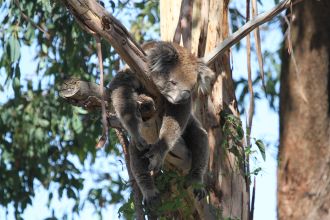
A groundbreaking genomic study has reshaped our understanding of the evolutionary history of the koala (Phascolarctos cinereus), revealing the iconic Australian marsupial experienced a severe population decline around 100,000 years ago, before the arrival of humans on the continent.
All modern koalas descended from a single ancestral population that survived major climate fluctuations, including severe glacial periods.
However, modern koala populations are now facing a new combination of threats, including hunting, land clearing, bushfires and disease.
Led by researchers at the University of Sydney and Texas A&M University, the findings overturn earlier studies that suggest koala populations declined only after humans arrived. The findings were announced in Molecular Biology and Evolution, published by Oxford University Press.
“The study rewrites the timeline for the koala’s genetic history in Australia,” says PhD student Toby Kovacs, who led the research.
“By calculating the mutation rate of modern koala populations, we can estimate and build the genetic timeline backwards all the way to 100,000 years ago to get a glimpse of genetic diversity and the sizes of ancient koala populations.”
Mr Kovacs said Fossil records are too sparse to know exactly how big koala populations were 100,000 years ago, so studying their genomes offers vital clues to their evolutionary history.
“Genomic analyses show that koalas have experienced major population declines in the past due to climate change and habitat loss. When environmental conditions improved, their populations recovered and expanded across much of eastern Australia,”
“It’s important to make clear many of the threats facing modern koala populations are caused by humans, which includes habitat loss and hunting.”
Understanding how koala populations responded to past declines and recoveries can help guide the science-based conservation strategies needed to protect the species into the future.
Multimedia