 Sign In



 Australia; International; ACT
News release
From:
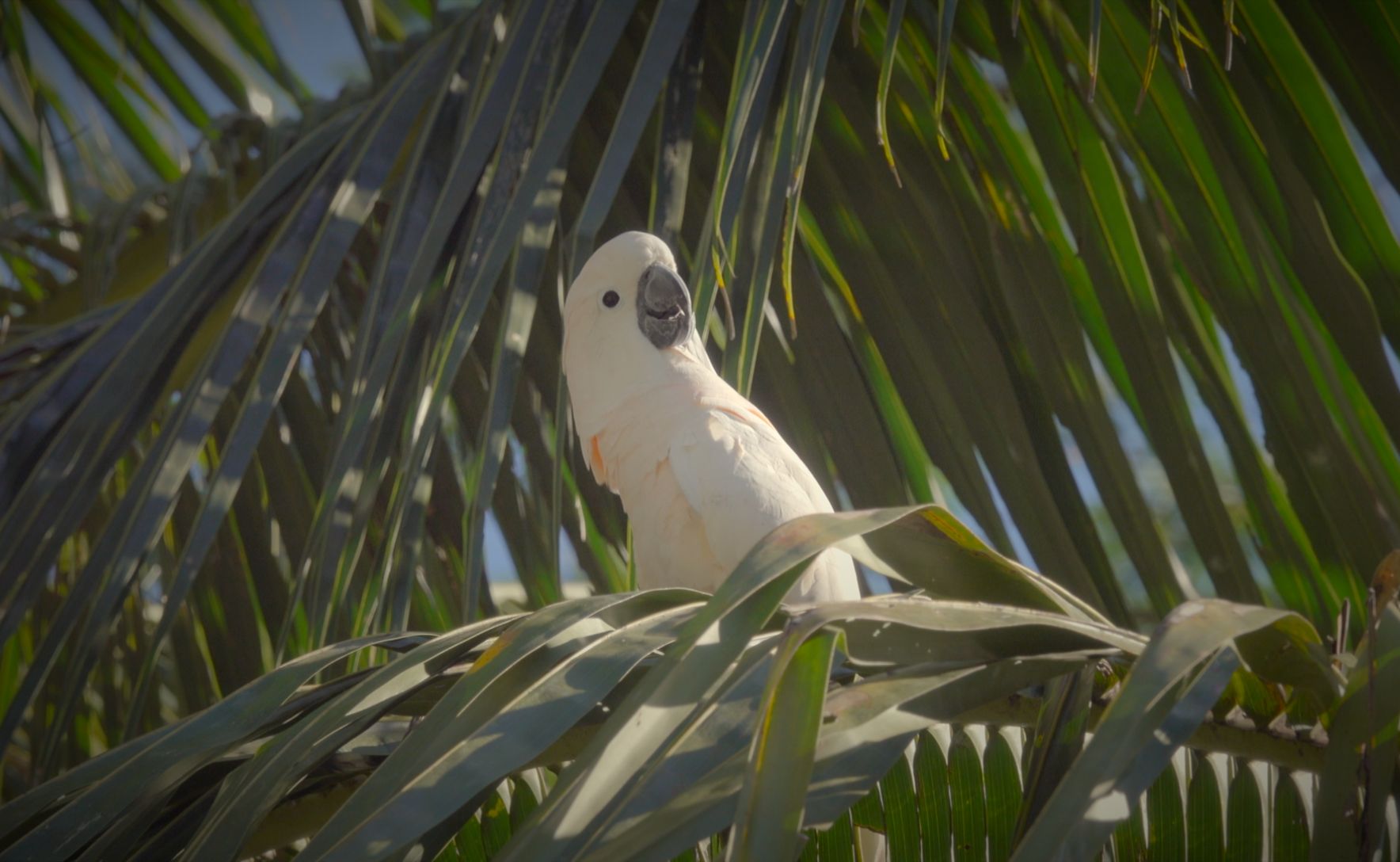
An Indigenous community in Indonesia has found a way to protect one of the world’s rarest cockatoos without abandoning a centuries-old sacred tradition, according to new research led by The Australian National University (ANU), Universitas Gadjah Mada (UGM) and Perkumpulan Konservasi Kakatua Indonesia (KKI).
The study documents how the Huaulu people of Seram Island, Indonesia, worked with conservation researchers and government authorities to adapt their sacred Cidaku initiation ceremony.
Instead of hunting the endangered salmon-crested cockatoo, the ceremony now uses naturally moulted feathers collected from wildlife rescue centres.
Historically, young Huaulu men wore the bird’s distinctive crest feathers during the Cidaku ceremony, which marks the transition to adulthood.
The co-designed solution has been formally recognised by the Indonesian Government and offers a model for conservation efforts that work with Indigenous communities rather than against them.
Senior author Dr George Olah from the Fenner School of Environment and Society said the research challenges the idea that traditional cultural practices and wildlife conservation are inherently at odds.
“We found that for the contemporary Huaulu, the spiritual potency of the Cidaku ritual relies less on the violence of the hunt and more on the inherent spiritual integrity of the species itself,” Dr Olah said.
“Through a series of participatory focus group discussions, the community co-designed a solution that respects their oral customary law and practices, while ensuring the survival of the wild cockatoo population.”
The study found commercial wildlife trafficking is the primary driver of the species’ decline, while Indigenous communities are often disproportionately blamed for the loss of wild cockatoo populations.
Working with Huaulu elders, Mansuela National Park authorities and KKI, researchers helped establish a “feather bank” that provides naturally shed feathers from rehabilitation centres, eliminating the need to hunt wild birds for the ceremony.
The research also found the Huaulu community views the use of authentic moulted feathers as preserving the ceremony’s spiritual integrity while ensuring the survival of wild cockatoos.
Lead author Dwi Agustina from UGM and KKI said the project demonstrates that conservation is most effective when Indigenous communities help shape the solution.
“This agreement does more than just protect a species; it validates the community’s role as the rightful stewards of their environment,” Agustina said.
“It shows that when we move beyond freezing culture in the past and instead support its evolution, we can achieve outcomes that benefit both biodiversity and Indigenous identity.”
The team hopes the research will serve as a global model for biocultural conservation, demonstrating that successful conservation interventions are most effective when they are co-designed with local leaders and embedded within existing cultural frameworks.
Agustina said the findings have implications well beyond Indonesia.
“Saving the salmon-crested cockatoo requires saving the culture that reveres it,” Agustina said.
“This study proves that you don’t have to choose between cultural continuity and ecological survival – you can have both.”
The researchers used interviews, focus group discussions and participatory fieldwork with Huaulu community members between 2019 and 2025 to document how the new conservation agreement was developed and implemented.
The study is published in the Journal of Ethnobiology.

