 Sign In



 International
News release
From:
How jellyfish bycatch could be valuable collagen source for cosmetics and biotech
Dr Ainara Ballesteros is a Juan de la Cierva postdoctoral researcher at the Institute of Environment and Marine Science Research at the Catholic University of Valencia, where she leads a research group focused on jellyfish biology, aquaculture, and the sustainable use of marine resources. Her work is centered on developing innovative solutions based on marine science, particularly through the study of underused organisms as sources of high-value compounds within circular bioeconomy and zero-waste strategies.
She is joined in this work by Raquel Torres, a PhD student at the same institute, who is carrying out her doctoral thesis within this line of research, focused on jellyfish valorization, collaboration with the fishing sector, and the sustainable management of marine resources.
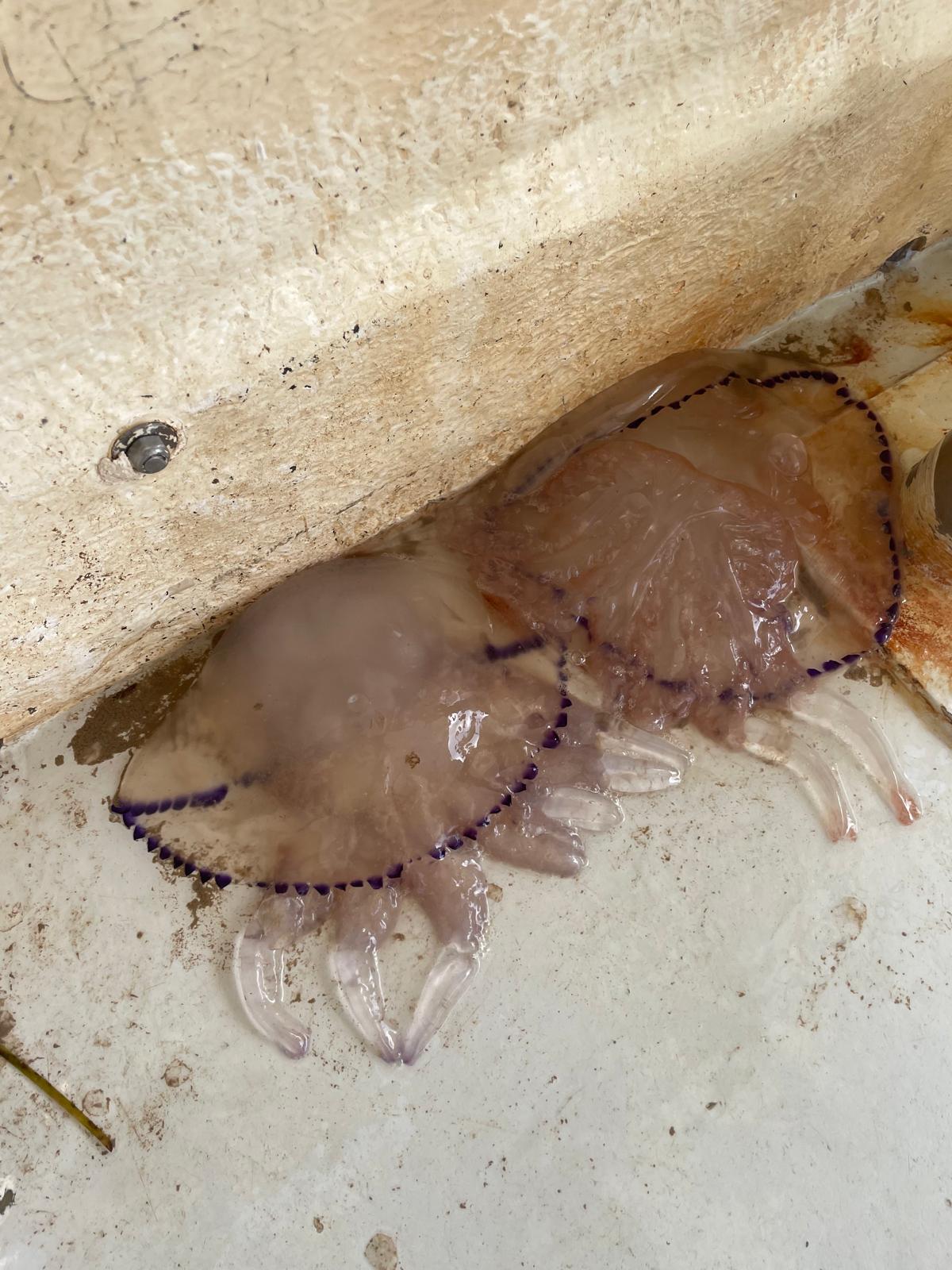
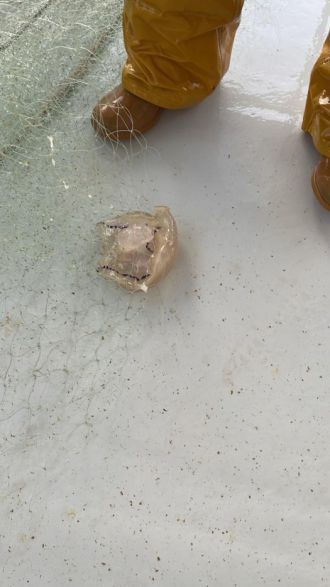
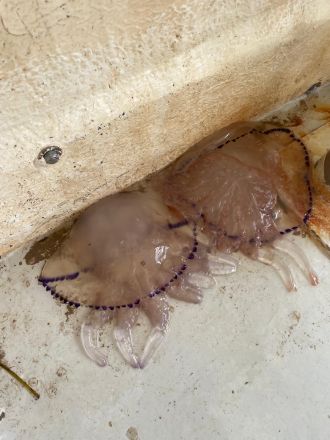
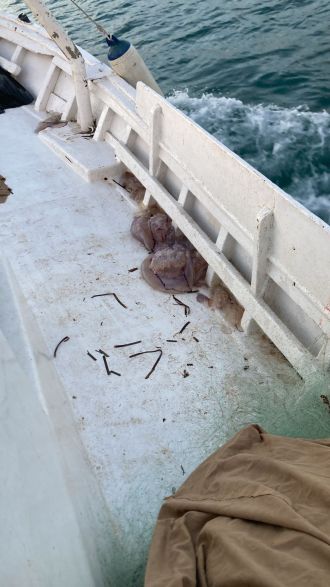
They are co-authors on a new Frontiers in Marine Science article which investigated whether jellyfish accidentally caught by small-scale fishers in Spain could be transformed into a valuable resource instead of being treated as waste. The team worked side by side with fishers to better understand their perceptions of jellyfish bycatch, identify which species are most frequently caught, and evaluate whether one of them, Rhizostoma pulmo, could serve as a sustainable source of high-quality collagen.
What inspired you to become a researcher?
Ballesteros: We have always been fascinated by nature and by the many unanswered questions surrounding marine ecosystems. The sea is dynamic, complex, and full of interactions that are still not fully understood. For us, becoming researchers was a natural way to combine curiosity with the possibility of contributing useful knowledge to society.
Jellyfish are fascinating animals. They have inhabited the oceans for millions of years, play important ecological roles, and possess unique biological characteristics that we are still discovering. However, they often carry a negative reputation, usually associated only with stings or blooms. Part of our work is to help people understand them better, showing their true role in marine ecosystems as well as their scientific and biotechnological potential.
We were especially drawn to applied marine science—the kind of research that not only advances knowledge but can also help address real environmental and social challenges. In our case, working with fisheries, marine resources, jellyfish, and focusing on sustainability allows us to connect science directly with coastal communities and ocean conservation.
Can you tell us about the research you’re currently working on and why it’s important?
Ballesteros: Our current research focuses on the sustainable use of marine biological resources, particularly species that are often overlooked, underused, or considered problematic. This work is aligned with current circular bioeconomy and zero-waste policies and strategies, which aim to reduce waste and give new value to materials that have traditionally been discarded.
Torres: Our research is important because it shows that environmental challenges can sometimes become opportunities when approached creatively and collaboratively.
Jellyfish bycatch is often seen as a nuisance for fishers because it damages nets, increases workload, and can reduce the value of commercial catches. However, jellyfish are also rich in collagen, a biomaterial widely used in cosmetics, medicine, food technology, and tissue engineering.
By demonstrating that jellyfish bycatch can provide collagen without compromising quality, we propose a circular bioeconomy solution: reducing waste, creating new economic opportunities, and supporting small-scale fisheries at the same time.
Can you tell us about the collaboration with fishers? Were you surprised by any of their attitudes towards recycling jellyfish bycatch? What did they identify as opportunities and difficulties?
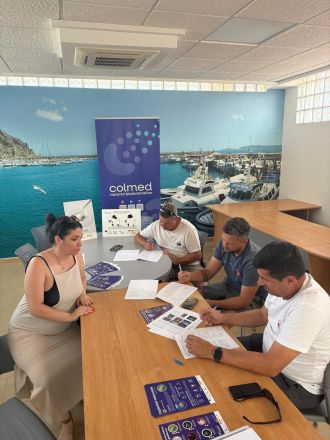
Torres: The collaboration with fishers was one of the most valuable parts of the project. Their practical knowledge of the sea, seasonal changes, fishing gear, and species behavior is incredibly valuable and often underappreciated.
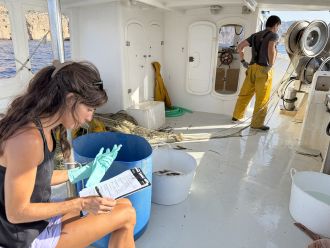
We were especially impressed by their high level of involvement. Many reported almost daily on catches – or non-catches. They also shared photographs and observations directly from the sea. This was particularly important, as data on non-catches are extremely valuable for understanding patterns of presence and distribution. All of this showed a clear willingness to collaborate and a genuine commitment to the project.
We were also positively surprised by how open and interested many fishers were. Most participants saw the potential of transforming jellyfish bycatch into something useful, especially if it could generate additional income and reduce waste.
At the same time, they were realistic about the barriers. They highlighted the lack of infrastructure, limited market demand, the absence of clear incentives, and the need for specific training. In other words, they were willing to participate—but they need systems that make participation truly viable.
Can you tell us about the analyses you ran in the lab? Is the collagen from jellyfish bycatch of the same quality as jellyfish that wasn’t caught accidentally?
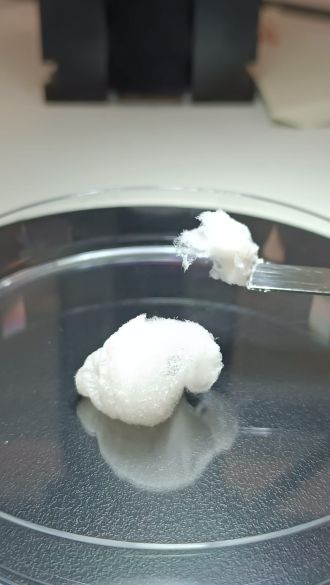
Torres: In the laboratory, we extracted collagen from R. pulmo jellyfish collected in two different ways: individuals caught accidentally in fishing nets, and individuals carefully collected by hand-net to better preserve their structure.
We then compared the collagen using several analytical techniques which allowed us to assess the protein profile and apparent molecular weight distribution, structural integrity, and the characteristic molecular and crystalline features of collagen.
The key result was very encouraging: collagen obtained from bycatch jellyfish showed the same main structural features and very similar quality to collagen from carefully collected specimens. In other words, despite being considered a discarded material, the accidental capture did not significantly damage the collagen. This supports the feasibility of using jellyfish bycatch biomass as a sustainable raw material and demonstrates its significant biotechnological value.
What potential applications of collagen harvested from jellyfish bycatch are possible? Which one are you most excited about?
Torres: Jellyfish collagen has a wide range of possible applications. It could be used in cosmetics, for example in skin-care products; in biomedical fields, such as wound dressings, scaffolds for tissue regeneration, or drug delivery systems; and potentially in nutraceutical or food-related products.
One of the most exciting areas for us is regenerative medicine. Marine collagen is attracting attention as an alternative to mammalian collagen because it may reduce concerns linked to zoonotic diseases, religious restrictions, or consumer preferences.
Are there any common misconceptions about this area of research? How would you address them?
Ballesteros: One common misconception is that jellyfish are only harmful organisms with no positive value. While blooms can create challenges, jellyfish are natural components of marine ecosystems and can also provide ecosystem services and useful biomaterials.
Another misconception is that waste materials are automatically low quality. Our results show that, with proper handling and scientific validation, bycatch biomass can become a valuable resource.
Finally, some people assume sustainability and profitability are incompatible. Innovative circular economy models can help support both environmental goals and coastal livelihoods.
What are some of the areas of research you’d like to see tackled in the years ahead?
Ballesteros: We would like to see more long-term studies on jellyfish bycatch patterns in different fisheries and regions, as climate change and other environmental and human-driven factors may alter their abundance, distribution, and interactions with fisheries.
We are already expanding this line of work to other areas of the Spanish Mediterranean to understand the perceptions of more fishing communities and to assess more deeply the impact that jellyfish are having on the sector. New research groups have joined in to replicate and expand the study in other regions, which reflects the growing scientific and social interest in this topic.
We would also like to see further progress in optimizing collagen extraction methods, scaling up production processes, and evaluating commercial applications in real industrial settings.
Another very important area is understanding how fishers, policymakers, consumers, and scientists can jointly design practical, participatory solutions adapted to each territory. Sustainable innovation only works when all stakeholders are actively involved in decision-making.
How has open science benefited the reach and impact of your research?
Ballesteros: Open science is essential for increasing visibility, transparency, science communication, and collaboration. By publishing openly, our findings can be accessed not only by scientists, but also by fishers, environmental organizations, policymakers, students, and entrepreneurs.
This is especially important in sustainability-focused research, where knowledge should be as accessible, understandable, and as widely shared as possible. Open access also supports science communication, allows ideas to move more quickly into practice, encourages interdisciplinary collaboration, and increases the real-world impact of the work.
For a topic like jellyfish valorization, open science helps connect people who might otherwise never meet and who together can create solutions.
Multimedia

Attachments
Note: Not all attachments are visible to the general public. Research URLs will go live after the embargo ends.


