 Sign In



 Australia; NT
News release
From:
A new study led by the Communicate Study Partnership from Menzies School of Health Research has uncovered key priorities to improve the delivery of culturally safe care for First Nations people.
Published recently in the Journal of Racial and Ethnic Health Disparities, this study revealed key insights into the experiences First Nations peoples face when receiving care in hospital, and solutions to improve health equity and cultural safety.
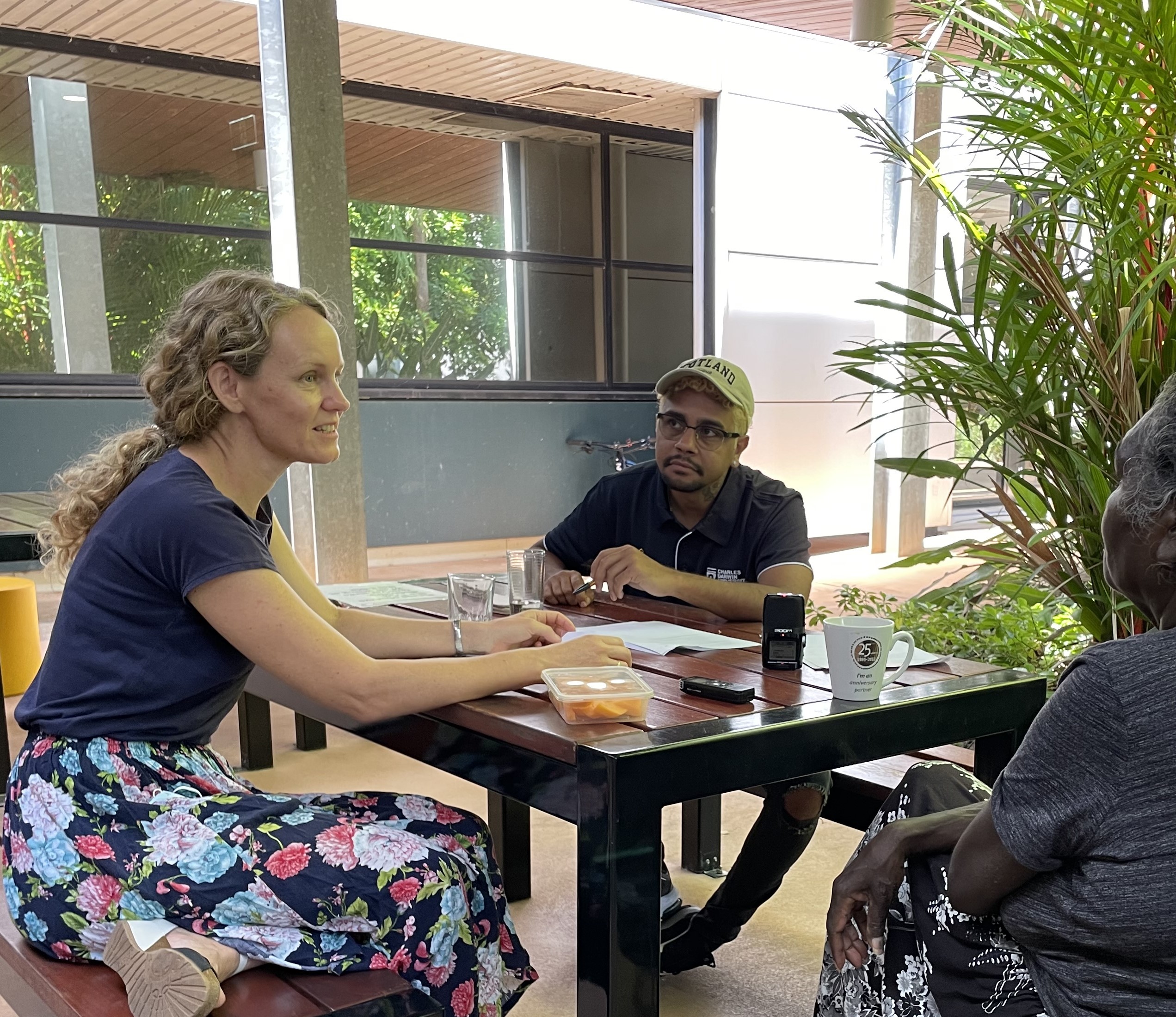
The research team spoke with 11 in-patients and carers from diverse First Nations backgrounds about their hospital experiences. With a majority of the research team being First Nations, it also allowed participants to share their stories in their first language.
The findings uncovered that poor communication contributed to experiences of racism and in turn poorer health outcomes. Participants shared encounters of confusion, aggression and healthcare provider resistance to shared decision making, leading to culturally unsafe care.
To support collaboration and mutual understanding, the study called for action from policy makers, administrators and healthcare providers. Key priorities included:
- Providing training programmes for healthcare providers that focus on intercultural communication and anti-racism.
- Ensuring patients receive information in ways that promote genuine understanding and trust.
- Revising consent processes to respect First Nations protocols, with a focus on involving family members in the consent process.
- Developing an appropriate mechanism for patients to make complaints without fear of retribution.
The study quotes one of the participants, Dorothy, a Yolŋu Elder who articulated the need to co-design ways to work together: “If they help us, we can help them. Create the solutions together. But they have to do the work first, and open pathways for us because that place [the hospital] is full of complicated foreign things and a lot of different systems.”
“Embedding our culture into their culture has never happened before. This is rorru (a sacred process of great importance) which establishes dhanuyuman (a gold standard). I am suggesting a new pathway today so they can see. From there we can be together on the same level. Indigenous and non-Indigenous.”
The consequences of culturally unsafe communication are vast and can include angry staff and patients, missed appointments, clinical mistakes and patients self-discharging before treatment is complete.
Improving intercultural communication within the hospital setting is imperative to supporting the health and wellbeing of both patients and staff. This leads to better patient healthcare experiences and outcomes, supports culturally safe care and helps to reduce staff burnout.
Read the study in full: https://link.springer.com/article/10.1007/s40615-024-02160-4
Quotes attributable to Stuart Yiwarr McGrath, a Gumatj man of the Yolŋu nation, Aboriginal Health Practitioner, Menzies researcher and author of the study:
“This paper highlights solutions rather than deficits to better inform clinical care, linguistically, culturally and a pragmatic approach to have equal perspectives whilst delivering biomedical knowledge to our mob coming from remote areas.
“The qualitative interviews I conducted were in Yolngu Matha, which made a huge difference. You are more likely to express yourself articulately in the language you think and dream in.’’
ENDS
Lead authors of the study, Dr Vicki Kerrigan and Stuart Yiwarr McGrath, are available for interviews.

