 Sign In



 International
News release
From:
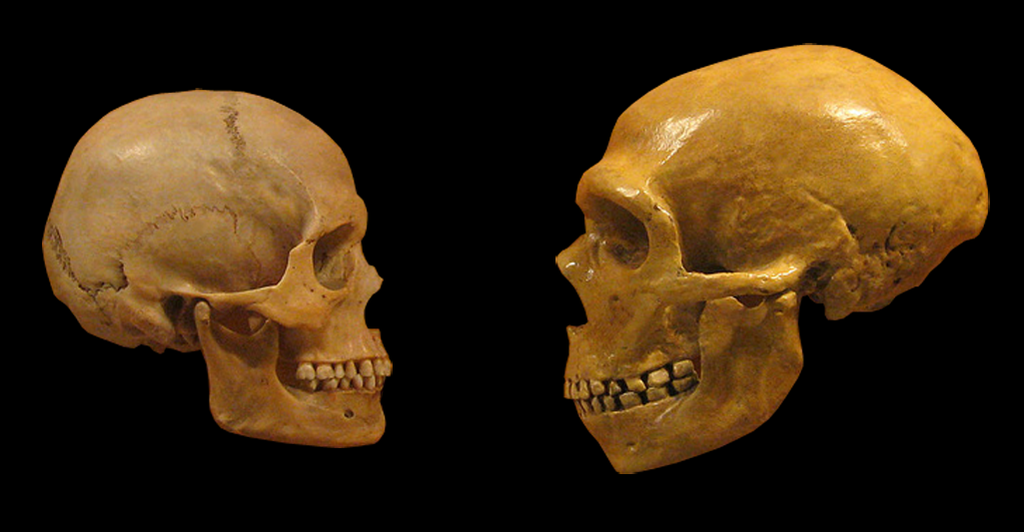
Clarifying the co-existence between modern humans and Neanderthals *IMAGES*
Modern humans may have co-existed with Neanderthals in France and northern Spain for between 1,400 and 2,900 years before Neanderthals disappeared, according to a modelling study published in Scientific Reports. These findings add to our understanding of the existence of the two species of humans in this region.
Recent fossil evidence suggests that modern humans (Homo Sapiens) and Neanderthals (Homo neanderthalensis) may have co-existed in Europe for as long as 5,000 to 6,000 years before Neanderthals became extinct. However, there is currently little evidence for their co-existence at a regional level and it is difficult to establish when the two species first appeared and disappeared in these areas.
Igor Djakovic and colleagues analysed a dataset of 56 Neanderthal and modern human artefacts (28 for each group) from seventeen archaeological sites across France and northern Spain, as well as an additional ten Neanderthal specimens from the same region. All samples had been radiocarbon dated using robust modern techniques since 2000 for greater accuracy.
The authors used Optimal Linear Estimation and Bayesian probability modelling to estimate the date ranges for these samples and the populations responsible, and infer the earliest and latest dates that these human groups might have been present at the sites. This modelling served to fill in missing portions of the archaeological record, which hamper date estimation.
Based on this modelling, the authors estimate that Neanderthals artefacts first appeared between 45,343 and 44,248 years ago, and disappeared between 39,894 and 39,798 years ago. The date of Neanderthal extinction, based on directly-dated Neanderthal remains, was between 40,870 and 40,457 years ago. Modern humans were estimated to first appear between 42,653 and 42,269 years ago. The authors conclude that this suggests the two species of humans co-existed in these regions for between 1,400 and 2,900 years. These results do not, however, indicate how or whether modern humans and Neanderthals interacted.
Attachments
Note: Not all attachments are visible to the general public. Research URLs will go live after the embargo ends.


