Fungal phonecalls: Could fungi signals resemble human communication?

Publicly released:
International
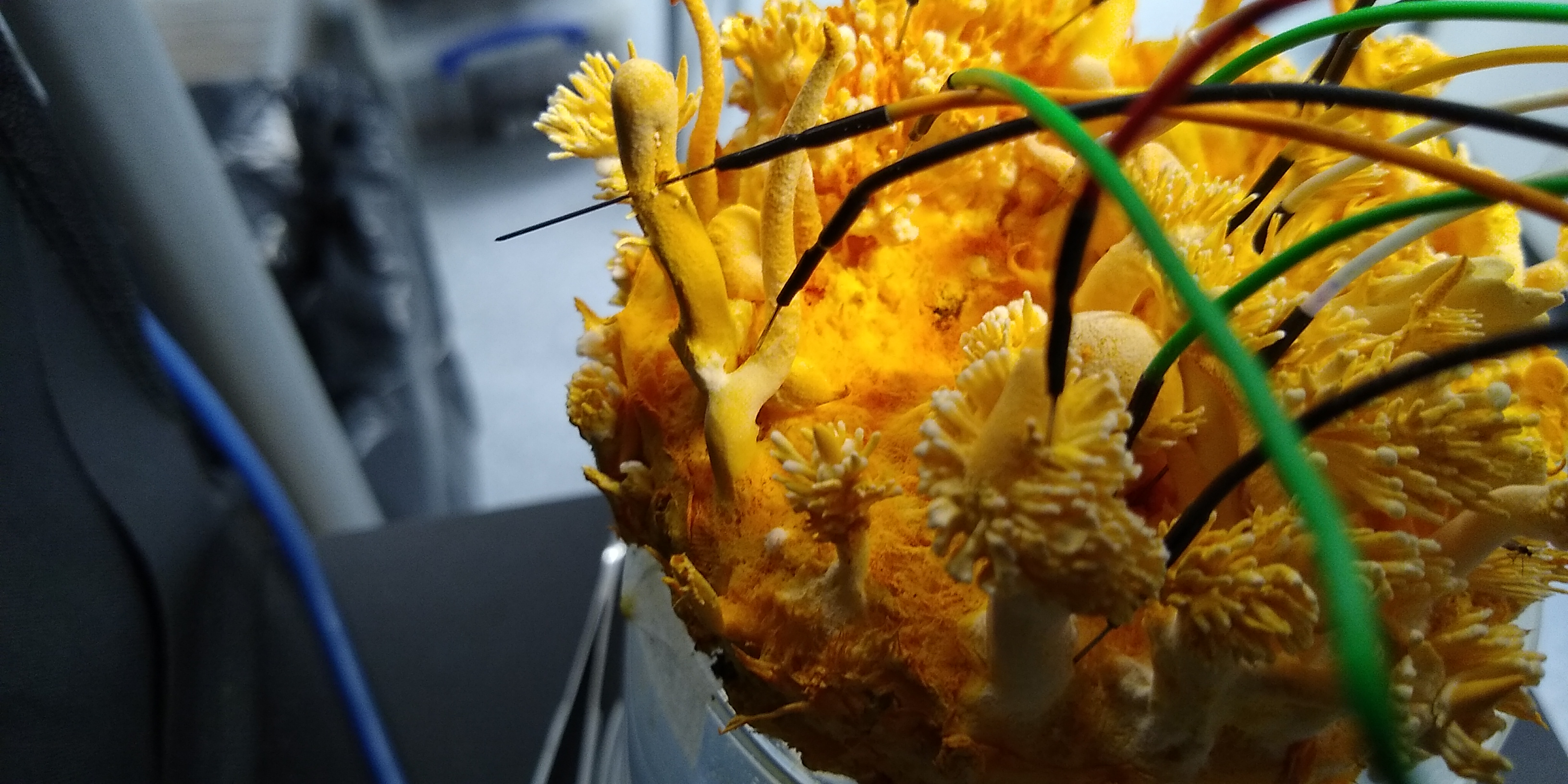
Cordyceps. CREDIT Andy Adamatzky

Ever wondered if a mushroom was talking smack about you? Researchers looking at fungi communication have found patterns of electrical activity that could resemble human speech. The team found spikes in the electrical potential of four species of fungi, and found these spikes are often clustered into 'trains of activity' which indicate information being communicated between distant parts of the fungal colonies. The spikes could also resemble vocabularies of up to 50 words. Fungal 'word length' (spike groups of 5.97) averaged the same as some human languages, for example 4.8 in English and 6 in Russian. Talk about putting the 'us' in 'fungus'!

Media release

From: The Royal Society

Language of fungi derived from their electrical spiking activity

Fungi communicate with trains of electrical spikes, similarly to what neurons do. We analyse fungal spiking activity and identify basic structures of the language of fungi. Mathematical analysis shows that the language of fungi might be morphologically similar to human language.

Multimedia
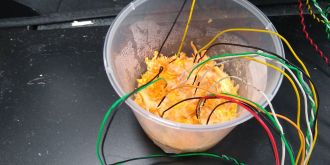
Image 1
Image 1
Image 2: Cordyceps
Image 2: Cordyceps
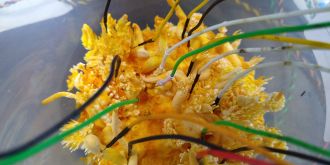
Image 3: Cordyceps
Image 3: Cordyceps
Image 4: Cordyceps
Image 4: Cordyceps

Attachments

Note: Not all attachments are visible to the general public. Research URLs will go live after the embargo ends.

Research The Royal Society, Web page The URL will go live after the embargo lifts.
Journal/
conference:
Royal Society Open Science
Research:Paper
Organisation/s: University of the West of England, UK
Funder: This project has received funding from the European Union’s Horizon 2020 research and innovation programme FET OPEN ‘Challenging current thinking’ under grant agreement no. 858132.
Media Contact/s
Contact details are only visible to registered journalists.