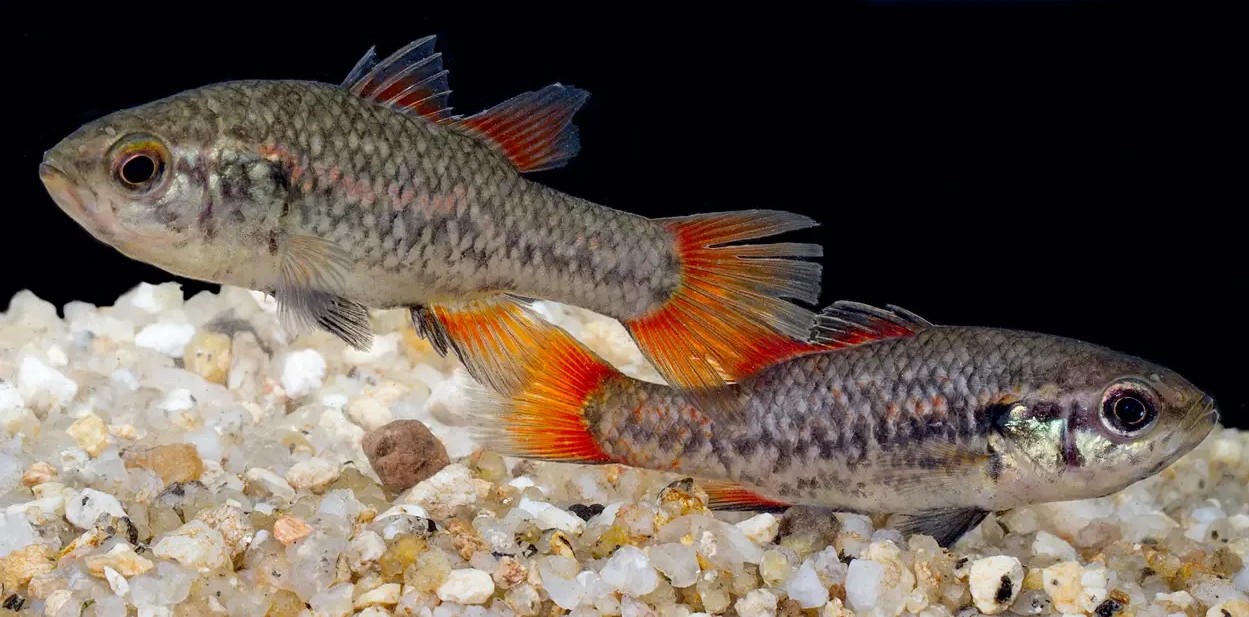
Fish exposed to antidepressants behave differently

Publicly released:
Australia; VIC; WA
Southern pygmy perch CREDIT: Animalia

Fish exposed to antidepressants could behave differently, according to Aussie and international researchers. The team looked at venlafaxine exposure in the southern pygmy perch, and found these fish were less varied in their activities and less bold after exposure to the antidepressant. Exposed fish also showed poorer body condition when compared to unexposed fish. As pharmaceutical pollution grows globally, the team says it’s important to know how this affects our wildlife.

News release

From: The Royal Society

Antidepressant exposure suppresses boldness and behavioural individuality across social contexts in fish

Biology Letters

Pharmaceutical pollution is a growing threat to the environment globally. We found that exposure to venlafaxine, an antidepressant widely detected in the environment, reduced boldness in the southern pygmy perch. Exposure also reduced the variation of activity and boldness between individuals. Interestingly, these effects appeared to vary across social contexts. Following exposure, fish exposed to venlafaxine also showed poorer body condition compared to unexposed fish. As behavioural variation supports adaptation to environmental changes, and as body condition is closely linked to fitness, these changes may potentially have implications for the persistence of populations inhabiting polluted environments.

Attachments

Note: Not all attachments are visible to the general public. Research URLs will go live after the embargo ends.

Research The Royal Society, Web page The URL will go live after the embargo lifts.
Journal/
conference:
Biology Letters
Research:Paper
Organisation/s: Monash University, The University of Western Australia
Funder: This work was supported by Monash University, as well as with funding from the Holsworth Wildlife Research Endowment from The Ecological Society of Australia (to R.R) and Discovery Grants from the Australian Research Council (DP220100245 and DP250100501 to B.B.M.W.). U.A. was supported by the Forrest Research Foundation Fellowship (2023/GR001415).
Media Contact/s
Contact details are only visible to registered journalists.