 Sign In



 Australia; VIC; QLD; SA
Expert Reaction
These comments have been collated by the Science Media Centre to provide a variety of expert perspectives on this issue. Feel free to use these quotes in your stories. Views expressed are the personal opinions of the experts named. They do not represent the views of the SMC or any other organisation unless specifically stated.
David Schlosberg is Professor of Environmental Politics, Payne-Scott Professor and Co-Director, Sydney Environment Institute,The University of Sydney
The main thing to understand about the statements from the so-called Monash Forum is that this is not a rational, reality-based set of policy suggestions - it is coal industry lobbying and nothing more.
Any policy that offers further taxpayer support for coal goes against the science of climate change, the reality of environmental impacts, the danger of health consequences, the inevitability of technological advances, and the supposed support of a fair market.
These politicians clearly put the support of a single industry against the public good and public opinion.
Worse, artificially propping up a dying industry sabotages Australia’s attempts to build the technology and jobs necessary for a safe and productive life in the 21st century.

Professor John Quiggin is a Professor of Economics at the University of Queensland
Following the failure of the National Electricity Market, the dogma that the allocation of investment to energy should be left to the free market has now been abandoned even by the most prominent advocates of free market conservatism.
However, the proposal to invest in new coal-fired power represents the worst possible use of public funds.
Coal-fired electricity is uneconomic, even without considering its adverse environmental effects, and these effects are devastating. Particulate pollution from coal kills tens of thousands of people every year around the world. Added to this health damage is the damage to the global environment caused by carbon dioxide emissions.
Taking all these factors into account, coal is by far the most expensive source of energy in the world. This is why nearly every country in the world is abandoning it.
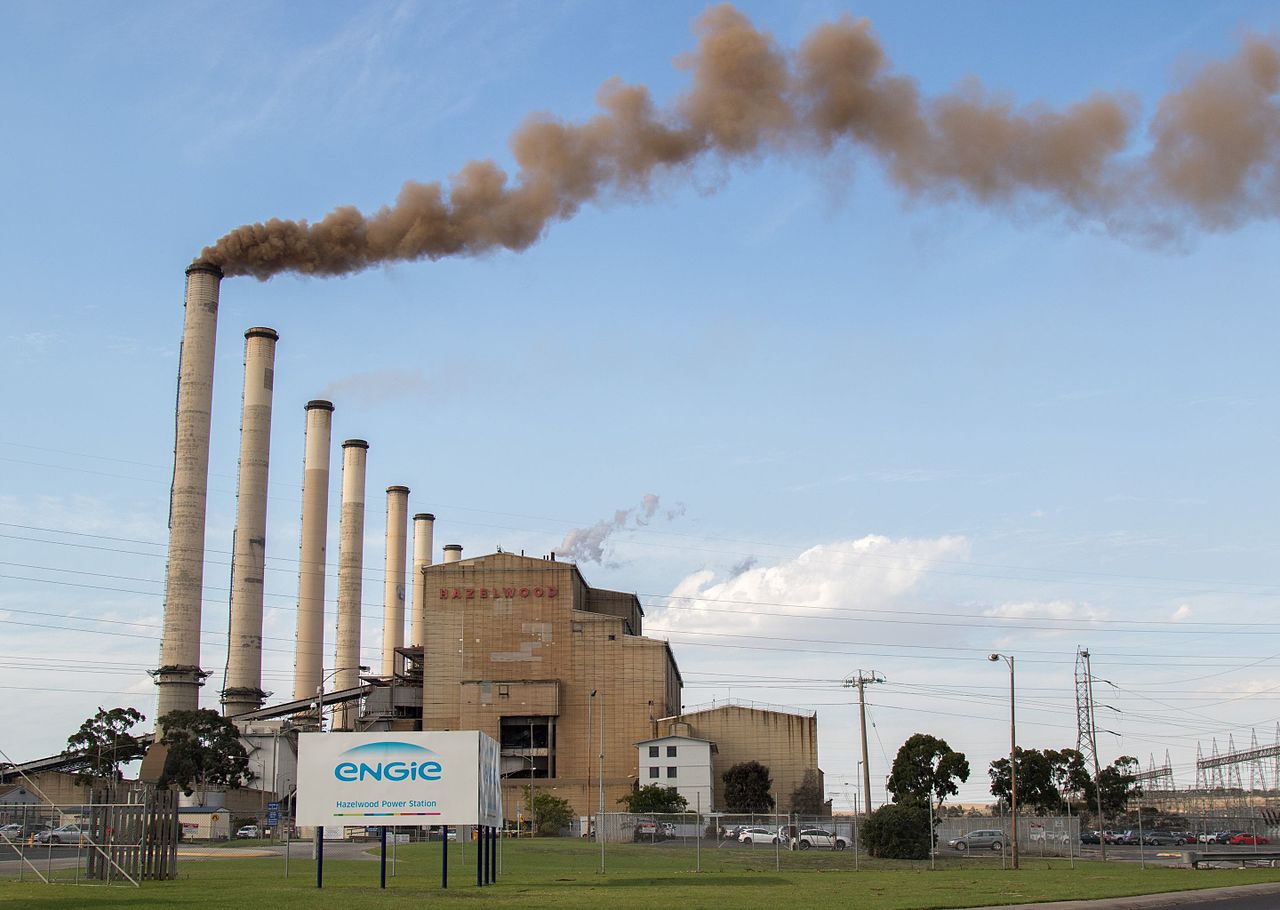
The new so called 'Monash Forum' group of Federal MPs appears to call for a return to the past, citing Australian energy and military pioneer and innovator, Sir John Monash, after whom my university is named.
I imagine the call to roll back technological progress by investing in more brown coal generation would have Sir John rolling over in his grave. He used the latest technology back in his time and no doubt would use the latest technology again if he were making the decision today. He would go with wind, solar and pumped hydro energy storage as well as electric batteries such as the Tesla super battery in South Australia.
The idea that brown coal would be economic today is patently false. The government’s own figures from 2013 (https://www.industry.gov.au/Office-of-the-Chief-Economist/Publications/Documents/aeta/AETA-Update-Dec-13.pdf) show that brown coal would be more expensive than wind by 2020. And this was underestimating the decline in wind power costs which have already reached the lower end of the 2013 study prediction for 2020.
We already know from recent ACT reverse auctions that solar is not far behind.
The “Monash” Forum’s claim that coal is reliable and is also the dispatchable solution of choice for the National Energy Guarantee is highly inaccurate. Coal generators can fail, and when they fail (3-10 per cent of the time) they can fail spectacularly, and the market loses as much as 700MW of supply at a time (the current size of the largest coal unit in Australia).
The dispatchability issue is also misleading. While a brown coal station would be dispatchable, it’s economics dictate that it should be running flat out 100 per cent of the time and would not usually be available to ramp up to meet demand growth or supply shortage during peak consumption periods. The best generators for this are hydro (including storage, such as Snowy 2.0) while electric batteries are now confirmed to perform admirably in these circumstances.
So to paraphrase Luke Skywalker in 'The Last Jedi': This is amazing, every statement of the 'Monash Forum' is wrong, coal is neither the economic nor flexible solution the market needs going forward.
Associate Professor James Ward is from the Natural and Built Environments Research Centre, University of South Australia
Climate change may not be the most urgent reason to move away from coal. Our modelling (published in 2015 [1]) showed the world racing towards the peak of fossil fuel production, led by the imminent onset of coal shortages in China as soon as 2020.
This means that – irrespective of whether we choose to reduce carbon – the reign of “Old King Coal” is ending. The world is moving on.
Luckily for Australia, we are blessed with abundant renewable energy resources, especially large-scale wind, hydro and solar (but with the potential to augment these with geothermal, biomass and waste-to-energy).
Moreover, we possess the storage and smart-grid technology to adopt a 100 per cent renewable electricity mix, nation-wide, without sacrificing grid stability. Given the urgency of the global fossil fuel situation – coupled with the urgent need to show today’s young people that we care about the environment and climate they will inherit – it is absolutely imperative that Australia uses its tremendous natural advantage to lead the world into a clean energy future.
Reference: [1] Mohr, S.H., Wang, J., Ellem, G., Ward, J. and Giurco, D., 2015. Projection of world fossil fuels by country. Fuel, 141, pp.120-135. https://www.sciencedirect.com/science/article/pii/S0016236114010254
Ian Lowe is Emeritus professor of science, technology and society at Griffith University, Qld and former President of the Australian Conservation Foundation.
The proposal by the so-called Monash Forum makes no sense economically, politically or environmentally. Some of these politicians are still denying the science of climate change, decades after it was established to the satisfaction of reputable scientific organisations and informed decision-makers. They also want to ignore the Paris agreement, to which Australia is a signatory. Achieving the Paris target certainly means we should not build any new coal-fired power stations. It probably means that we should be phasing out some existing facilities before the end of their projected life.
It is clear to independent financial analysts that coal has a very limited future. Just last week, Rio Tinto divested itself of its last holdings in coal. The suggestion that public funds should be tipped down this black hole is financially irresponsible, as well as totally incompatible with both our treaty obligations and our duty to future generations. Given the speed at which Australian households are embracing solar energy, the proponents are also totally out of touch with the communities they purport to represent.
